Pete Hegseth Faces a Privileged House Impeachment Vote on Eight Articles, Three on Iran War Powers
Thomas Massie’s resolution forces a House vote within two legislative days. Read in full, its 34 pages lean hardest on dates: War Powers Resolution deadlines that, by the text’s own count, ran out in May and June.

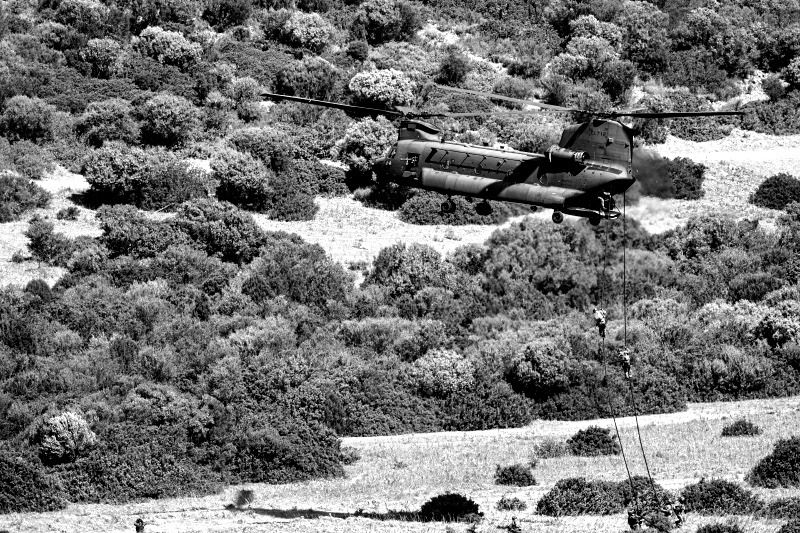
U.S. Navy photo — Public domain, via Wikimedia Commons
Pete Hegseth faces a House vote this week on eight articles of impeachment that Representative Thomas Massie filed on Monday 9 November, three of which charge that the Defence Secretary waged the Iran war in breach of the War Powers Resolution.
The resolution runs to 34 pages. It impeaches one official, and the statute it cites most often, by this publication’s count, is not a criminal law but section 1541(c) of title 50, the clause of the 1973 War Powers Resolution that lists the only three circumstances in which a president may send forces into hostilities. Mr Massie, an outgoing Kentucky Republican, put his case to CBS News in a sentence: “The question is whether he committed impeachable acts. And the answer is yes, eight times.” This publication read the text posted on his House website in full.
He offered it as a question of the privileges of the House, which changes who controls the calendar. Speaker Mike Johnson must first rule whether it qualifies, and if it does, the House must act within two legislative days, Roll Call reported: a vote on the articles themselves, or on a motion to table or refer them. Roll Call reported that the vote could come by Wednesday, which is Veterans Day. The count runs in legislative days, the days the House actually sits, so a holiday adjournment moves it. Mr Massie first introduced the articles in September; the House adjourned before a vote could occur. It is the same kind of privileged procedure that brings war powers resolutions to the floor whether leaders want them there or not.
What do the eight articles charge?
Five of them charge breaches of named sections of the War Powers Resolution, and a sixth invokes its chapter of the U.S. Code. The other two rest on civilian-protection statutes and the First Amendment. The table is this publication’s summary of the posted text; the article titles are the resolution’s own, and the dates are those the text itself gives.
| Article | Title in the resolution | Main law cited | Dates in the text |
|---|---|---|---|
| I | Waging war in contravention of the War Powers Resolution, section 2(c) | 50 U.S.C. 1541(c) | Hostilities with Iran from 28 February 2026 |
| II | Same, section 5(c) | 50 U.S.C. 1544(c) | H.Con.Res. 86 agreed by the House 3 June and the Senate 23 June; hostilities continued 26 June |
| III | Same, section 5(b) | 50 U.S.C. 1544(b) | President’s report 2 March; 60-day period ended 1 May; any 30-day extension ended 1 June |
| IV | Ignoring laws that minimize civilian casualties | 10 U.S.C. 184; two defence authorisation acts | Repeal request 29 May 2025; strike on a school in Minab, Iran, 28 February 2026 |
| V | Extrajudicial killings | Title 46 drug-interdiction law; 10 U.S.C. 274, 275 and 279; title 14 | Execute order 5 August 2025; first boat strike 2 September 2025; strikes of 30 December 2025 |
| VI | Suppressing free speech | First Amendment; Speech or Debate Clause | Senator Mark Kelly’s video 18 November 2025; letter of censure 5 January 2026 |
| VII | Kidnapping of a sovereign foreign leader | Declare War Clause; 50 U.S.C. 1541(c) | Operation in Caracas to seize Nicolás Maduro, 3 January 2026 |
| VIII | Unlawful war in Yemen | 50 U.S.C. 1541(c) and 1543(a) | Strikes 15 March to 6 May 2025; report sent 28 March 2025 |
Two features of the list stand out. The earliest conduct charged is the Yemen campaign that began on 15 March 2025, and the latest dated act anywhere in the text is 26 June 2026. Nothing from the four and a half months since appears, which fits Roll Call’s description of the refiled resolution as substantially the same as September’s. And every article is framed as an abuse of the powers of his office; none alleges private gain, the charge behind the only earlier impeachment of a war secretary. Article I says Mr Hegseth “has executed unlawful orders”; it charges the official who carried out the decision to go to war, not the President who made it. Mr Massie was candid about that choice when Roll Call asked why he had not targeted President Trump: “I think the president needs to see one of — this is a metaphor — one of his horses shot out from under him.”
Why do the war powers dates carry the case?
Because they turn a dispute about judgment into a dispute about a calendar. The War Powers Resolution requires forces introduced into hostilities without authorisation to be withdrawn 60 days after the President’s report unless Congress acts, with up to 30 more days if the President certifies in writing that “unavoidable military necessity” requires it. The resolution says Mr Trump reported on 2 March, that Congress passed nothing, and that no certification was sent. By its arithmetic the 60 days ran out on 1 May and the longest possible extension on 1 June.
By this publication’s count, Tuesday 10 November is 255 days after the hostilities began, 193 days after the first deadline and 162 days after the second. The President’s reports have kept arriving on time, which is why they no longer constrain anything; Article III’s point is that the statute’s other half, the withdrawal clock, was never obeyed.
Article II is the more unusual charge. It rests on House Concurrent Resolution 86, which directed the removal of forces from hostilities with Iran under section 5(c). The articles say it was agreed by the House on 3 June and the Senate on 23 June, “marking the first successful passage of such a legislative vehicle by both chambers of Congress in the history of the United States of America,” and that hostilities continued on 26 June. The articles treat that resolution as a binding legal direction. The House has since passed another, H.Con.Res. 93, which this publication found waiting in the Senate in October.
Which figures in the text are disputed?
At least one. Article V says the boat-strike campaign comprised “at least 63 separate attack events” that struck 67 vessels and killed “at least 221 individuals.” Roll Call, describing the refiled resolution, gave the toll as at least 243. The text this publication read is the one Mr Massie has posted; if the version filed on Monday carries a higher number, it was updated without the other dates changing. The House will vote on the filed text.
Article IV’s civilian figures are its own compilation. It says three Tomahawk missiles struck the Shajareh Tayyebeh elementary school in Minab within the war’s first hour, and that “at least 156 civilians were killed, with some reports suggesting the civilian death toll surpassed 170.” The article cites no source for either number. Its larger claim is about cause: that the Secretary dismantled the department’s civilian-harm offices, removed more than 90 per cent of their staff at combatant commands and fired the senior judge advocates general before the strike. Those are allegations in a charging document. This publication has seen no point-by-point answer to them from the Pentagon.
The Pentagon’s answer has been general. Mr Hegseth told reporters on Monday, “we’re not worried about that,” and said in a video, “Didn’t work against President Trump, and it won’t work with me,” CBS reported. His spokesman Sean Parnell said he “will not back down or be deterred by politicians seeking to score partisan points,” according to Newsweek. Mr Johnson has said impeaching a defence secretary during hostilities abroad “would be a terrible, terrible look.” Hakeem Jeffries, the Democratic leader, called himself “a hard yes” on ABC’s This Week.
How have cabinet impeachments ended before?
Never in removal. The Senate’s own list records 22 impeachment proceedings against 21 people since 1799. Two involved cabinet secretaries. By this publication’s count of that list, all eight officials the Senate has convicted were federal judges.
| Official | House impeached | Senate outcome | Days between |
|---|---|---|---|
| William Belknap, Secretary of War | 2 March 1876, unanimously, minutes after he resigned | Acquitted 1 August 1876; each article fell short of two-thirds | 152 |
| Alejandro Mayorkas, Secretary of Homeland Security | 2024, by 214 votes to 213 | Charges dismissed as unconstitutional, 17 April 2024 | not computed |
| Pete Hegseth, Secretary of Defense | Vote due this week | — | — |
The Belknap entries are from the Senate Historical Office, which notes that he resigned “just minutes before” the House vote and that the Senate kept jurisdiction anyway. The Mayorkas vote is as Roll Call reported it. The day count is ours.
The Mayorkas case is the closer precedent on procedure: a House majority impeached a cabinet secretary over policy, and a Senate majority of the other party disposed of the articles without a trial. Here the parties are arranged differently. Republicans hold the lame-duck House, Democrats won control of both chambers for the next Congress, and the sponsor is a Republican. Representative Adam Smith, a Washington Democrat, told Roll Call that “by every estimation, it will pass,” and that the Senate would be bound to take the case up; Mr Massie said a trial might not begin until 2027.
Conviction needs two-thirds of the senators present, under Article I, section 3 of the Constitution. With all 100 voting, that is 67. If Democrats hold the 54 seats they have won so far for the new Senate, 13 Republicans would have to join them, by this publication’s arithmetic. The war itself has cost $47.1 billion by the Pentagon’s own partial accounting, and none of the eight articles mentions what it has cost.
House Democrats were to discuss the resolution at their caucus meeting on Tuesday morning. The two-legislative-day clock started on Monday.
Further reading
- Impeaching Peter Brian Hegseth, Secretary of Defense, for high crimes and misdemeanorsOffice of Rep. Thomas Massie
- Massie introduces impeachment articles against Hegseth, teeing up vote this weekCBS News
- Massie moves to force Hegseth impeachment voteRoll Call
- Jeffries Backs Republican-Led Hegseth Impeachment Effort: He’s ‘Got to Go’Newsweek
- Impeachment CasesU.S. Senate
- Impeachment Trial of Secretary of War William Belknap, 1876U.S. Senate
Gregor Vance is a house byline used by The 13th Bell’s Security desk. This piece was checked against the sources listed below before an editor approved it. See How we use AI.
Get The 13th Bell in your inbox