The Privileged Resolution Explained
Most bills die because leadership never schedules them. The War Powers Resolution created a category of measure that leadership cannot decline to schedule, which is why the same vote keeps recurring.

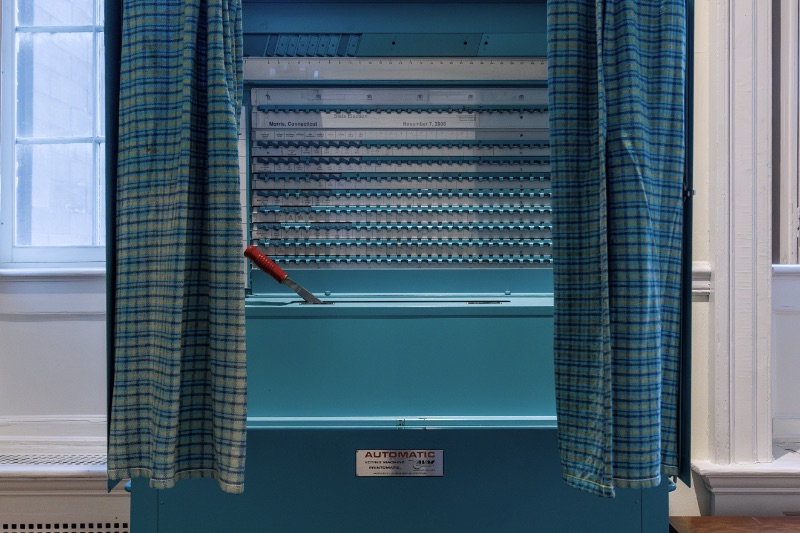
Public domain, via Wikimedia Commons
The House has now voted three times on limiting the president's use of force against Iran. The repetition looks like a caucus making a point. It is a procedure working as designed.
In ordinary circumstances a member of the House cannot force a vote on anything. A bill is referred to a committee, and if the chair does not schedule a markup, or leadership does not schedule floor time, it never reaches a vote and no rule has been broken.
That is the normal condition of legislation. The overwhelming majority of bills introduced in any Congress die without a recorded vote, and almost none of those deaths involve anybody voting against them.
A privileged measure is the exception. It is a category of business that, once properly offered, takes precedence over the scheduled agenda, and the leadership's usual power to simply not bring something up does not apply.
The section that creates the procedure is the source of the ones being used on Iran. It provides that where forces are introduced into hostilities without a declaration of war, Congress may direct their removal by concurrent resolution.
the priority procedures written alongside it supply the machinery: such a resolution is referred to committee, reported within a fixed number of days, and then becomes privileged for floor consideration.
The time limits are the point. A committee that sits on the resolution does not kill it; when the clock runs out the measure is discharged automatically and the vote happens anyway.
That inversion is unusual in American legislative practice. Nearly every other route to the floor requires the assent of somebody in charge — a chair, a Rules Committee majority, a speaker — and this one requires only that a member follow the steps.
The 1973 Congress built it that way deliberately. It had watched a decade of war conducted without a declaration and concluded that the problem was not the absence of a rule but the absence of a vote.
The Congressional Research Service's account of its practice records how the mechanism has been used since, and how presidents of both parties have maintained that parts of the resolution are unconstitutional while generally reporting to Congress as though they were not.
That standoff has never been resolved by a court, which has consistently found ways to avoid deciding, usually on the grounds that a dispute between the branches is not ripe until Congress has actually passed something.
the War Powers Resolution as a whole also carries a structural weakness that shapes every vote taken under it. A concurrent resolution passed by both chambers is not presented to the president and does not become law.
A joint resolution, which would bind, must be signed or survive a veto. So the realistic ceiling on any of these measures is a two-thirds majority in both chambers against the sitting president's own use of force.
Knowing that, the votes are best understood as doing something other than legislating. They create a recorded position for every member on a specific military action, at a specific moment, under their own name.
That record is the product. It cannot be avoided by leadership, cannot be buried in a committee, and cannot be softened into a voice vote, and it exists whether the resolution passes or fails.
It also forces a count. Each vote establishes precisely how many members of the president's own party will break with him on the use of force, which is information the executive branch reads as carefully as anyone.
Repetition is not futility in this context. A margin that moves ten votes between one attempt and the next is a trend line, and the third vote is what establishes that the second was not an anomaly.
The costs are real too. Members dislike being forced into a recorded position on an unfolding military situation with incomplete information, and leadership dislikes floor time it did not plan.
Those objections are the price of the design. A mechanism that could be scheduled away by the people it is meant to check would not be a check.
So the thing to watch in the next one of these is not whether it passes, because the arithmetic is usually known in advance. It is the margin, and specifically how many of the president's own party are now willing to have their names recorded on the other side.
Further reading
- 50 U.S.C. § 1544, Congressional actionLegal Information Institute, Cornell Law School
- War Powers Resolution, 50 U.S.C. ch. 33Legal Information Institute, Cornell Law School
- The War Powers Resolution: Concepts and PracticeCongressional Research Service
Miriam Halloway writes for The 13th Bell on politics. This piece was edited and fact checked before publication.
Get The 13th Bell in your inbox