Roll Call 317: How the House Voted 211-204 to Send Pete Hegseth’s Impeachment to Committee
One Republican and every Democrat present voted to keep Thomas Massie’s eight articles on the floor. The Clerk’s record shows 18 members missing, and an outcome that would have survived their votes.

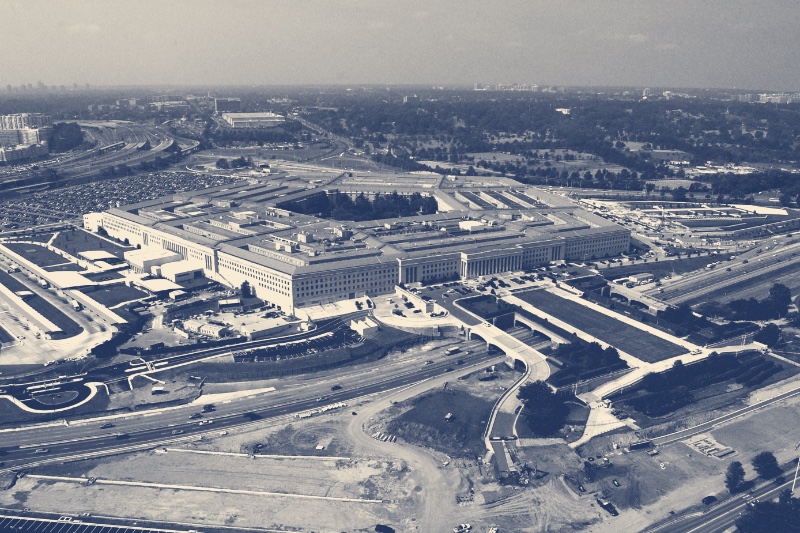
ajay_suresh — CC BY 4.0, via Wikimedia Commons
At 6:02 pm on Tuesday 10 November 2026, the House of Representatives voted 211 to 204 to refer Representative Thomas Massie’s resolution impeaching Defence Secretary Pete Hegseth to the Judiciary Committee. Republicans voted 210 to one in favour, Democrats 203 to none against, and 18 members did not vote.
The motion did not decide whether Mr Hegseth committed impeachable acts. It decided where the resolution would go, and it sent it to a committee that has no deadline to act before this Congress ends. ABC News reported that the referral effectively kills the measure for the rest of the 119th Congress. This publication pulled the vote from the House Clerk’s record of roll call 317 and set it beside the votes taken either side of it that evening and the House’s previous impeachment vote, in September.
What the House actually voted on
Mr Massie, a Kentucky Republican, filed the eight articles as House Resolution 1655 on Monday 9 November and offered them as privileged, which forced leaders to act within two legislative days. Acting did not have to mean a vote on the articles. Under the same procedure that brings war powers resolutions to the floor, the House may dispose of a privileged resolution by tabling it or referring it, and it chose referral on the second day. The text it referred is the one this publication read in full on Tuesday: three articles on the Iran war under the War Powers Resolution, others on boat strikes, the seizure of Nicolás Maduro and the Yemen campaign.
The committee that received it meets in the Rayburn House Office Building, at the address its own website gives as 2138 Rayburn. Its chairman is Jim Jordan of Ohio, whom House Republicans had elected as their leader for the next Congress about three hours before the vote, at a meeting where he defeated Steve Scalise by 106 votes to 73, according to CBS News.
Who voted which way?
Almost exactly along party lines: Mr Massie was the only member to vote against his own party. The table is this publication’s tabulation of the Clerk’s record. The one independent, Kevin Kiley of California, is listed as such by the Clerk and voted with the Republicans.
| Party | Yes (refer) | No | Not voting |
|---|---|---|---|
| Republican | 210 | 1 (Massie) | 7 |
| Democratic | 0 | 203 | 11 |
| Independent | 1 (Kiley) | 0 | 0 |
| Total | 211 | 204 | 18 |
President Trump wrote after the vote that “Every single Republican, except Thomas Massie, a major LOSER, voted in favor of Pete,” ABC News reported. The roll call is less complete than that: 210 of the 218 Republicans did. Seven were not recorded at all: Monica De La Cruz of Texas, Neal Dunn of Florida, Russell Fry of South Carolina, Julia Letlow of Louisiana, Tom Tiffany and Derrick Van Orden of Wisconsin, and Rudy Yakym of Indiana.
The 11 Democrats not recorded were Julia Brownley, Lou Correa and Nancy Pelosi of California, Laura Gillen of New York, Steven Horsford of Nevada, Jonathan Jackson of Illinois, Brittany Pettersen of Colorado, Melanie Stansbury of New Mexico, Haley Stevens of Michigan, Marilyn Strickland of Washington and Frederica Wilson of Florida. Democratic leaders had not whipped the vote. Members “are going to have to make their own decisions,” Pete Aguilar, the caucus chair, said that afternoon, according to CBS News, which reported that he and Hakeem Jeffries would vote yes.
Would the missing votes have changed the result?
Not on the evening’s own record. Two more roll calls followed within 18 minutes, both on the rule for an unrelated securities bill: roll call 318 at 6:10 pm, which passed 213 to 207, and roll call 319 at 6:20 pm, 215 to 209. Seven of the 11 absent Democrats are recorded voting on one of them, and so are five of the seven absent Republicans. The Clerk’s record does not say why any member missed a vote, and a member recorded eight minutes later may simply have arrived after the earlier vote closed. The table assumes each absent member would have voted with the rest of his or her party on the motion; the scenarios are this publication’s arithmetic.
| Scenario | Yes | No | Outcome |
|---|---|---|---|
| As recorded | 211 | 204 | Referred |
| All 11 absent Democrats vote no, nobody else added | 211 | 215 | Fails |
| Add only the 12 absentees recorded at 6:10 or 6:20 pm (7 D, 5 R) | 216 | 211 | Referred |
| All 18 absentees vote with their party | 218 | 215 | Referred |
So the absent Democrats could have defeated the motion only if the absent Republicans had stayed away. Eight of the 11 had voted the previous evening, on roll call 316 at 7:07 pm on Monday. Mr Correa, Ms Wilson and Mr Dunn appear on none of the four votes this publication checked.
How Democrats moved since September
From three positions to one. The House’s previous impeachment vote was roll call 298 on 15 September, a motion to table Al Green’s resolution impeaching President Trump, which passed 232 to 147 with 47 members voting present. Democrats split three ways that day: 18 voted to table, 147 against and 46 present. Mr Massie voted present.
This publication matched the two roll calls member by member. Of the 18 Democrats who voted to table the Trump resolution, 17 voted on Tuesday to keep the Hegseth resolution alive; the 18th, Ms Gillen, did not vote. Of the 46 who voted present in September, 44 voted no on Tuesday; Mr Horsford and Ms Pelosi did not vote. Not one Democrat voted with the majority this time. The House did not take a recorded vote at all between 16 September and 9 November: roll calls 314 and 315, on those dates, are 54 days apart, which is how a resolution Mr Massie first offered in September reached the floor only this week.
What happens to the articles now?
They wait in the committee, and the committee has no obligation to take them up. The 119th Congress ends at noon on 3 January 2027, the date the Twentieth Amendment sets for the end of Representatives’ terms, which is 54 days after the vote. Mr Massie will not be a member of the next House; he lost his primary this year to a challenger backed by Mr Trump, ABC News reported.
Mr Hegseth called the effort “a political spectacle, a personal manifesto driven by ego and resentment,” according to ABC News, and told reporters at the Pentagon, “It’s a farce, and it’s a stunt and everybody knows it,” NBC News reported. Mr Trump called the vote an “EXONERATION of a Great American Patriot.” Darrell Issa, an outgoing California Republican, told NBC the articles would have failed anyway: “It’s going to die in the Senate; it’s just that simple.” Conviction would need two-thirds of the senators present, which the Constitution sets in Article I, section 3.
Mr Jeffries, who NBC reported is on track to become Speaker in January, said Democrats would “run Pete Hegseth out of town” when they take over. “But this is not the end of it,” he said on Tuesday evening, according to CBS News. “It’s just the beginning.” A new House would have to start from a new resolution, because H.Res. 1655 belongs to the 119th Congress. It sits with a committee whose chairman, Mr Jordan, voted on Tuesday to send it there.
Further reading
- Roll Call 317: On Motion to Refer, H.Res. 1655Office of the Clerk, U.S. House of Representatives
- Roll Call 298: On Motion to Table, H.Res. 1486Office of the Clerk, U.S. House of Representatives
- Impeaching Peter Brian Hegseth, Secretary of Defense, for high crimes and misdemeanorsOffice of Rep. Thomas Massie
- Republican-led House rejects Hegseth impeachment effortNBC News
- House tables Hegseth impeachment, effectively killing it in current CongressABC News
- GOP picks House and Senate leaders, Hegseth impeachment vote is killedCBS News
Gregor Vance is a house byline used by The 13th Bell’s Security desk. This piece was checked against the sources listed below before an editor approved it. See How we use AI.
Get The 13th Bell in your inbox