The Strait That Sets the Price of Everything
A handful of narrow passages carry most of the world's traded goods. The politics of those passages is now the politics of everyone's grocery bill.

Global trade looks like a web on a map and behaves like a small number of pipes. Most of what moves between continents passes through a handful of narrow places, and the list is short enough to memorize.
This concentration is not an accident of geography alone. It is the product of decades of optimization. Bigger ships are cheaper per container, bigger ships need deeper channels, deeper channels exist in a limited number of places, and so the traffic consolidates. Every efficiency gain has been purchased with a small loss of redundancy, and the losses have compounded.
Fragility is a design outcome, not a surprise
When a chokepoint closes, the cost is not the cargo on the blocked ships. It is the schedule. Container shipping runs on rotations, and a rotation that loses a week does not simply arrive a week late. Vessels miss their berthing windows, containers pile up at the wrong terminals, empty boxes end up on the wrong continent, and the disturbance takes months to damp out.
Rerouting sounds like the obvious answer, and it works, at a price. A longer route burns more fuel, occupies the ship for more days, and effectively removes capacity from the market at exactly the moment demand for capacity spikes. The freight rate does the rest.
A closure that lasts three weeks can raise costs for six months, because the system's recovery time is much longer than the interruption.
The political economy of a narrow passage
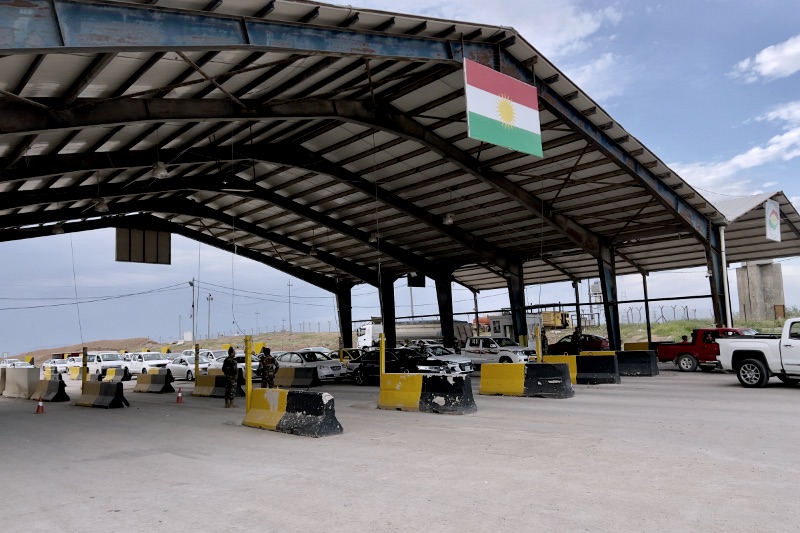
Every chokepoint sits in somebody's neighborhood, which means the security of global trade depends on the domestic politics of a small set of states. Some of them are wealthy and stable. Some of them are neither. All of them understand the leverage they hold.
This is a different situation from the one that shaped mid-century trade policy. The old assumption was that the sea was a commons and the navies of the largest economies would keep it open. That assumption held because the cost of policing was concentrated and the benefits were diffuse, and one power was willing to absorb the imbalance.
The arrangement is under strain. Naval resources are stretched, the number of actors capable of threatening a passage has grown, and the tools required to threaten one have become dramatically cheaper. A state does not need a fleet to make a strait uninsurable. It needs a few systems and the willingness to use them.
Insurance is the real front line
The mechanism that translates risk into trade disruption is not military, it is actuarial. War risk premiums are repriced continuously, and a rate that rises far enough functions as a closure even when the passage is physically open. Owners will not send a ship where the premium exceeds the margin on the voyage.
This gives underwriters a quiet role in foreign policy that nobody designed and nobody supervises. Their pricing decisions determine which routes remain economic, which means they determine which threats succeed. A state seeking to disrupt trade does not have to sink anything. It only has to convince the market that it might.
What resilience would actually cost
The honest version of the resilience conversation starts with a number. Redundant routes, larger inventories, and second-source suppliers all cost money, continuously, in exchange for protection against an event that may not occur during any given executive's tenure.
Firms that carried extra inventory through the calm years were penalized by their own investors for tying up capital. Firms that ran lean were rewarded until the day they were not. Nothing about that incentive structure has changed, which is why the buffers rebuilt after the last disruption have already been drawn back down.
Governments can change the calculation, and a few have started to, through stockpiles, route subsidies, and requirements that critical importers hold minimum reserves. These are unpopular in ordinary times because they look like waste. They are waste, in the same way a fire department is waste on the days nothing burns.
The pricing mechanism is worth stating precisely, because it explains why a disruption that never happens still costs money.
The flow data establishes the dependency, and the dependency is the input to a risk premium that is paid continuously whether or not anything occurs.
That premium is the actual transfer. It moves money from consumers to whoever is positioned to benefit from uncertainty, and it does so without any incident taking place.
The law of the sea instruments govern transit passage and are clearer than most people assume, which is why outright closure is rare. The ambiguity is in everything short of closure.
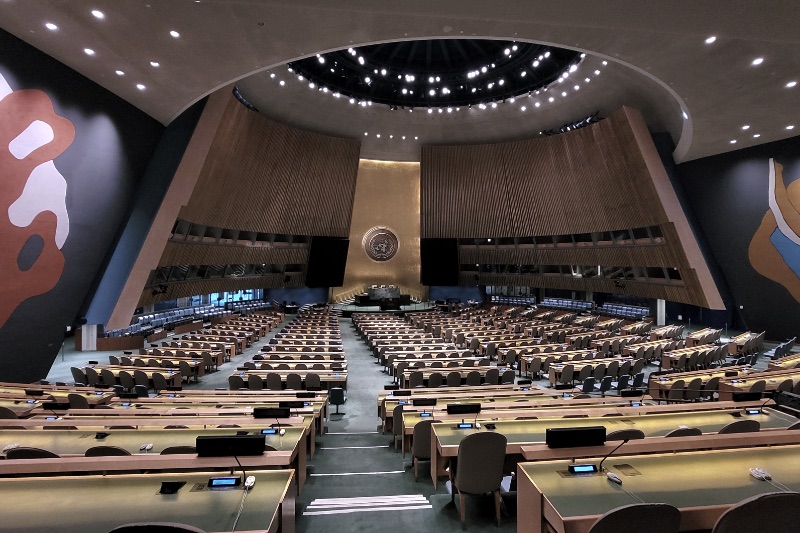
The maritime organisation handles the operational layer, and its requirements continue to apply in a contested strait exactly as they do anywhere else, which is a genuine stabiliser.
Published analysis tracks the shifts in routing that follow each episode, and the pattern is consistent: traffic reroutes, the cost rises, and the reroute persists for longer than the incident did.
Nadia Belkacem writes for The 13th Bell on world. This piece was edited and fact checked before publication.
Get The 13th Bell in your inbox