Who Is Left to Join Kulbergs
Latvia’s president has said he will ask Prime Minister Andris Kulbergs to form the next government, but the United List’s 41 seats are ten short of a majority. With two large parties ruled out, the arithmetic points to one partner.

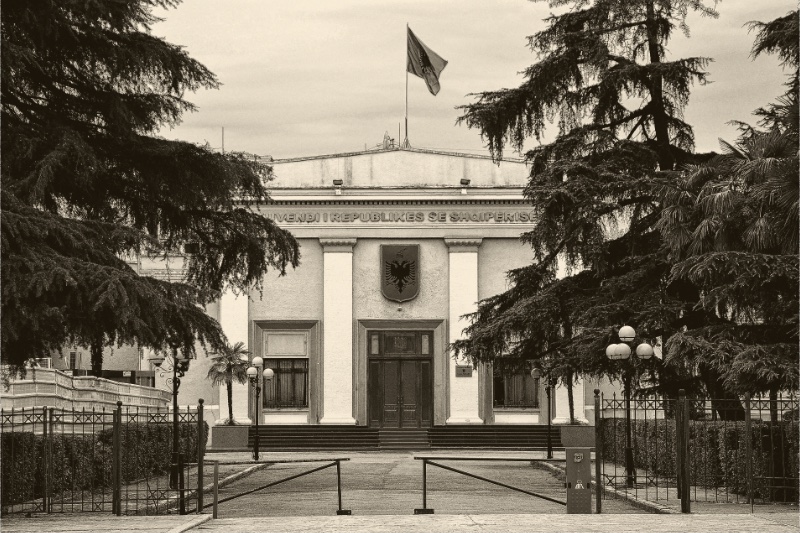
Ralf Roletschek — CC BY-SA 3.0 AT, via Wikimedia Commons
President Edgars Rinkēvičs has already said who he wants to form Latvia’s next government. On Tuesday 6 October he said he would ask Prime Minister Andris Kulbergs, whose United List won 41 of the 100 seats in the Saeima three days earlier, LSM reported. “A 41-vote majority in the Saeima is something unique,” the president said. It is also ten votes short of a majority, and who supplies the ten is the open question.
Latvia voted on Saturday 3 October, the date the Constitution fixes as the first Saturday of the month. The Central Election Commission’s provisional results, published on 4 October and reproduced by LV portals, the official legal information portal, give the United List 41 seats on 35.29 per cent of the vote, Latvia First 17, Sovereign Power, which ran on a joint list, 15, the National Alliance 10, the Progressives 10 and New Unity 7. Those sum to 100. Turnout was 806,641, or 51.79 per cent of eligible voters. The Union of Greens and Farmers, a member of the outgoing coalition, took 4.40 per cent and fell below the 5 per cent threshold.
Earlier counts differed. Some reports on election night, and an analysis by the Centre for European Policy Studies, gave the United List 42 seats and the Progressives nine. The commission’s figures are used here.
The arithmetic of 51
A majority of the Saeima is 51. Adding the National Alliance’s ten seats to the United List’s 41 makes exactly 51; so would the Progressives’ ten. New Unity’s seven would bring the total only to 48. The National Alliance and New Unity together would make 58. Sovereign Power would make 56 and Latvia First 58. Those are this publication’s calculations from the commission’s seat totals.
The difference between 51 and 58 matters. A government with 51 votes cannot lose a single member of its own bloc on a confidence vote. LSM reports that the United List’s leaders intend to talk first to their existing partners, the National Alliance and New Unity, which together would give 58. A separate LSM analysis notes that “in alliance with the National Alliance alone he would have a majority,” and that it remains to be seen whether Kulbergs will ask New Unity in at all.
Who has been ruled out
Two of the larger parties are effectively excluded. CEPS reports that Kulbergs has ruled out a coalition with Sovereign Power, which it says promises to end military support for any ongoing conflicts, including continued EU aid to Ukraine. LSM reports that Kulbergs has said he does not want to work with Latvia First, which CEPS describes as openly Trumpist. Between them those two parties hold 32 seats.
The Progressives are excluded by recent history. They were in Evika Siliņa’s coalition until May. When two stray Ukrainian drones hit Rēzekne, Siliņa moved to dismiss the defence minister, Andris Sprūds, a Progressive. “In response the Progressives pulled out of the coalition and the government collapsed,” LSM wrote. When Kulbergs began building a replacement that month, the United List, the National Alliance and the Union of Greens and Farmers agreed to invite New Unity but not the Progressives, because, LSM reported, the National Alliance objected to working with them. The Saeima approved the resulting cabinet on 28 May by 66 votes to 25.
If that objection still stands, the arithmetic leaves one ten-seat partner, the National Alliance, with New Unity as an optional margin. Of the four parties that governed from May, one is now out of parliament.
What the president’s announcement does and does not do
Article 56 of the Constitution says: “The Cabinet shall be formed by the person who has been invited by the President to do so.” It sets no date. LSM explains that the formal invitation can come only after the new Saeima convenes and the sitting government resigns, and that the 6 October statement therefore “has political, not legal, force.” The new Saeima meets on Tuesday 3 November.
The test that binds comes afterwards. Article 59 provides: “In order to fulfil their duties, the Prime Minister and other Ministers must have the confidence of the Saeima.” Rinkēvičs said that the United List and Kulbergs “enjoy broad support from other parties – not all, but the majority.” That describes his consultations, not a vote count.
How long talks can run
Articles 55 and 56 set no deadline for forming a cabinet, and the record shows how wide the range can be. After the election of 1 October 2022, the second cabinet of Krišjānis Kariņš was approved on 14 December, 74 days later. This year’s replacement government took about two weeks, but it was formed inside a sitting parliament, from parties that already knew their numbers.
LV portals called the 41 seats the largest lead any political force has held in the Saeima’s history. They are also ten short. The number that decides who governs Latvia is not the one announced on election night but the one recorded in the confidence vote, and no coalition agreement had been announced by Sunday.
Sources
Seat totals, vote shares, turnout and the Union of Greens and Farmers result are the Central Election Commission’s provisional figures as published by LV portals. The president’s remarks, the talks sequence, Kulbergs’s position on Latvia First, the 3 November sitting and the “political, not legal, force” explanation are from LSM’s report of 6 October. The New Unity analysis and the account of the May collapse are from LSM’s report of 7 October, and the May talks from its report of 19 May. The Sovereign Power exclusion and the earlier seat figures are from CEPS. Constitutional text is from the Saeima. The 28 May vote is from the Saeima. The seat arithmetic and day counts are this publication’s.
Further reading
- President asks Kulbergs to form next Latvian governmentLSM
- Balsis ir skaitītas (provisional 15th Saeima results)LV portals
- New Unity faces some post-election soul searchingLSM
- Coalition talks to progress without ProgressivesLSM
- The Constitution of the Republic of LatviaSaeima
- After years of turbulence, old-new Prime Minister Kulbergs has his work cut out for himCentre for European Policy Studies
Alice Pyne writes for The 13th Bell on politics. This piece was edited and fact checked before publication.
Get The 13th Bell in your inbox