Two Hundred Thirty-Three Votes
Romania’s fourth prime minister-designate since the government fell in May needs 233 votes in parliament, and the liberals have said they might supply some without joining his government. A vote to install a cabinet and a majority to run one are not the same thing, and the parties are negotiating over the gap.

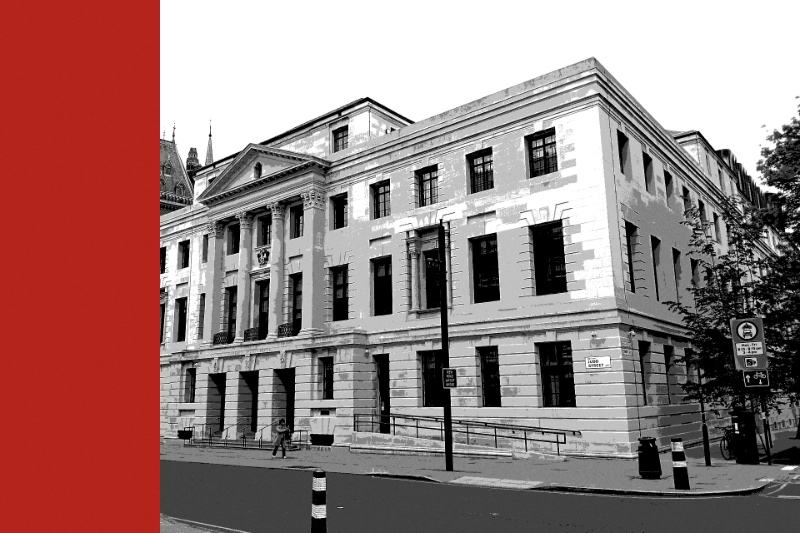
Britchi Mirela — CC BY-SA 4.0, via Wikimedia Commons
Romania has been without a fully functioning government since 5 May, when parliament adopted a no-confidence motion against the cabinet of Prime Minister Ilie Bolojan by 281 votes to four, Agerpres reported. The motion was initiated by the Social Democrats (PSD), the nationalist AUR and the PACE – Întâi România group. Of President Nicușor Dan’s three earlier nominees, Eugen Tomac stepped down and Adrian Veștea and Siegfried Mureșan failed to win a vote of confidence, Romania Insider reported. The fourth, the independent diplomat Luca Niculescu, was named on Monday 5 October and began consultations on Thursday 8 October. He needs 233 votes to take office, the same outlet reported; the constitution requires the votes of a majority of deputies and senators sitting together.
A vote without a coalition
The arithmetic turns on the National Liberal Party (PNL), which Bolojan leads and which governed with the PSD until the coalition collapsed. After meeting Niculescu on Thursday, Bolojan said the PNL does not intend to take part in his government. “Based on our experience over the past year, we have decided not to participate in governments alongside the Social Democratic Party in the current political context; if that party is part of the government, the PNL will go into opposition,” he said, according to Agerpres.
That is not a refusal. Bolojan also said the PNL “is open to voting to install this government,” citing the need for “a government with full powers” that can revise the budget, curb spending and prepare next year’s. The PNL will decide next week, he said, depending on the programme and the cabinet’s composition. Agerpres reported that Niculescu met the PSD, the PNL and the ethnic Hungarian party UDMR on Thursday.
So the question is whether a party can vote for a government it will not sit in. For the PSD, led by Sorin Grindeanu, that is not enough. On Friday Grindeanu said the PSD “supports rebuilding a stable majority alongside the PNL and the UDMR,” and on Saturday he wrote that the PNL’s participation in government “is not a favour to the PSD, but the right decision for Romania,” Agerpres reported. Politico reported that the Social Democrats want Niculescu to steer away from Bolojan’s austerity policies. A commentary in Universul argued that Grindeanu and Dan want more than 233 votes: a majority able to give the cabinet at least minimal functionality, with the political costs of governing not falling on the PSD alone. That is the commentator’s reading, not a statement from either man.
The votes that will not come
AUR has led Romania’s opinion polls for almost two years, Politico reported, and its leader, George Simion, wants snap elections. He told Politico that Dan was mounting a “blockade” because he is “afraid of us coming to power.” Dan has refused to give AUR a role in government and says he opposes a snap election because the campaign would delay budget reforms and healthcare funding, Politico reported.
Politico reported that Dan faces demands to call a snap election if Niculescu fails. The constitution does not compel one: it says the president “can dissolve Parliament” if no vote of confidence has been obtained within 60 days of the first request, and only after at least two requests for investiture have been rejected. The latest INSCOP barometer, published on 10 September from fieldwork on 1–7 September, put AUR at 39.7 per cent, the PSD at 18.7, the PNL at 16.3 and the reformist USR at 9 among respondents who named a party. These are vote shares and not seats; this publication has no seat arithmetic that would show how far 233 is from any combination.
The cost of the wait
Dan Barna, a member of the European Parliament for Renew Europe, told Agerpres that Niculescu might win enough votes for investiture but would lead “a rather weak and vulnerable government.” “Some might say that we would gain some time, but I’d say that we would actually lose more time - months or years - before turning back to the voters and seeing what the current wishes of the Romanian people are for moving forward,” he said. He said Romania is “on the brink of junk status.”
Mureșan, the most recently defeated nominee, told Politico that investors were already “holding back on their investments, waiting with major investment decisions before they have more certainty.” Bolojan, for his part, tied the PNL’s openness to the need to meet deficit targets and keep the budget in balance.
The structural point is simple. An investiture vote is a one-day event. The majority a cabinet needs afterwards, to pass a budget revision and a budget, has to be rebuilt each time. Romania’s parties are now negotiating over whether the first can be given without the second, and the answer is due within days.
Sources
The no-confidence vote is from Agerpres’s report of 5 May. The earlier nominees, the date of Niculescu’s nomination and the 233-vote requirement are from Romania Insider. Bolojan’s remarks and the Thursday consultations are from Agerpres, as are Barna’s remarks and Grindeanu’s statements in separate Agerpres reports. Simion’s and Mureșan’s remarks, the length of AUR’s poll lead, Dan’s position and the PSD’s stance on austerity are from Politico. The poll shares are from INSCOP. The dissolution and investiture rules are from Romania’s constitution (Articles 89 and 103). The commentary on the PSD’s and the president’s aims is from Universul. The description of vote shares and the remarks about what a vote can deliver are this publication’s.
Further reading
- Romanian president Nicușor Dan nominates independent Luca Niculescu as prime ministerRomania Insider
- ‘Nobody wants a new Greece’: Calls grow for crisis election in RomaniaPolitico Europe
- Grindeanu: PNL's participation in Gov't is not a favour to PSD, but the right decision for RomaniaAgerpres
- Barometrul Informat.ro – INSCOP Research, September 2026: vote intentionINSCOP Research
- PNL is open to voting Niculescu Gov't but does not intend to rule with PSD (Bolojan)Agerpres
- MEP Dan Barna: Building a stable parliamentary majority is practically impossible nowAgerpres
- Nicușor Dan Faces a Political Trap as Romania’s Parties Battle Over a New GovernmentUniversul
Claire Vantassel writes for The 13th Bell on political language and constitutional procedure. This piece was edited and fact checked before publication.
Get The 13th Bell in your inbox