A Coup Belt With No Center
A run of military takeovers across a single region has produced governments that share methods and almost nothing else.

Coups cluster. A successful seizure in one country lowers the perceived cost in its neighbors, particularly among officers who trained together and watch the same outcomes.
That is the extent of the coordination. Analysts looking for a bloc keep finding that these governments have divergent interests, competing claims, and no shared project beyond staying in power. Cooperation agreements get signed and then ignored.
The pattern is better explained by shared conditions than shared intent: security forces stretched by insurgencies they cannot end, budgets dependent on a single export, and civilian governments that had already lost public confidence before anyone moved.
The policy implication is uncomfortable. There is no center to engage and no bargain to strike with the group. Each case has to be handled on its own facts, which is slow, expensive, and the only approach that has produced results.
The search for a bloc is not silly, because blocs are how the last century's coverage was organised, and the pattern here superficially rewards it. Same region, same decade, similar methods, overlapping training histories.
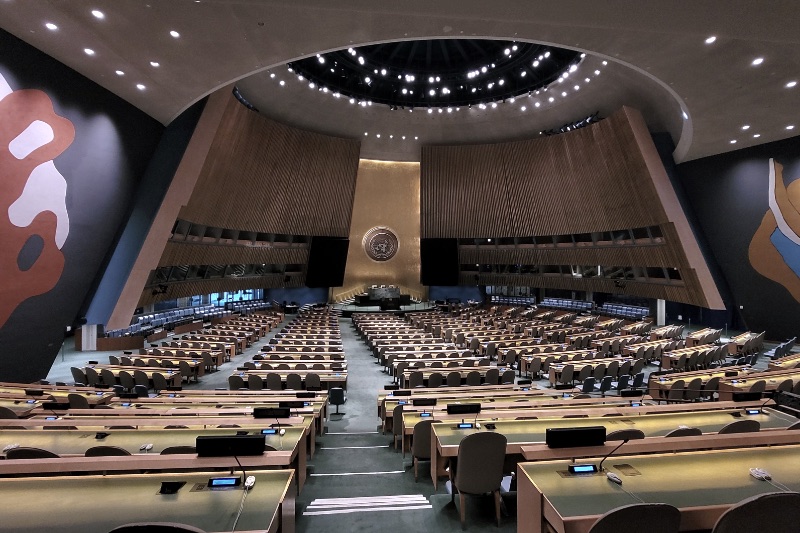
It fails on the evidence. How they vote in international bodies is the cheapest available test of whether states are coordinating, and these governments do not vote as a group on the questions where a bloc would show itself.
The treaty record points the same way. A coordinated set of states accumulates shared instruments over time, and there is no comparable accumulation here beyond the regional arrangements that predate any of these governments.
What they share is a situation rather than a project, and the situation is legible. Security forces committed against insurgencies with no achievable end state. Budgets that rise and fall with a single export. Civilian governments whose legitimacy was already contested before anyone moved.
Those conditions produce similar outcomes without any need for coordination, in the same way that similar weather produces similar crops in neighbouring fields.
The contagion element is real but narrower than it sounds. What travels is information about cost. An officer who watches a neighbouring seizure go unpunished updates a private estimate of what would happen to him, and that is the whole of the mechanism.
It is worth being precise about what unpunished means, because this is where outside policy actually operates. Suspension from regional bodies, aid conditionality and recognition decisions are the levers, and they are applied inconsistently.
Inconsistency is not hypocrisy in every case. The charter's terms on non-intervention and on the sovereign equality of states constrain what outside actors may do, and those constraints bind regardless of whether the government in question is one anybody likes.
But inconsistency is read, and it is read by exactly the audience whose cost estimate matters. A response that varies with the strategic value of the country teaches that strategic value is the variable.
The policy conclusion is genuinely uncomfortable, which is why it is unpopular. There is no centre to negotiate with, so there is no single settlement available, and each case has to be worked separately at a cost nobody has budgeted.
The alternative on offer is a regional framing that lets an outside government announce a strategy. It produces speeches and does not produce leverage, because the thing it describes does not exist.
That is the argument for the slower approach. Not that it is likely to work quickly, but that it is addressed to the situation as it is rather than to a bloc assembled for the convenience of the people describing it.
There is one respect in which the bloc framing does real damage rather than merely being inaccurate. It flattens the populations of these countries into an attribute of their governments, which is the same error the governments themselves make.
The people living under these administrations did not choose them and are not a party to whatever is imagined to unite them. A policy addressed to a bloc is a policy that has stopped distinguishing between a state and the people it governs.
Nadia Belkacem writes for The 13th Bell on world. This piece was edited and fact checked before publication.
Get The 13th Bell in your inbox