The Border That Exists Only on Paper
Several internationally recognized frontiers are not administered by the governments that claim them. Everyone involved prefers the ambiguity.

There is a category of territory where the map and the ground disagree, and the disagreement has lasted long enough to become an arrangement rather than a crisis.
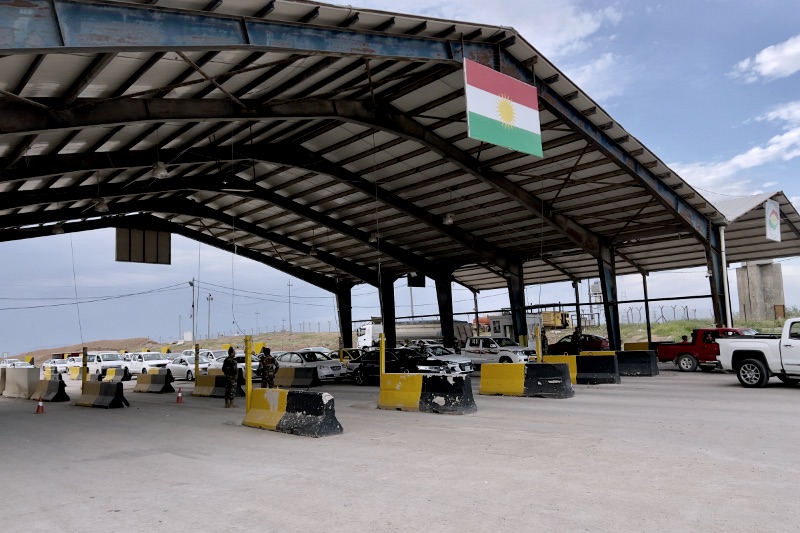
The pattern repeats across continents. A recognized government claims a region. A different authority collects the taxes, runs the schools, issues the documents, and polices the roads. Neighbors deal with whichever party can deliver what they need, quietly, without conceding anything on paper.
Frozen is not the right word
These situations are usually described as frozen conflicts, which suggests something waiting to thaw. Most are not waiting. They are functioning systems with tax bases, trade routes, and a class of people whose position depends on the arrangement continuing.
The residents adapt. Dual documentation, parallel currencies, and school curricula that hedge on which state's history is being taught are all standard. A generation grows up inside the ambiguity and has no memory of anything else.
An unresolved status that persists for thirty years is not a pause in a settlement. It is the settlement.
Why nobody resolves them
Resolution requires somebody to concede, and the domestic cost of conceding is usually higher than the cost of continuing. Claimant governments derive legitimacy from the claim. De facto authorities derive it from the resistance. Outside powers extract leverage from both.
International organizations respond by restating the recognized position annually, which changes nothing and is not meant to. The restatement is a way of preventing the arrangement from hardening into precedent, which is a real objective even when it produces no movement.
The cost is borne locally
The people who pay are the ones living there. Property titles are unenforceable, travel documents are not accepted, degrees are not recognized, and any legal dispute crossing the line has no forum.
Pragmatic fixes exist and are politically radioactive, because each involves treating the de facto authority as capable of doing something, which claimant governments read as recognition. So the technical arrangements happen informally, badly, and without any guarantee that they will survive the next escalation.
The legal position and the administrative position have come apart, and it is the administrative one that governs daily life. Somebody collects the tax, staffs the school and stamps the document, and it is not the recognised government.
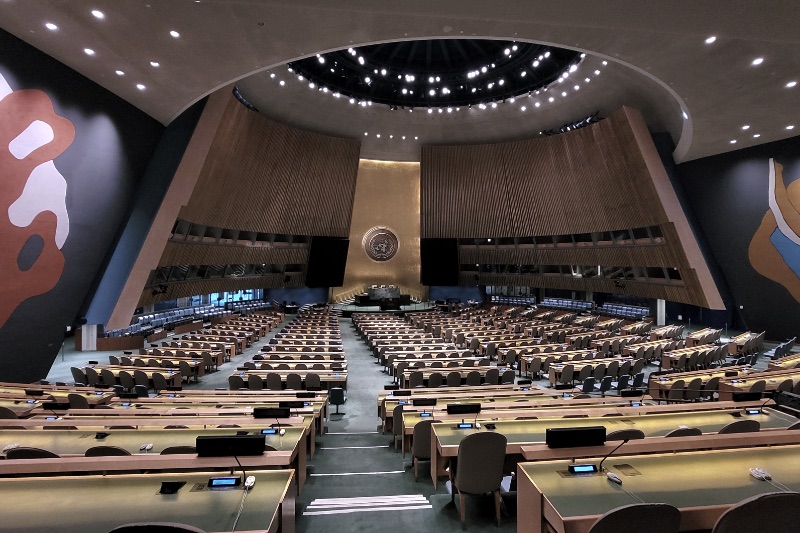
The charter supplies the framework that keeps the recognised position formally intact, resting on territorial integrity and on the sovereign equality of states, and neither principle has any mechanism for handling a thirty year divergence.
So the machinery does what machinery does when the situation is outside its design. The annual votes restate the recognised position, the restatement passes, and nothing on the ground moves.
That is not a failure of the institution and it is worth saying so. Restating a position is what preserves a claim, and a claim abandoned by inattention is very hard to recover.
The cost falls on the residents rather than on either government, which is why neither is under pressure to resolve it. A person living there holds documents that one authority issues and the other will not accept.
Document recognition is where that becomes concrete. A travel document issued by an unrecognised authority is not a travel document, which forecloses study, medical treatment and work outside the territory regardless of the holder's circumstances.
Property is the other trap. A title registered with the de facto authority is unenforceable in the recognised courts, and a title registered with the recognised state is unenforceable where the property actually is.
The depositary record shows how little formal accommodation has been made. The instruments that govern statehood and recognition were drafted for transitions, not for arrangements that outlast the people who created them.
The pragmatic proposals all share a shape and all carry the same political cost. Recognise documents for a limited purpose. Permit degrees to be validated. Allow a title to be registered somewhere that both sides will honour.
Each of those requires treating the de facto authority as capable of performing a function, which is exactly the concession the claimant government cannot make without conceding the larger point.
So the arrangement persists because it is stable for everyone with the power to change it, and unstable only for the people without any.
The honest description is not a frozen conflict, which implies something waiting. It is a settlement that nobody has signed, operating indefinitely, at the expense of the residents who never agreed to it.
Nadia Belkacem writes for The 13th Bell on world. This piece was edited and fact checked before publication.
Get The 13th Bell in your inbox