Set Aside as to Everyone
The Solicitor General has asked the Supreme Court to decide whether a court that finds a federal rule unlawful may set it aside for everyone, or only for the parties who sued. The vehicle is a surprise-billing case, and the argument is borrowed from last year’s ruling on universal injunctions.

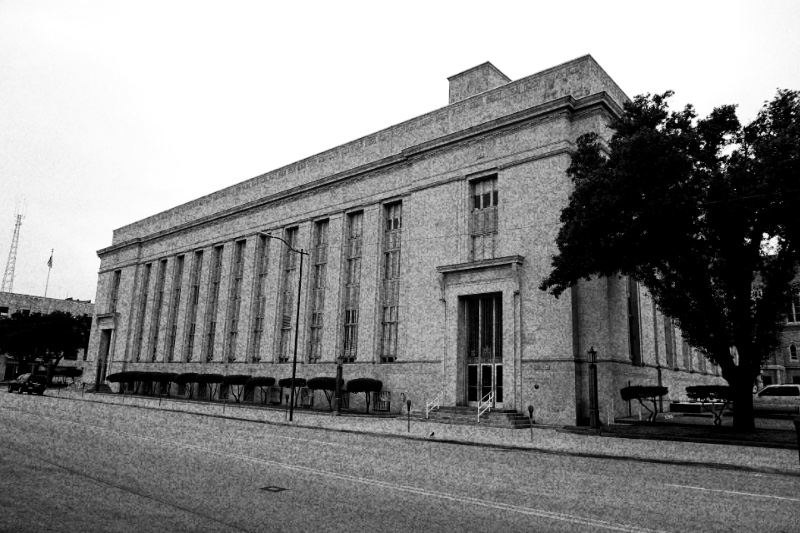
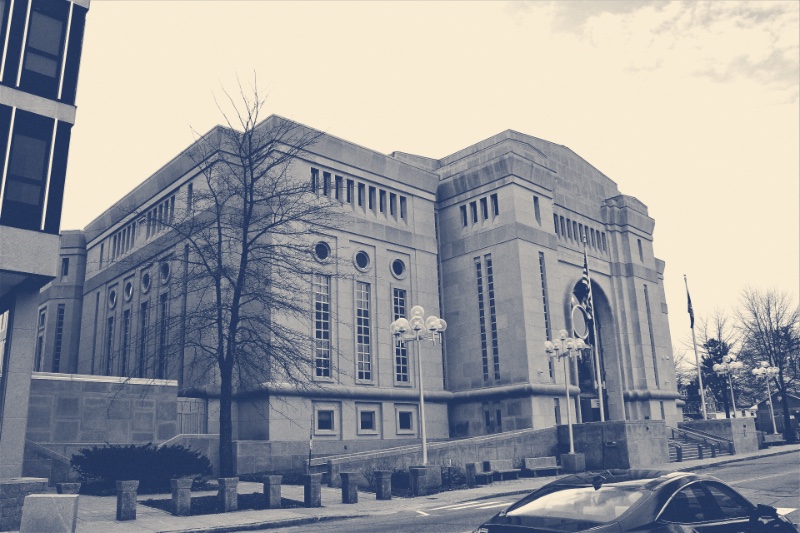
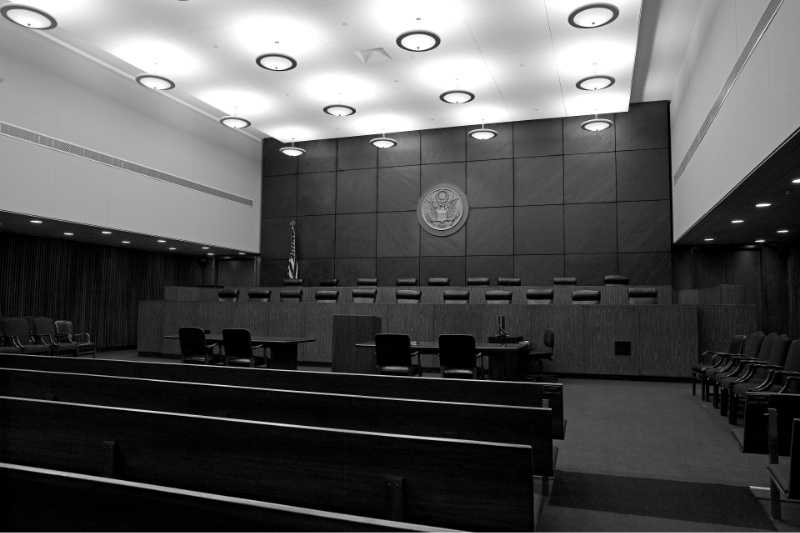
Carol M. Highsmith — Public domain, via Wikimedia Commons
The question presented is one sentence long. “Whether the Administrative Procedure Act, 5 U.S.C. 701 et seq., authorizes courts, in Section 706(2), to enter universal vacatur of agency rules that courts have held unlawful and, if so, in what circumstances.” It heads a petition for certiorari filed by the Solicitor General, D. John Sauer, and docketed on Wednesday 14 October as Department of Health and Human Services v. Texas Medical Association, No. 26-491.
The docket shows one entry so far: the petition, with a response due on 13 November. SCOTUSblog noted that the deadline may be extended. The case below concerned two rules on how insurers calculate a payment benchmark under the No Surprises Act. The petition does not ask the Court to revive them. It asks about the remedy that removed them.
Two words in Section 706
Section 706(2)(A) of the APA tells a reviewing court that it “shall” “hold unlawful and set aside agency action, findings, and conclusions” that are “arbitrary, capricious” or “otherwise not in accordance with law.” The Fifth Circuit reads “set aside” to mean vacate, and vacate to mean the rule is gone for everyone. The government reads it as a direction to disregard an unlawful rule in deciding the dispute in front of the court. On that reading the rule stays on the books, and only the parties who sued are protected from it.
The petition borrows its strongest language from Justice Gorsuch’s concurrence in United States v. Texas in 2023, which said lower courts had seized on “two words in isolation” to claim a “new and far-reaching remedial power.” Its main argument runs through Trump v. CASA, the 2025 decision ending universal injunctions. That ruling, in the petition’s summary, held that such injunctions offend the “equitable tradition,” under which courts grant “complete relief” to the parties but cannot, as a rule, reach beyond them. Universal vacatur, the petition says, is a “variation on th[at] theme.” It also concedes the limit of that argument: in CASA the Court “expressly reserved the question” of vacatur, in a footnote.
What the full Fifth Circuit decided
The opinion below, reprinted in the petition’s appendix, was issued on 11 August 2026 by all 17 active judges of the Fifth Circuit, sitting en banc. It is a per curiam opinion. Nine judges joined it in full: Chief Judge Elrod and Judges Jones, Smith, Richman, Willett, Ho, Duncan, Engelhardt and Wilson. Judge Southwick concurred in Parts I and III, Judge Oldham concurred in part, and Judge Haynes, joined by Judges Stewart, Graves, Higginson, Douglas and Ramirez, concurred in part and dissented in part. The judgment affirmed the district court in part and reversed it in part.
On the merits, the court held that two of the rules conflicted with the statute. The Texas Medical Association’s counsel, Sidley Austin, described the result as reinstating the district court’s vacatur of two regulations that included “ghost rates”, rates for services never provided, and left out certain bonus and incentive payments, which in the firm’s words deflated “the benchmark rates in favor of insurers.” That is a party’s account. The point it rests on is not one only the challengers make: the en banc opinion notes that Judge Haynes, who dissented on other issues, agreed that no provider ever agreed to provide a service for $0.
On the remedy, the court treated vacatur as settled circuit law. “Our court has interpreted this text to make vacatur the APA’s default remedy,” the opinion says, citing its 2023 en banc decision in Cargill v. Garland. The agencies and the insurers had argued that vacatur would “create a host of practical problems,” including the time insurers would need to recalculate and the risk that patients could lose protection from balance billing meanwhile. The court answered that the APA “does not embrace a too-big-to-vacate principle,” and that agencies could use enforcement discretion to let insurers keep existing figures until new ones were calculated, as they had been doing while the appeal was pending.
The concurrence the government quotes
The most useful document for the government came from a judge who voted against it. Judge James Ho joined the opinion in full and wrote separately to set out the case against universal vacatur, ending with Justice Gorsuch’s line about an “obscure way” to create a remedial power. He then concurred anyway: “That said, I recognize that our circuit precedent goes the other way, and that there is not presently interest to revisit that precedent.” The petition presents that as proof the question will not resolve itself below, and argues that it needs no “further percolation.”
The other side of the argument has its own Supreme Court authority. The petition acknowledges that other judges and scholars have answered the Gorsuch position, and cites Justice Kavanaugh’s concurrence in Corner Post (2024), which the Ho concurrence quotes directly: “[T]he APA authorizes vacatur of agency rules.” The government notes that the Court has so far at most “assumed” the point. The challengers have not yet filed; their brief is due on 13 November.
What a grant would decide
The government’s practical argument is the one it made in CASA. If a single district court can set a rule aside for everyone, the petition says, the government “must run the table in every court in which it is sued,” and a single loss forces emergency applications. The response is visible in the opinion below: a rule that a court has held contrary to the statute would, on the government’s view, go on binding every insurer and provider who did not sue. This publication has examined the same remedial question in a district court vacatur of an ICE policy and in a consent judgment that vacated an immigration-court rule.
A grant needs the votes of four justices, and none of the dates for that decision is on the docket yet. The rules that started the case are two methods of computing a median. The question on top of them is whether “set aside” describes what a court does to a rule, or only what it does for the people in the room.
Further reading
- Petition for a writ of certiorari, with the en banc opinions in the appendix (14 October 2026)Office of the Solicitor General
- Docket, Department of Health and Human Services v. Texas Medical Association, No. 26-491Supreme Court of the United States
- Trump administration asks justices to determine courts’ ability to vacate federal agency actionsSCOTUSblog
- For the Sixth Time, Sidley-Represented Physicians Prevail in No Surprises Act ChallengeSidley Austin (counsel to the Texas Medical Association)
Peter Osei-Bonsu writes for The 13th Bell on law. This piece was edited and fact checked before publication.
Get The 13th Bell in your inbox