A Judgment Nobody Opposed
Texas sued the Justice Department over an immigration-court rule, the department agreed, and a judge vacated the rule and barred a similar one, all on the same day. Three cities and a legal-aid group want the Supreme Court to pause it. A response is due on Thursday.

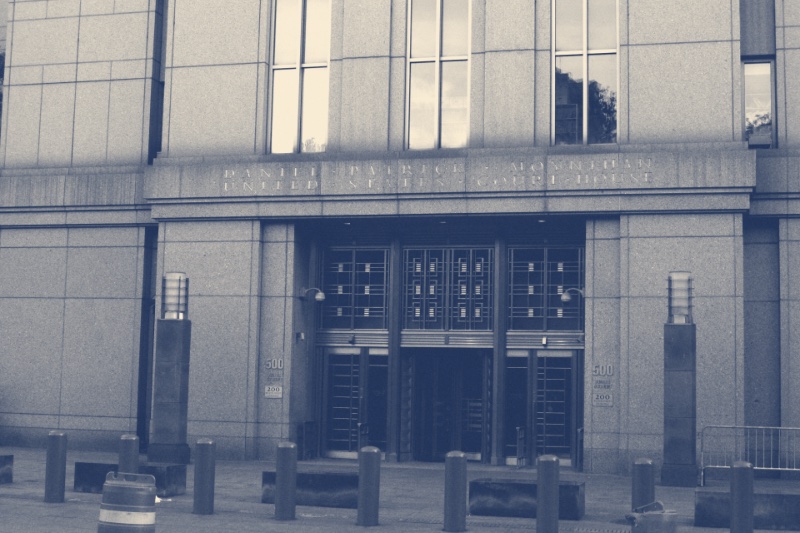
Michael Barera — CC BY-SA 4.0, via Wikimedia Commons
Justice Samuel Alito has called for a response by 4 p.m. on Thursday 22 October to an application that asks the Supreme Court to suspend a judgment entered on the same day the lawsuit behind it was filed. The application, City of Baltimore, Maryland v. Texas, No. 26A500, was filed on 9 October and submitted to Alito as the circuit justice for the Fifth Circuit, the Court’s docket shows. He requested the response on 15 October. The applicants are three cities, Baltimore, Columbus and New Haven, and Centro Legal de la Raza, an Oakland nonprofit that represents immigrants facing deportation.
The judgment they want paused ended a federal regulation. Nobody argued for the regulation in court before it went.
One day in Wichita Falls
On 22 June, Texas sued the Department of Justice in the Wichita Falls Division of the Northern District of Texas, State of Texas v. Department of Justice, No. 7:26-cv-00070. Its target was “Efficient Case and Docket Management in Immigration Proceedings,” 89 Fed. Reg. 46,742, a rule the Executive Office for Immigration Review issued on 29 May 2024 after notice and comment. Among other things it set out when immigration judges may administratively close a case, taking it off the active calendar, for example while a crime victim waits for a decision on a visa application from another agency. The case went to Chief Judge Reed O’Connor, the only judge in that division, SCOTUSblog’s Amy Howe reported.
Within hours, according to the application, and before any summons had issued, Texas and the department filed a joint motion for a consent judgment. O’Connor signed it the same day. The two-page order and final judgment, reproduced in the application’s appendix, does four things. It declares the rule “in excess of statutory authority and contrary to law,” and declares that no statute authorises immigration judges “to indefinitely administratively close or suspend adjudication of a case before them.” It vacates the rule. It permanently enjoins the department from enforcing it. And it permanently enjoins the department from issuing regulations that let immigration judges administratively close removal proceedings “without reaching the merits of a case absent an express statutory basis to do so.” The parties waived any right to appeal.
A footnote records that the department’s position is that the Administrative Procedure Act does not authorise a court to vacate a rule at all. It agreed “not to pursue this position in this case” and reserved the right to argue it in others.
A repeal without a rulemaking
An agency that wants to undo a rule made through notice and comment ordinarily has to go back through notice and comment: a proposal, public comments and a reasoned answer to them. The application says that never happened here. Earlier, the immigration review office’s acting director had issued a memorandum saying the office “could not—and will not—defend” the rule “in good faith against legal challenge.” No repeal was proposed. The lawsuit did the work instead, and its result was broader than a repeal would have been. The application says the judgment vacated the whole rule nationwide, including provisions on other subjects and despite a severability clause, when Texas had challenged only the administrative-closure parts. The injunction against a similar rule also binds future administrations, the feature that makes consent decrees outlast the officials who sign them. The application cites a 1986 memorandum from Attorney General Edwin Meese as evidence of the department’s own long-standing caution about such orders.
The applicants call this “egregious collusion” and the judgment “indefensible.” They lean on a 2022 concurrence by Chief Justice John Roberts, joined by Justices Clarence Thomas, Samuel Alito and Neil Gorsuch, in Arizona v. City and County of San Francisco, which warned of “rulemaking-by-collusive acquiescence.” That case had been taken to decide whether states could step in to defend a rule the federal government had stopped defending. It was dismissed without an answer. “There is a substantial continuing need,” the application says, for the Court to address whether litigation tactics can substitute for the rule that a regulation adopted through notice and comment may be rescinded only the same way.
Why the cities are the ones asking
With no defendant objecting, the only way to get an argument against the judgment in front of a court was for someone new to join the case. On 7 August, within the time to appeal, the cities and Centro Legal moved to intervene. The cities said that if, as Texas claimed, the judgment would lead to more deportations, some of those deported would be their taxpayers, and that it would weaken the visa certifications their police use to get immigrant crime victims to cooperate. Centro Legal said it represents 80 to 100 people whose cases are administratively closed.
O’Connor denied intervention on 21 August, finding that none of them had standing. In Howe’s account, he rejected the cities’ argument that the end of the rule would cost them money because their taxpayers would likely be deported. The application points out that this is the same chain of reasoning Texas used to establish its own standing. O’Connor refused to stay the judgment on 2 September. The Fifth Circuit refused a stay and summary reversal on 29 September, without a written opinion, in No. 26-10794.
The supporters of the judgment see an unlawful rule removed. America First Legal, which brought the suit with the Texas attorney general’s office, said on 23 June that administratively closed cases grew from about 278,000 to nearly 392,000 between January 2021 and January 2025. “The end of this Biden-era rule is a major win for common sense, safety, and national security,” said Gene Hamilton, its president. Those figures are the group’s own.
What a stay would and would not do
The application asks the Court to stay the judgment while the Fifth Circuit hears the appeal, and through any petition for review after that. A stay would, as Howe put it, temporarily restore the 2024 rule. It would not decide whether the cities belong in the case, which is the question the Fifth Circuit has, or whether the rule is lawful, which no court has decided after hearing both sides.
The respondents named on the docket are Texas and the department, now led by Todd Blanche as attorney general. Both asked for the judgment. Their response is due in five days.
Further reading
- Docket, City of Baltimore, Maryland v. Texas, No. 26A500Supreme Court of the United States
- Application to stay the judgment of the U.S. District Court for the Northern District of Texas, with appendix (9 October 2026)Democracy Forward Foundation
- Challengers ask court to pause agreement between Texas and the DOJ on deportation proceedingsSCOTUSblog
- Press release on the consent judgment (23 June 2026)America First Legal
Marguerite Devlin writes for The 13th Bell on the administrative state and the people inside it. This piece was edited and fact checked before publication.
Get The 13th Bell in your inbox