A Denial Is Not a Holding
The Supreme Court turned away Gwynne Wilcox’s challenge to her firing from the National Labor Relations Board without a word of explanation. Her case ends where the appeals court left it, and the question the Court reserved in June about boards that decide cases stays open.

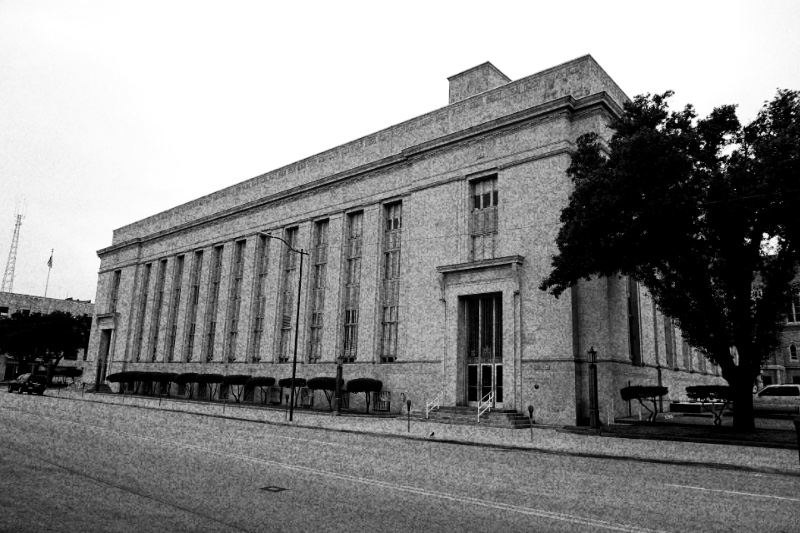
National Archives and Records Administration — Public domain, via Wikimedia Commons
The Supreme Court on Monday 19 October declined to hear Gwynne Wilcox’s challenge to her removal from the National Labor Relations Board, leaving in place an appeals court ruling that the law’s limits on removing Board members are unconstitutional. The Court gave no reason.
Wilcox v. Trump, No. 26-5, appears in the plain list of denied petitions in the Court’s order list for 19 October, with no noted dissent and no statement respecting the denial. The same list shows what the Court records when a justice wants something on the record: Justice Alito would have granted review in a Missouri case, and Justice Sotomayor, joined by Justice Gorsuch, wrote a statement on the denial in a challenge to Chicago’s vehicle forfeitures. For Ms Wilcox there is nothing beyond the case name. The docket records one line: “Petition DENIED.”
The NLRB is the federal agency that decides unfair labour practice cases brought by its General Counsel, and it may order back pay and reinstatement, as the government’s brief describes it. Ms Wilcox was a member until President Trump tried to fire her shortly after his second inauguration, SCOTUSblog reported. The statute allows removal for “neglect of duty or malfeasance in office,” and the same report says Mr Trump alleged neither.
What does a denial decide?
Nothing about the merits. The Court has said so repeatedly: in Teague v. Lane, 489 U.S. 288, 296 (1989), it wrote that “the denial of a writ of certiorari imports no expression of opinion upon the merits of the case,” quoting United States v. Carver (1923). The same passage relies on Justice Frankfurter’s opinion in Maryland v. Baltimore Radio Show, 338 U.S. 912 (1950), on the variety of reasons the Court turns petitions away, as grounds for giving a denial no precedential weight.
The practical effect is narrower and harder. The judgment below stands for these parties, so Ms Wilcox’s case is over. The D.C. Circuit entered that judgment on 5 December 2025 and denied rehearing en banc on 28 January 2026, according to the government’s brief. Judge Gregory Katsas wrote for the majority that Congress “cannot restrict the President’s ability to remove NLRB … members” because they “wield substantial executive power,” as SCOTUSblog quotes the opinion.
What did each side ask the Court to do?
The government asked for exactly what it got, or for something firmer. Its brief in opposition, filed on 14 September after the Court requested a response, argued that Trump v. Slaughter “makes clear that petitioner’s contentions are meritless,” and that the Court “should thus deny the petition for a writ of certiorari, or, in the alternative, grant the petition and summarily affirm.” A summary affirmance would have been a ruling on the merits. The Court did not give one.
Ms Wilcox’s side wanted an answer of some kind. The government’s brief quotes her petition as warning that leaving the NLRB’s “status under Slaughter unresolved” would deprive the agency and those who deal with it “of the certainty they urgently need,” and that “[o]nly this Court can provide” it. The brief also opposes the petition’s suggestion that the Court grant, vacate and remand the case for reconsideration in light of Slaughter. The order list does none of these things.
What did Slaughter leave open about boards like the NLRB?
Whether bodies that mainly decide cases are different. Trump v. Slaughter, decided 6 to 3 on 29 June 2026 in an opinion by Chief Justice Roberts, held that for-cause removal protections for Federal Trade Commission members violate the separation of powers and overruled Humphrey’s Executor. The government’s brief quotes its rule that “[s]ubordinates who exercise the President’s power are subject to removal by him” “at will.”
According to a 2 July analysis by the law firm Proskauer Rose, the Court “expressly reserved questions regarding ‘non-Article III courts’” and adjudicatory bodies, and left room for an exception for agencies following “the distinct historical tradition” of the First and Second Banks of the United States, which may matter for the Federal Reserve. The NLRB sits near that edge because it adjudicates. The government’s answer is that, like the FTC, the NLRB “enforces … statutes and rules through in-house adjudications,” so Slaughter controls. Proskauer’s view was that Slaughter’s reasoning “strongly suggests” the National Labor Relations Act’s parallel removal provision “will likewise be struck down.” That is a forecast, not a holding.
What changes at the Board?
For now, the D.C. Circuit’s rule governs, and this is the second time the Supreme Court has left it alone. The appeals court decided Ms Wilcox’s case together with Harris v. Bessent, about members of the Merit Systems Protection Board, and the Court denied review in Harris on 30 June, the day after Slaughter, according to the government’s brief. The brief says the petitioner there argued that the board was a “purely adjudicatory bod[y].” Proskauer expects that “the era of gradual, staggered transitions in Board composition may be over.”
For Ms Wilcox, the sequence is finished: an emergency-docket stay in May 2025 that let her removal take effect, a circuit loss in December 2025, a petition in June 2026 and a one-line denial on 19 October. The question of what Article II allows for a board that decides cases is still waiting for a case the Court is willing to take.
Further reading
- Order List, Monday, October 19, 2026Supreme Court of the United States
- Docket No. 26-5, Wilcox v. TrumpSupreme Court of the United States
- Brief for the Respondents in Opposition, Wilcox v. Trump, No. 26-5U.S. Department of Justice
- Supreme Court declines to take up cases on vehicle seizures in Chicago, 9/11 plea disputes, and the president’s removal of National Labor Relations Board membersSCOTUSblog
- Teague v. Lane, 489 U.S. 288 (1989)Legal Information Institute
- What the Supreme Court’s Slaughter decision means for the NLRBProskauer Rose LLP
Ruth Okonkwo writes for The 13th Bell on the courts and the litigation that shapes them. This piece was edited and fact checked before publication.
Get The 13th Bell in your inbox