The Ceiling Covers Both Columns
The Philippine Supreme Court has voided the 2024 and 2025 budget laws because Congress raised spending above the President’s proposal, counting standby funds against the ceiling. Completed programmes stand. Whether anyone answers for the additions is left to other tribunals.

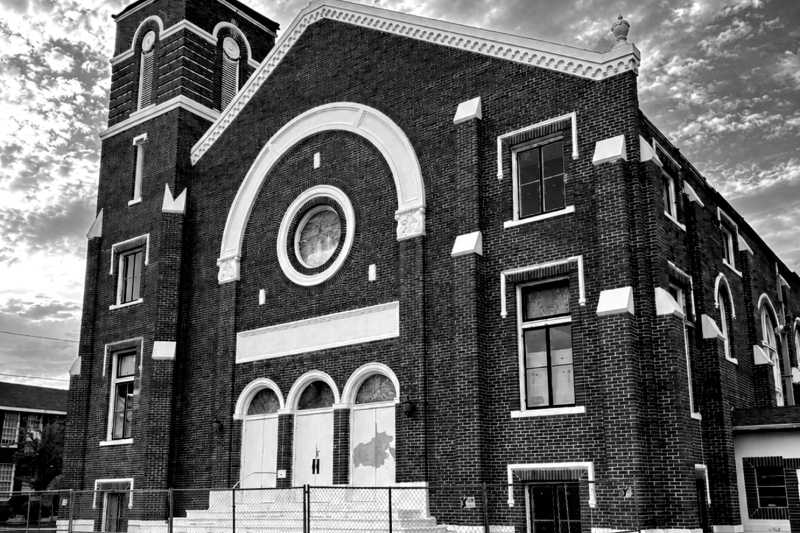
Patrickroque01 — CC BY-SA 4.0, via Wikimedia Commons
The Supreme Court of the Philippines has ruled that Congress may not raise the President’s total recommended budget, counting programmed and unprogrammed spending together, and has voided the 2024 and 2025 budget laws on that ground. The decision is dated 7 October and was made public on Tuesday 20 October.
The Court’s Office of the Spokesperson summarised it in a press release. Written by Senior Associate Justice Marvic M.V.F. Leonen, the decision declares the 2024 General Appropriations Act, Republic Act No. 11975, unconstitutional “because the total appropriations were effectively increased by PHP 449.5 billion.” It strikes down the 2025 Act, Republic Act 12116, over a P17.99 billion increase to the Department of Public Works and Highways (DPWH) Special Road Fund, and two special provisions of the 2026 Act that govern the release of standby funds.
It does not abolish those standby funds. “The SC ruled that Unprogrammed Appropriations are not unconstitutional per se,” the release says. Unprogrammed appropriations are spending authority that may be used only if revenue or financing conditions set in the budget are met. The Court held that they need “clear limits and safeguards”, and that Congress had used them in 2024 to move money around the ceiling.
What rule did Congress break?
The budget ceiling in Article VI, Section 25(1) of the Constitution, which bars Congress from increasing the appropriations the President recommends. The Court held that the ceiling “applies to the total of programmed and unprogrammed appropriations.” Two justices disagreed on exactly this point. Justices Rodil V. Zalameda and Jhosep Y. Lopez each wrote that the limit covers only programmed spending, not contingent or standby funds, according to the Court’s summary of the separate opinions.
The mechanism matters more than the total. According to the Court, the P449.5 billion increase in 2024 was made by the bicameral conference committee, the joint panel that reconciles the House and Senate versions of a bill, “through transfers of Programs, Activities, and Projects from programmed to unprogrammed” and large increases for two standby items. “Congress severely distorted the budget creating artificial fiscal space in the programmed appropriations,” the release says. That space paid for increases in DPWH basic infrastructure, the Department of Social Welfare and Development’s Ayuda sa Kapos ang Kita Program (AKAP) and the labour department’s TUPAD emergency employment scheme, among others.
The sizes are reported, not in the Court’s summary. BusinessMirror reported that unprogrammed appropriations rose from P282 billion in the President’s 2024 National Expenditure Program to P732 billion in the enacted law, and that the committee added 43 programmes, activities and projects worth P303.11 billion. The 43-item figure appears only in BusinessMirror’s report. Politiko gives the two totals as about P281.9 billion and P731.4 billion.
What did the Court strike, law by law?
A different defect in each of three budget laws, and a fourth finding under a statute rather than the Constitution.
| Budget law | What the Court found | Amount |
|---|---|---|
| 2024 (RA 11975) | Unprogrammed appropriations raised, lifting the President’s total; law declared unconstitutional | P449.5 billion |
| 2025 (RA 12116) | DPWH Special Road Fund raised, lifting the President’s total; law declared unconstitutional | P17.99 billion |
| Special Accounts in the General Fund | Increase beyond the President’s proposal, contrary to Book VI, Chapter 4, Section 25 of the Administrative Code | P12.75 billion |
| 2026 | Special Provisions 1(a) and (b), Chapter XLIII, on releasing unprogrammed funds, struck down | None stated |
Source: Supreme Court press release, 20 October 2026. The release places the Special Accounts finding directly after the 2025 ruling but does not name the year; BusinessMirror reported that the 2025 petition challenged amendments involving special accounts.
The 2026 provisions failed for a different reason. They allowed releases tied to “any new or excess revenue, without regard to whether the whole revenue target was exceeded,” which the Court said “departs from the unprogrammed appropriations’ original feature as a deficit neutral mechanism.” The Court permanently barred the Senate, the House, the Office of the Executive Secretary and the acting Budget Secretary from implementing them. It also set four conditions for future unprogrammed appropriations, the first of which is: “In no case shall there be lump sums in Unprogrammed Appropriations.”
Why was SAGIP treated separately?
Because the Court found it to be a prohibited lump sum. SAGIP, the Strengthening Assistance for Government Infrastructure and Social Programs item in the 2024 and 2025 unprogrammed appropriations, gave the Executive “post-enactment identification/allocative powers, which are constitutionally vested in Congress,” the release says. In practice, the Court said, it “became the covert repository of lump sum allocations for DPWH infrastructure like flood control projects.” The item was removed from the 2026 budget.
The Court also faulted the committee’s paper trail. It found “no records of the Committee’s discussions,” and that its report “did not explain the increases and decreases in budget items, in violation of the Rules of the House and the Senate.” The gap was visible at oral argument in June, when Justice Leonen told counsel for Congress, as the Daily Tribune reported: “If there are none, we need a certification that there are no supporting documents and an explanation as to how they arrived at the increases and decreases.”
What happens to money already spent?
Most of it stays spent. For the 2024 and 2025 laws the Court applied the doctrine of operative fact, which can preserve the effects of a law later declared unconstitutional. The release limits it to “irreversible programs whose beneficiaries acted in good faith,” and adds that it “does not shield authors, proponents, or implementors from criminal, civil, or administrative liability unless the proper tribunals explicitly find that they acted in good faith.”
That sentence moves the accountability question to other forums. None of the reports reviewed says any case has been filed over the voided increases. Justice Amy C. Lazaro-Javier would have deferred any ruling on operative fact until there is a complete accounting of the funds released and how they were used, the summary says.
How divided was the Court?
The release gives no vote count, but it summarises twelve separate opinions. Justices Ramon Paul L. Hernando and Antonio T. Kho, Jr. would have gone further and held unprogrammed appropriations unconstitutional; Justice Zalameda disagreed that the 2024 increase breached the ceiling, and Justice Lopez rejected the majority’s reading of it. Justice Samuel H. Gaerlan proposed public, recorded bicameral proceedings, describing the committee as “a bridge between two chambers,” not “an alternative legislative procedure.” The full decision and opinions, in G.R. Nos. 271059, 271347, E-02472 and E-04036, are cited in the release but were not available to this publication.
The rule the majority settled is short: the number the President sends is the number Congress may not exceed, however it is split between columns. Who answers for the 2024 and 2025 additions is a question the Court has sent elsewhere.
Further reading
- SC Holds Unprogrammed Appropriations Subject to Guidelines, Voids Congressional Increases in 2024 and 2025 BudgetsSupreme Court of the Philippines
- SC strikes down 2024, 2025 budgets, sets limits for unprogrammed appropriationsGMA News
- SC tags ’24, ’25 budgets as unconstitutionalBusinessMirror
- SC voids parts of 2024-2026 budget laws, sets limits to unprogrammed fundsBusinessWorld
- SC voids P449.5-B unprogrammed funds hikeDaily Tribune
- SC requests House, Senate to explain P500-B bicam budget changesDaily Tribune
Daniel Marchetti writes for The 13th Bell on public finance and appropriations law. This piece was edited and fact checked before publication.
Get The 13th Bell in your inbox