Where You Were Convicted
The Supreme Court will decide whether a prisoner may appeal on a question his own circuit has settled against him but another circuit has decided his way. For now, the answer depends on where he was convicted.

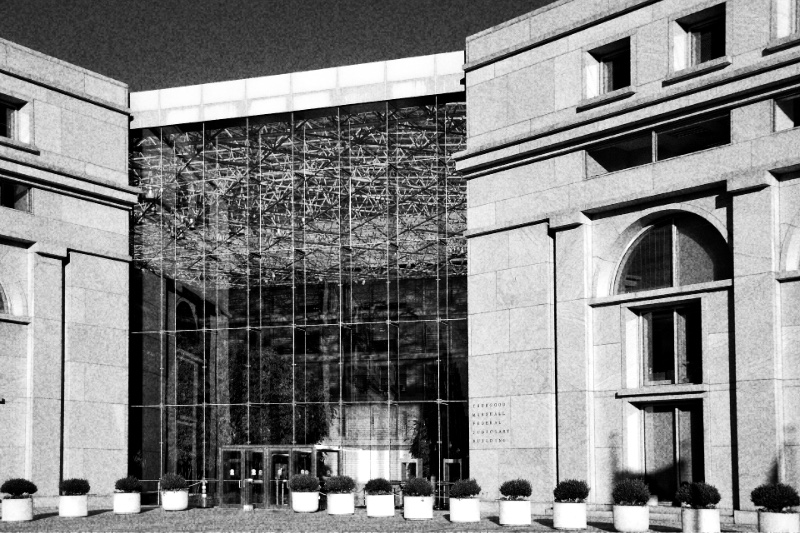
Warren LeMay — CC0, via Wikimedia Commons
The Supreme Court on Tuesday 13 October agreed to decide whether a federal prisoner may appeal the denial of his habeas motion when his own circuit’s precedent forecloses his argument but another circuit has accepted it. The case is Berry v. United States, No. 25-7026, and the docket shows the petition granted on 13 October, along with Corey Berry’s motion to proceed as a pauper. No argument date has been set.
The question is narrow and procedural. Its effect is not. Under the Antiterrorism and Effective Death Penalty Act of 1996, a prisoner whose habeas petition or federal motion to vacate is denied cannot appeal at all unless a judge issues a “certificate of appealability.” Whether he gets one can depend on which circuit he was convicted in.
The gate before the appeal
The statute, 28 U.S.C. 2253(c), allows a certificate only on “a substantial showing of the denial of a constitutional right.” The Supreme Court has read that to require a showing that “reasonable jurists could debate” whether the case should have come out differently, the question presented notes, citing Slack v. McDaniel (2000). The question the Court will now answer is whether a certificate “should be granted where the issue that the petitioner seeks to raise on appeal has been resolved against him by binding circuit precedent but has been resolved in his favor by another circuit.”
Berry’s argument is that judges in the other circuit are, by definition, reasonable jurists who debate the point. The Eleventh Circuit’s answer, in Hamilton v. Secretary, Florida Department of Corrections (2015), is that a certificate may not issue where a claim is foreclosed by binding circuit precedent, even if other circuits disagree. It applied that rule when it denied Berry a certificate on 18 February 2026.
The case underneath
Berry pleaded guilty in federal court in the Southern District of Florida to attempted and completed carjacking and to brandishing a firearm during a “crime of violence,” the attempted carjacking, under 18 U.S.C. 924(c). He was sentenced to 218 months, 84 of them a mandatory consecutive term for the firearm count, his petition says. After the Supreme Court struck down the residual clause of section 924(c) as unconstitutionally vague in United States v. Davis (2019), and held in United States v. Taylor (2022) that attempted Hobbs Act robbery is not a crime of violence under the remaining elements clause, the Eleventh Circuit let him file a second motion to vacate the firearm conviction.
The district court denied it on one ground: under Eleventh Circuit precedent, Beeman v. United States (2017) and Fernandez v. United States (2024), Berry had to prove that his conviction more likely than not rested on the invalid residual clause alone. The petition says the Third, Fourth and Ninth Circuits require only a showing that the court may have relied on it, and that Berry would have prevailed in one of those circuits. The district court declined to decide whether attempted carjacking still counts as a crime of violence after Taylor, noting that “even the government stop[ped] short” of making that argument.
How divided the circuits are
The petition counts the Fifth, Sixth and Eleventh Circuits on the side of denying a certificate when home-circuit precedent forecloses the claim, and the Ninth and Tenth on the other. Berry’s August supplemental brief puts the division at three to three. The government’s brief in opposition describes disagreement among three courts of appeals and argues that “any limited disagreement” about the role of binding precedent “does not appear to have any significant practical effect on the ultimate disposition of Section 2255 claims.”
The government also argued that this was a poor case for review, because in its view Berry procedurally defaulted his claim and it is time-barred under section 2255(f), and it noted that the Court has repeatedly declined to review the underlying burden-of-proof question. The Court granted review anyway. A second petition raising the same certificate question, Clark v. United States, No. 25-1199, had not been acted on as of 13 October, according to its docket.
What is at stake
Berry’s petition frames the issue as one of geography: whether a prisoner can appeal on the hardest questions in habeas law, those on which the circuits disagree, “currently depends entirely on the happenstance of geography.” It argues the stakes include prisoners under sentence of death. The government’s answer is that the procedural issue “will not materially affect the ultimate disposition of Section 2255 claims.”
The grant does not reach whether Berry’s firearm conviction is valid. It reaches only whether he may ask a court of appeals to say so. For prisoners in the Fifth, Sixth and Eleventh Circuits, the Court’s answer will decide whether a split among the circuits is a reason to hear an appeal or a reason, at home, to refuse one.
Further reading
- Docket No. 25-7026, Berry v. United StatesSupreme Court of the United States
- Question presented, No. 25-7026Supreme Court of the United States
- Petition for a writ of certiorariFederal Public Defender, Southern District of Florida
- Brief for the United States in oppositionSolicitor General
- Court grants cases on DOGE data dispute, prisoners’ rights, and what qualifies as “material support” for terrorismSCOTUSblog
Miriam Halloway writes for The 13th Bell on law. This piece was edited and fact checked before publication.
Get The 13th Bell in your inbox