The Private Suit Is the Enforcement
Most fraud against the government is pursued by private parties who keep a share of what they recover. It works, and nobody designed it as policy.

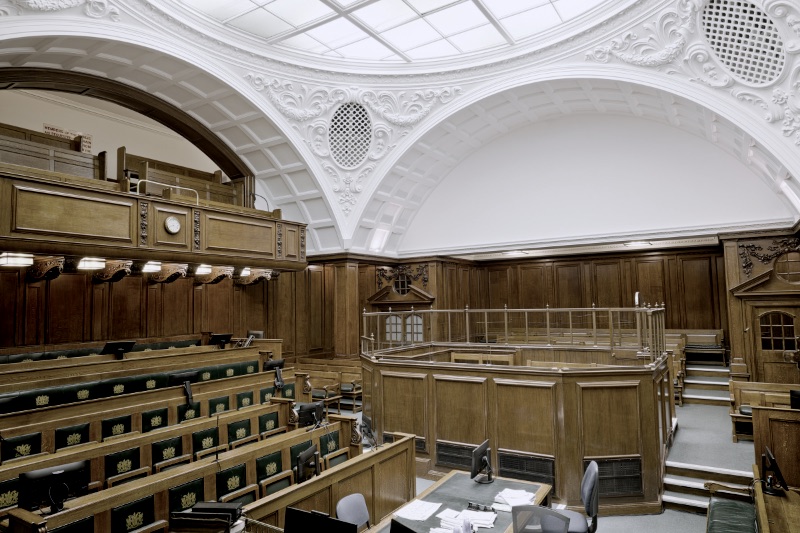
w_lemay — CC BY-SA 2.0, via Wikimedia Commons
A government that buys on a large scale will be defrauded on a large scale, and detecting it requires knowing what happened inside the contractor.
No inspectorate can be inside every firm, which is why the most effective instrument in this area is not an inspectorate at all.
The provision creating liability is unremarkable. What is unusual is the mechanism attached to it, which lets a private person sue on the government's behalf and keep a share.
The device is centuries old and was nearly abolished before being revived, and it now accounts for the majority of recoveries in this field.
The reason it works is informational. An employee who has seen the invoices knows something no auditor can reconstruct, and the share gives them a reason to accept the cost of saying so.
The first-to-file rule adds a race that has nothing to do with the merits.
That cost is substantial. Bringing such a case means ending a career in an industry, waiting years, and carrying the litigation while the government decides whether to join.
Only the first person to bring a given claim may pursue it, so an employee who waits to gather better evidence can be barred by someone with worse evidence who moved sooner.
The published decisions contain the doctrine that has grown around this, most of it concerned with who is entitled to bring a case rather than whether fraud occurred.
The rule prevents duplicative suits, which is a real purpose, and it rewards speed over quality in a field where quality is what makes a case worth bringing.
The public disclosure bar is the centre of it: a person cannot sue on information already public unless they are the original source of it.
It also means the strongest possible case may never be heard, because a weaker version of it was filed first and then lost.
The rule prevents opportunistic suits built from news reports, which is a real problem it solves, and it also disqualifies people who learned something and then saw it reported.
Deciding which of the two a claimant is takes years of litigation before anyone examines the alleged fraud, which is the same pattern as certification and standing.
The caseload figures show these cases as a small share of filings carrying a disproportionate share of the money, which is what you would expect from a leveraged instrument.
The government's election to intervene is the decision that determines almost everything about the outcome.
A case the government joins is resourced and usually settles. A case it declines is left to a private firm funding it against a defendant with far deeper reserves.
That election is made on limited information, early, by an office with more cases than capacity, and there is no published account of how the choice is made.
The financial regulations govern the recoveries once they arrive, and the money returns to the treasury rather than to the defrauded programme.
Which means the agency that was cheated has no financial interest in the outcome, and the incentive to pursue sits entirely with the private party and the litigating department.
The criticism most often made is that the share paid to claimants is too generous for the work involved.
That criticism ignores the counterfactual. The alternative to a generous share is not a cheaper recovery; it is no recovery, because nobody would take the risk.
The stronger objection is about what the mechanism selects for. It rewards provable overbilling and does almost nothing about waste, which is larger and entirely lawful.
A contractor that delivers something useless at an honest price is untouched, and a contractor that delivers something useful and bills for an extra hour is exposed.
That is the shape of the instrument rather than a flaw in it. It is worth being clear that a country relying on private suits to police its procurement has chosen enforcement of honesty over enforcement of value.
Further reading
- False claims, 31 U.S.C. § 3729Office of the Law Revision Counsel, U.S. House
- Caseload statisticsAdministrative Office of the U.S. Courts
- United States Courts OpinionsU.S. Government Publishing Office
Ruth Okonkwo writes for The 13th Bell on law. This piece was edited and fact checked before publication.
Get The 13th Bell in your inbox