Two Hundred Eighty Votes on Loan
Romania’s parliament confirmed Luca Niculescu’s government on 20 October by 280 votes to 58, well over the 233 it needed. Much of the majority came from parties that say they are going into opposition, on agreements that run out within months.

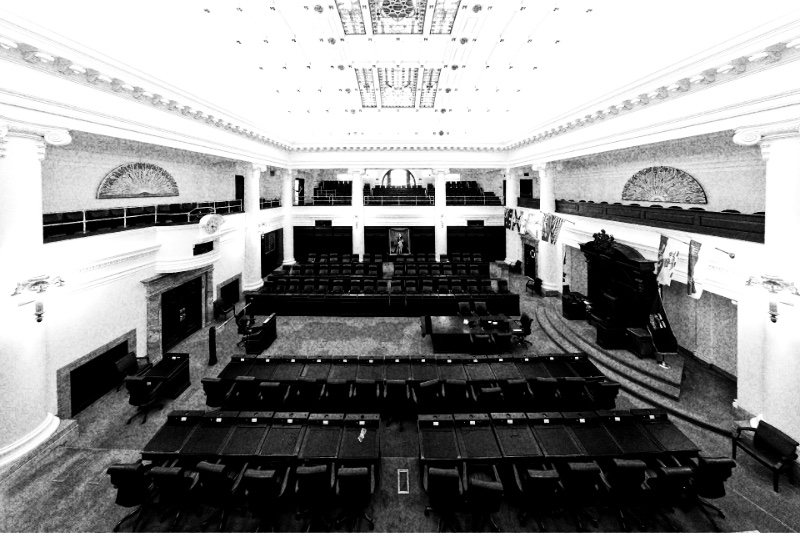
Diego Delso — CC BY-SA 4.0, via Wikimedia Commons
Romania’s parliament confirmed Luca Niculescu’s government on Tuesday 20 October by 280 votes to 58, clearing the 233 it needed. Much of that majority came from parties that say they will not govern with him.
The figures read out in the joint sitting were 338 valid votes, none void: 280 for granting confidence and 58 against, with 355 of the 464 deputies and senators present, Radio România Actualități reported. Euronews Romania gives the same count. Balkan Insight reported 55 against; this piece uses the 58 given by the two Romanian outlets, which also adds up to their stated total. The vote ended a crisis that began when Ilie Bolojan’s government lost a no-confidence vote on 5 May.
The process moved quickly once the vote was counted. President Nicușor Dan signed Decree 818/2026 appointing the government the same day, and it was published in the Official Gazette, Part I, No. 877 of 20 October, Juridice.ro reported; the oath at the Cotroceni Palace was set for 19:00.
What did parliament actually vote for?
A government with the legal right to take office, and nothing more. Under Article 103 of the Constitution, the two chambers debate the programme and the list of ministers in joint sitting, and “Parliament grants confidence to the government by the vote of the majority of the deputies and senators,” in the Constitute Project’s translation. That is a majority of all members, not of those present. With 464 seats, it is 233, the number this publication set out on 10 October when Niculescu was still prime minister-designate. He is the president’s fourth nominee since May, after Eugen Tomac withdrew, Adrian Vestea’s cabinet was rejected and Siegfried Mureșan failed to win enough support, according to Balkan Insight.
The decree lists the prime minister and 18 ministers, two of them delegated ministers. Accounts of their party make-up differ. Radio România Actualități describes the cabinet as PSD ministers and technocrats; Balkan Insight counts 11 ministers from the Social Democratic Party (PSD) and seven independents, and describes Niculescu, a former journalist and diplomat, as politically independent. This publication has not matched each minister to a party.
Who supplied the 280, and on what terms?
The ballot was secret, so the 280 cannot be matched to names. What is on record is what party leaders announced. The PSD, led by Sorin Grindeanu, supported the government. Bolojan, the interim prime minister and leader of the National Liberal Party (PNL), said on Tuesday that “PNL va da astăzi un vot de necesitate, un vot pentru încheierea acestei crize” (the PNL will today give a vote of necessity, a vote to end this crisis) and that “PNL va intra în Opoziție,” the party will go into opposition, Euronews Romania reported.
The same report says the PNL signed an agreement with Niculescu setting conditions for the next two to three months, until the 2027 budget is adopted, and that Bolojan said the party could table a no-confidence motion if it is not respected. The ethnic-Hungarian UDMR signed a six-month support agreement; its leader, Kelemen Hunor, said the government would be single-party and without a stable majority. George Simion of the nationalist AUR said his party would give it “Zero” votes.
Those terms are the substance of the result. The agreements are not statutes and have not been published, and they bind no individual deputy or senator. One runs to the budget, the other to six months. Each is a date on which the arithmetic opens again.
How could the government be removed?
By a censure motion under Article 113. In the text published by the Constitute Project, a motion must be initiated by at least a quarter of all deputies and senators, is debated in joint sitting three days after it is tabled, and passes by a majority of all deputies and senators, 233 again. If it fails, its signatories may not table another in the same session unless the government stakes its responsibility on a programme or bill under Article 114.
The two thresholds are the same number, and that is the point of the figure. On Tuesday 58 members voted against. Removing Niculescu would take 175 more, and those votes would have to come from parties now counted among the 280, the PNL first among them.
The constitution also limits how the crisis could have ended otherwise. Article 89 lets the president dissolve parliament, after consultations, only if no vote of confidence has been obtained within 60 days of the first request and after at least two requests have been rejected, and only once a year. No source reviewed for this piece says whether that provision shaped Tuesday’s vote.
What does the government face first?
A budget. Niculescu’s stated priorities, according to Balkan Insight, are budget revisions, energy security and cutting waste in the public sector, and he said Romania “has no more time to lose.” After the vote he said, in Romanian, “Primesc cu emoție și responsabilitate acest vot” (I receive this vote with emotion and responsibility), and “România nu mai poate aștepta. Ne punem imediat pe treabă” (Romania cannot wait any longer. We are getting to work immediately), Euronews Romania reported.
A government confirmed by 280 votes has the same legal standing as one confirmed by 233. The difference is how many of the 280 would turn up a second time.
Further reading
- Guvernul Luca Niculescu a trecut de votul Parlamentului cu 280 de voturi pentruRadio România Actualități
- Guvernul Luca Niculescu a primit votul de încredere al ParlamentuluiEuronews Romania
- Romanian Parliament Backs New Government After Months of CrisisBalkan Insight
- Guvernul Niculescu a primit votul de încredere al ParlamentuluiJuridice.ro
- Romania’s Constitution of 1991 with Amendments through 2003Constitute Project
Claire Vantassel writes for The 13th Bell on constitutional procedure. This piece was edited and fact checked before publication.
Get The 13th Bell in your inbox