Two Dissents, No Reasons
The Supreme Court on 21 October refused to let the Bureau of Prisons enforce its 2026 policy on care for transgender inmates while the appeal runs. The order is two sentences long, and it decides who waits, not who is right.

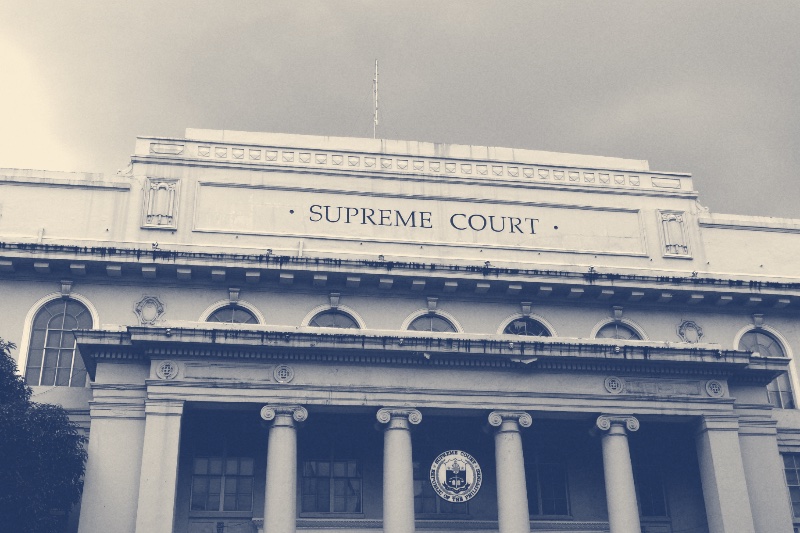
AgnosticPreachersKid — CC BY-SA 4.0, via Wikimedia Commons
The Supreme Court on Wednesday 21 October refused to let the federal Bureau of Prisons enforce its 2026 policy ending hormone therapy and “social accommodations” for transgender inmates, leaving a district court’s class-wide order in force while the government appeals.
The order in Trump v. Kingdom, No. 26A416, reads in full: “The application for stay presented to The Chief Justice and by him referred to the Court is denied. Justice Thomas and Justice Alito would grant the application for stay.” Neither justice wrote. The Court gave no reasons, and, as SCOTUSblog noted, did not explain why it acted 12 days after the government’s reply. This publication reported on 12 October that the application was fully briefed.
What does the policy do?
It withdraws treatments the bureau previously provided. The bureau issued the program statement on 19 February 2026, concluding, in the government’s description, that surgery, “hormone interventions in general” and social accommodations could no longer be justified as treatment for gender dysphoria. The government’s application lists social accommodations as including “buttock padding,” “breast padding,” chest “binders,” “makeup” and “wigs.”
The bureau said it was adopting the policy “independently of” Executive Order 14168, which President Trump signed on 20 January 2025, and attributed the change to “the latest scientific information.” It said the standards of the World Professional Association for Transgender Health, on which its earlier policies relied, had come to be seen as “unreliable” and “unpersuasive.”
Who blocked it, and on what grounds?
Senior U.S. District Judge Royce Lamberth of the District of Columbia. Three inmates sued in March 2025 over the bureau’s first memoranda implementing the executive order, and on 3 June 2025 he certified a nationwide class of everyone in bureau custody “with a current medical diagnosis of gender dysphoria or who receive such a diagnosis in the future.” His order of 26 August 2026 blocks the 2026 policy. On 18 September a divided panel of the D.C. Circuit refused to stay it, over a dissent by Judge Justin Walker.
The government’s application, filed on 28 September by Solicitor General D. John Sauer, says the district court contravened the basic principles of review under the Administrative Procedure Act by “substituting its own policy judgment for that of the agency, relying on evidence outside the administrative record, and faulting the agency for following presidential directions.” Each of those is a complaint about how a court reviews an agency, not a claim about what the Constitution requires of prison medicine.
The inmates, represented by the American Civil Liberties Union, opened their opposition with one sentence: “The government asks this Court to overturn a three decades-long status quo.” The bureau has treated gender dysphoria with hormone therapy since at least 1992, they wrote, and dropping that practice without weighing its own experience was the opposite of the “reasoned explanation” the law requires. Withdrawing care, they said, would put them “at serious risk of worsening gender dysphoria as well as other mental health symptoms including depression, anxiety, self-harm, and suicidality.”
How did the application move?
In four steps, all recorded on the Court’s docket. Both amicus briefs supported the government, according to their covers.
| Date | Filing or action |
|---|---|
| 28 September | Application filed with the Chief Justice; response requested by 8 October |
| 8 October | Inmates’ opposition; amicus briefs from America’s Future and from Indiana, Idaho, 22 other states and the Arizona Legislature |
| 9 October | Government’s reply |
| 21 October | Referred to the full Court and denied; Justices Thomas and Alito would grant |
What does a denied stay decide?
Who carries the cost of waiting, and nothing more. The order leaves Judge Lamberth’s injunction in force. It does not say the policy is unlawful, that the district court was right to look outside the administrative record, or that the bureau’s reliance on a presidential direction is beside the point. A stay applicant must show, among other things, that it is likely to win; the Court did not say which part of that showing the government failed to make, and lower courts cannot tell. Which justices other than Thomas and Alito voted to deny is not recorded.
The order also does not settle how long the injunction lasts. Under the Prison Litigation Reform Act, preliminary relief in a prison case expires after 90 days unless the court renews it with fresh findings, and Judge Lamberth has renewed his orders repeatedly; the inmates’ opposition lists renewals on 20 August 2025, 17 November 2025, 12 February 2026 and 26 May 2026. The application says the 26 August order was to take effect when its predecessor expired on 15 September, which on the Act’s 90-day clock would carry it to 14 December, by this publication’s arithmetic. Judge Walker’s dissent concluded that the district court “lack[ed] the authority to reissue the 90-day preliminary injunction.” The government’s appeals, Nos. 26-5236 and 26-5310, remain before the D.C. Circuit.
For the bureau, Wednesday’s order is a loss that carries no holding. For the inmates, it is a win that carries no precedent. The next date that matters is the one on which the injunction lapses unless it is renewed, and the order does not mention it.
Further reading
- Order in Pending Case, 26A416, Trump v. Kingdom (21 October 2026)Supreme Court of the United States
- Docket No. 26A416Supreme Court of the United States
- Application for a Stay, Trump v. KingdomOffice of the Solicitor General
- Respondents’ Opposition to Stay ApplicationAmerican Civil Liberties Union
- Justices leave lower court order in place preventing Trump administration from implementing transgender inmate policySCOTUSblog
Ruth Okonkwo writes for The 13th Bell on the courts and the litigation that shapes them. This piece was edited and fact checked before publication.
Get The 13th Bell in your inbox