The Guideline Is Advisory Until It Isn't
A sentencing range a judge is free to depart from is departed from rarely, and the freedom is what makes the range so hard to argue with.

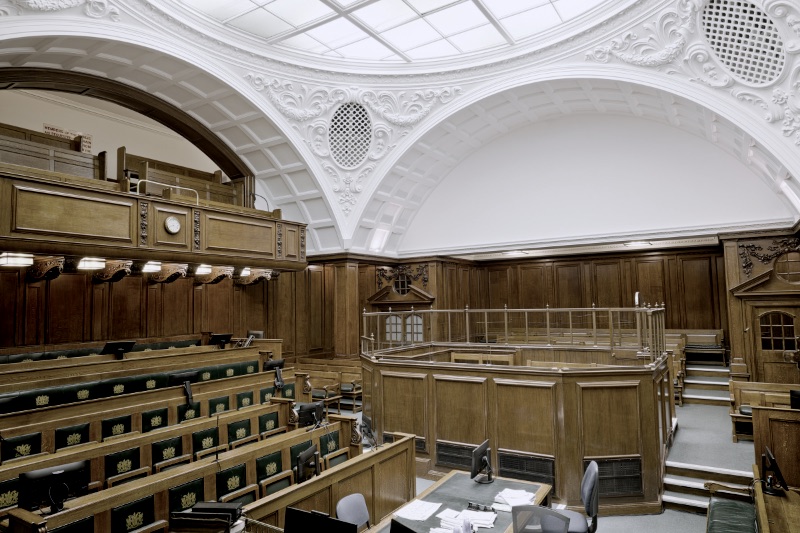
w_lemay — CC BY-SA 2.0, via Wikimedia Commons
A sentence looks like the most individual decision a legal system makes. A judge who has heard the case decides what the person in front of them should receive.
The provision establishing the guidelines created a body to reduce the variation in that decision, on the reasonable ground that identical conduct was drawing very different outcomes.
The instrument it produced is a table. Offence characteristics and criminal history intersect at a cell, and the cell contains a range.
The guidelines themselves run to hundreds of pages of adjustments, and the adjustments are where the sentence is actually determined.
The plea process is where this becomes decisive, because the overwhelming majority of cases never reach a sentencing hearing at all.
A judge is not bound by the result. The range is advisory, departures are permitted, and the sentence is the judge's to impose.
A defendant deciding whether to plead is comparing an offered outcome against an expected one, and the expected one is generated by the same table.
In practice the range is where most sentences land, and the gap between formal freedom and actual practice is the thing worth examining.
So the guideline shapes not only the sentences imposed after trial but the far larger number agreed without one, and there it operates with no judicial involvement whatsoever.
Part of the explanation is procedural. A sentence within the range is presumptively reasonable on appeal; one outside it must be explained and can be reversed.
That is the strongest argument that the instrument is not advisory in any practical sense. Its principal effect occurs at a stage where nobody has the discretion to depart from it.
So departing costs a judge time, writing and appellate risk, while following the table costs nothing, and that asymmetry does not need to be large to be decisive.
The commission that writes it has no direct democratic mandate, which was deliberate and was intended to insulate the work from the punitive cycles of electoral politics.
The deeper part is that the table absorbs the argument before the hearing. By the time a judge sees the calculation, the contested work has been done by others.
Insulation cuts both ways, and a body designed to be hard to pressure is also a body that is hard to correct.
Each adjustment was argued between counsel, and the resulting number arrives looking like arithmetic rather than like the series of judgements it actually is.
That is the mechanism this publication keeps encountering: a discretionary decision converted into a computation, after which disagreeing with it feels like disagreeing with mathematics.
The published opinions contain the appellate reasoning, and what they mostly review is whether the calculation was performed correctly rather than whether the result was just.
Reviewing the calculation is a tractable question. Reviewing the result is not, so the appellate function concentrates where it can operate, which is the arithmetic.
The original problem was real and the instrument did address it. Variation between judges for comparable conduct fell substantially, which was the stated purpose.
What the instrument could not do is distinguish between variation that reflected bias and variation that reflected genuinely different circumstances, because both look identical in the data.
Compressing both at once means some of what was eliminated was the individualised judgement the system says it wants, and there is no way to recover only the good part.
The caseload figures show the volume that makes a standardised instrument necessary in the first place. A system at this scale cannot deliberate case by case from first principles.
So the table is not a mistake. It is the predictable response to a volume problem, and the cost is a sentencing process that runs mostly on inputs settled before the hearing.
The reform most often proposed is loosening the appellate presumption, which addresses the procedural asymmetry and leaves the deeper mechanism untouched.
What would matter more is requiring that the adjustments be argued on the record in open court rather than resolved in a report, so the judgements inside the number stay visible as judgements.
Further reading
- Duties of the Commission, 28 U.S.C. § 994Office of the Law Revision Counsel, U.S. House
- Federal Sentencing GuidelinesUnited States Sentencing Commission
- United States Courts OpinionsU.S. Government Publishing Office
Ruth Okonkwo writes for The 13th Bell on law. This piece was edited and fact checked before publication.
Get The 13th Bell in your inbox