The Question Is Not Whether, but How Many
The Cook Political Report now sees a Democratic Senate majority in reach. In Kansas, a state that has not elected a Democratic senator since 1932, the race is a toss-up.

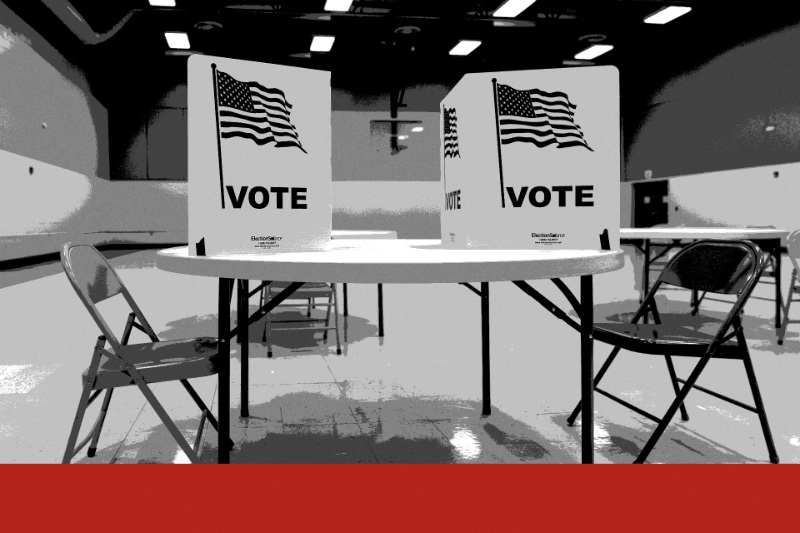
w_lemay — CC BY-SA 2.0, via Wikimedia Commons
The forecasters have stopped hedging. On Tuesday 6 October, four weeks before the midterm elections, the Cook Political Report moved three Senate races toward the Democrats under a blunt headline: a Senate majority, it said, is “squarely in Democrats’ sights.” Cook now estimates the party will gain between two and six seats. It needs a net gain of four for a majority. “At this point, the question isn’t whether Democrats will gain seats, but how many,” wrote Jessica Taylor, who rates Senate races for Cook, the Washington Examiner reported.
The most startling revision is in Kansas. Cook moved the state’s Senate race from “Lean Republican” to “Toss Up,” the last step in a slide that began in July, when it rated the seat “Solid Republican.” No Democrat has won a Senate race in Kansas since 1932, the year Franklin Roosevelt carried the state. Donald Trump carried it by more than 16 points in 2024. Yet Senator Roger Marshall has trailed or tied his Democratic challenger, Adam Hamilton, in the latest polls, according to the Examiner, while a new YouGov survey cited by USA Today had Marshall just three points ahead. Hamilton is not a conventional candidate. He is the founder and senior pastor of the Church of the Resurrection, in the Kansas City suburbs, which USA Today describes as the state’s largest church.
Cook moved two other races the same day. North Carolina shifted from “Lean Democrat” to “Likely Democrat”; there the former governor Roy Cooper leads the former Republican National Committee chairman Michael Whatley by five to 15 points in polls released over the past month. New Hampshire moved from “Toss Up” to “Lean Democrat,” with Representative Chris Pappas leading the former senator John Sununu by five to eight points in some of the most recent surveys, though two polls published last month showed the race statistically tied.
What is moving the map
What is driving these revisions is not ideology. It is the price of fuel and groceries. Cook’s analysis is blunt about the mechanism. “While Republicans continue to have a financial edge in almost every competitive state, President Donald Trump is a drag across the board even in deep red states due to rising fuel prices and the persistent high cost of living,” Taylor wrote. The polling from the voter’s side tells the same story. A Reuters/Ipsos poll completed on Monday 5 October put the president’s approval at 32 percent, unchanged from September’s record low. Registered voters preferred Democrats to Republicans by 44 percent to 37 percent, and the cost of living was the top issue on Americans’ minds as they decide how to vote, after a surge in fuel prices that Reuters ties to the war with Iran.
The Kansas race has become an emblem of the cycle because it concentrates the whole dynamic into a single contest. At the candidates’ first debate, at the Kansas State Fair in September, Marshall attacked Hamilton as “too woke and too weak” for the Sunflower State, then drew jeers and boos from the crowd in the bleachers when he defended his loyalty to the president. “Look, these tariffs are working,” he insisted. Hamilton’s reply was spare: “The current administration that Marshall supports is not normal.” The exchange was recounted by Susan Page in USA Today’s survey of the races that will shape the midterms.
Money still matters, and it is on the Republican side. Taylor concedes the party’s financial edge in almost every competitive state, and USA Today counts $1.3 billion raised by the Republican Party’s official campaign committees against $613 million for the Democratic ones. That edge matters most in the final four weeks, when advertising saturates the airwaves. Money can still buy a different ending. But money cannot change what the election is about, and this election is about what things cost.
The limits of the wave
There are reasons for caution. Polls are not votes, and midterm turnout with an unpopular president can surprise in either direction. The Senate is also the harder prize. Many analysts expect Democrats to win the House, Reuters noted, with the Senate “increasingly seen as up for grabs.” In USA Today’s formulation, a wave returns the House to Democrats; it takes a tsunami to deliver the Senate as well.
There is also the matter of what a Democratic Senate would actually do. A majority of 51 or 52 seats, assuming it materializes, is not a governing majority in any meaningful sense. It is a check on the president’s nominees and a platform for investigations. The filibuster would still stand. A gain of three seats rather than four would leave a 50-50 chamber in which Vice President JD Vance breaks ties for the Republicans. The likeliest result of any Democratic majority is two years of trench warfare rather than legislation, which is perhaps what the voters ordering it intend.
What Kansas means
The deeper story is about what moves voters when the familiar scripts fail. Kansas has not voted for a Democrat for president since Lyndon Johnson in 1964. Its last Democratic senator, George McGill, left office in 1939. If the state is genuinely competitive, it is not because Kansas has changed its mind about the parties in any philosophical sense. It is because the parties have changed what they are asking voters to defend.
A 16-point Trump state does not become a toss-up over the standard culture-war menu. It becomes one when the incumbent’s argument is that the tariffs are working and the crowd at the state fair boos. It becomes one when the challenger is a pastor who says the administration is not normal and the incumbent talks about loyalty. The election is becoming a referendum on whether the current economic order is normal, and referendums on normality are decided by people who buy groceries and fill their tanks, not by people who write platforms.
Elections are not referendums until they are. Then they are only that. Four weeks out, the forecasters have done the math, and the math says the Senate is in play. The rest is turnout, money and the price of fuel.
Sources
Cook’s rating changes of Tuesday 6 October, its seat estimate, the polling ranges in North Carolina and New Hampshire, the Kansas polling description and both quotations from Jessica Taylor are as the Washington Examiner reported them; the headline of Cook’s analysis was seen in a news listing, but the analysis itself, which is behind a subscription, was not read directly. The debate exchange and the quotations from Roger Marshall and Adam Hamilton, the YouGov poll, Cook’s earlier Kansas ratings, the description of Hamilton’s church and the party fundraising totals are from Susan Page’s report in USA Today of 8 October; the debate itself was not watched. The approval figure, the generic-ballot result, the top issue and the remark on the House are from Reuters’ report on its poll with Ipsos. Kansas’s presidential and Senate history and the 2024 margin were checked against Wikipedia’s entries on the 1964 and 2024 presidential elections in Kansas and on George McGill.
Further reading
- Three Senate races shift blue as Democrats eye upper-chamber majorityWashington Examiner
- From El-Sayed to Talarico, 5 races and 5 keys to the midtermsUSA Today
- Trump approval at record low; Hispanic voters sour on Republicans, Reuters/Ipsos poll findsReuters
- George McGill (Kansas politician)Wikipedia
- 1964 United States presidential election in KansasWikipedia
This piece was edited and fact checked before publication. Corrections are made under our editorial standards.
Get The 13th Bell in your inbox