The Order to Decide
The Fourth Circuit has ordered the FCC to rule by noon on Friday on whether party committees may buy airtime at the rate the law sets for candidates. The Supreme Court said last month the agency had to decide first. The administration has asked it to step in again.

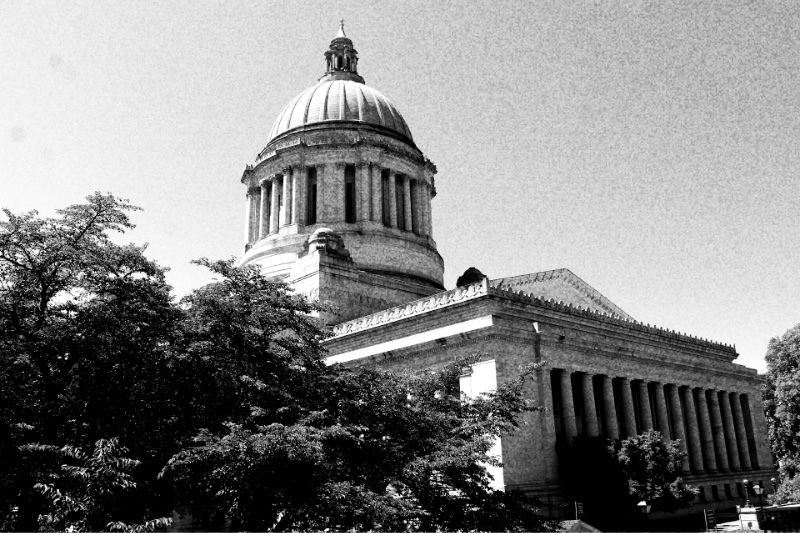
Acroterion — CC BY-SA 4.0, via Wikimedia Commons
On Wednesday 7 October, a divided panel of the Fourth Circuit granted a writ of mandamus ordering the Federal Communications Commission to resolve, “by 12:00 noon on Friday, October 9, 2026,” an application for review that four Democratic candidates filed with it in April. The application asks the full Commission to set aside guidance from its Media Bureau that lets political parties buy broadcast airtime at the discounted rate federal law sets for candidates. On Thursday the Solicitor General asked the Supreme Court to put the order on hold before the deadline, in an application docketed as No. 26A476.
The order does not tell the Commission how to decide. It tells the Commission that it must, and the fight over that distinction is now the case.
The rate and the notice
The discount is in 47 U.S.C. § 315(b). During the 45 days before a primary and the 60 days before a general election, the charges made to “any person who is a legally qualified candidate for any public office in connection with his campaign” may not exceed “the lowest unit charge of the station for the same class and amount of time for the same period.” Stations call it the lowest unit charge, or LUC. For the general election on 3 November, the order notes, the window opened on 4 September.
On 30 March the Media Bureau issued a public notice requiring broadcasters to extend that rate to political parties making coordinated expenditures with candidates, and to joint fundraising committees whose members include parties and others who are not candidates. The bureau presented it as a restatement of earlier guidance. The Fourth Circuit majority said it identified no earlier guidance holding that parties could ever be entitled to the rate.
The National Republican Congressional Committee and the National Republican Senatorial Committee joined the case on the Commission’s side. Against them are Kristen McDonald Rivet, a Democratic candidate for the House from Michigan, and three Democratic Senate candidates: Sherrod Brown in Ohio, Jon Ossoff in Georgia and Roy Cooper in North Carolina. Their application, filed on 29 April, argued that the notice put them at a competitive disadvantage by letting the party committees buy more opposing advertisements at the same price.
Too early, then too late
The candidates first went to the Fourth Circuit in June with a petition for review. The Commission answered that no court could review the notice until the full Commission had ruled on their application. On 14 August its chairman circulated a proposed order that would dismiss the application as an “improper vehicle”. On 25 August the panel ruled anyway: it held that the Commission had constructively denied the application by sitting on it, and set the notice aside as contrary to the statute.
The Supreme Court stayed that decision on 4 September in an unsigned opinion, over a dissent by Justice Ketanji Brown Jackson noted on the docket. The Court concluded that “the Communications Act makes clear that an aggrieved party must wait for the Commission to resolve its application for review by order before filing a petition for judicial review.” The stay left the notice in force. Since then, the panel wrote, the Commission has neither entered the chairman’s proposed dismissal nor otherwise resolved the application.
The candidates came back on 8 September asking the court to order the Commission to decide. According to the order, the Media Bureau opened a comment period on their application on 15 September, hours before the Commission’s response to the court was due, and the panel deferred action until at least 1 October. On 30 September the Commission invited comment, through 19 October, on a separate application from the Television Bureau of Advertising challenging the same notice, and asked the court for more time so that it could decide the two together.
What the writ requires
The majority, Judges Robert King and James Wynn, rested the writ on the Communications Act itself. Under 47 U.S.C. § 155(c)(4), “every such application shall be passed upon by the Commission”. Section 155(d) sets the objective of a final decision within three months of filing in original application cases that need no hearing, a provision the panel had already reminded the Commission of in September. And under section 155(c)(5), the Commission may grant or deny an application “without specifying any reasons therefor.” More than five months had passed, the judges noted, and the chairman’s proposed order did not even address the merits. “We have heretofore accorded the FCC a substantial amount of grace, but its gamesmanship must end,” they wrote.
Wynn added a concurrence explaining why, in his view, the writ honours the Supreme Court’s stay rather than evading it. If the agency can impose an interpretation and then delay the decision that opens it to review until the election has passed, he wrote, delay becomes its own justification. “What was once too early to review has become too late to remedy.” The writ, he said, leaves the outcome where Congress put it. “The Commission must issue a disposition. It remains free to determine the substance of that disposition.” Any later request for relief in court, he added, would still have to meet the jurisdictional requirements on its own terms. “The stay remains controlling.”
Judge J. Harvie Wilkinson dissented. “Litigants far and wide will be eager to purchase the majority’s new board game: Make The Supreme Court Say It Twice,” he wrote. “Once is enough for me, so I vote to deny the petition for a writ of mandamus.” He argued that the court had itself signalled that the Commission lacked authority to act while the first case was pending, and that the agency had then opened a comment period, the very step the panel’s earlier opinion had faulted it for not taking. “It is to be punished for sloth when it supposedly lacked jurisdiction, and then condemned for industry when it obeyed our instructions.” He also pointed to the stations. After the August ruling, broadcasters had begun rescinding the discounts, and a further change could force them to flip again. “Who can tally the intangible damage of election seasons thrown into limbo?”
The same panel, by the same two-to-one split, then refused emergency motions from the Commission and the two Republican committees to put its order on hold, Radio & Television Business Report reported.
Back to the Supreme Court
The Solicitor General, D. John Sauer, filed the Commission’s application on Thursday morning. It was docketed as No. 26A476 and submitted to the Chief Justice, who handles emergency matters from the Fourth Circuit. It asks the Court to stay the writ and, because the order would otherwise become moot before the justices could review it, to issue an immediate administrative stay. The statute requires the Commission to act on the application, Sauer argued, but sets no deadline for doing so. “In sum, just as the Fourth Circuit seriously erred when it first tried to leap-frog the Commission’s decision, it has now seriously erred in trying to short-circuit the Commission’s deliberations,” he wrote. He also asked the Court to make clear that the Fourth Circuit should not issue any further orders requiring the Commission to review the bureau’s notice, or preventing the bureau from implementing it, until after this year’s elections. As of midday on Thursday the docket showed no response requested and no ruling.
Nothing in the writ changes what stations charge this week. As Inside Radio explained, the Supreme Court’s stay remains in effect, so broadcasters must keep offering the lowest rate to qualifying coordinated party advertising and joint fundraising committees. What the order does is force a decision that could carry the dispute back into court before 3 November. The Commission may uphold the bureau’s reading, reverse it or otherwise dispose of the application. It cannot, under the writ, leave the application where it has sat since April.
The decision will be made by a short bench. The Commission is meant to have five members, the order notes in a footnote, but it currently has three, two Republicans and one Democrat, Anna Gomez, who dissented from the bureau’s August refusal to reconsider the notice. Whatever the three decide, the candidates’ route to a court runs through it. The Supreme Court said the agency had to decide first. The Fourth Circuit has now said when.
Sources
The Fourth Circuit’s order of 7 October in In re Brown, No. 26-2230, with Judge Wynn’s concurrence and Judge Wilkinson’s dissent, was read on the court’s website; the history of the case and the dates of the Commission’s filings are as the order gives them. The Supreme Court’s stay, its date and Justice Jackson’s dissent are from the docket in No. 26A274, and the quotation from the stay opinion was checked against the opinion itself. Sections 155 and 315 of Title 47 were read on the Legal Information Institute’s site. The denial of the stay motions is as Radio & Television Business Report reported it, the effect on current rates is as Inside Radio described it. The Solicitor General’s application in No. 26A476 was read on the Supreme Court’s website, and its docket was checked at midday on Thursday.
Further reading
- In re Brown, No. 26-2230, order granting petition for writ of mandamusU.S. Court of Appeals for the Fourth Circuit
- National Republican Congressional Committee v. Brown, No. 26A274Supreme Court of the United States
- 47 U.S. Code § 315Legal Information Institute
- 47 U.S. Code § 155Legal Information Institute
- Federal Communications Commission v. Brown, No. 26A476, application to stay the order of the Fourth CircuitSupreme Court of the United States
- Appeals Court Gives FCC 48 Hours To Act On Political Ad RatesInside Radio
- Fourth Circuit Denies Stay Of FCC Need To Release ‘LUR’ RulingRadio & Television Business Report
Ruth Okonkwo writes for The 13th Bell on law. This piece was edited and fact checked before publication.
Get The 13th Bell in your inbox