Forty-Eight Hours to Decide
The Supreme Court has stayed the Fourth Circuit’s order giving the FCC 48 hours to rule on whether parties get candidates’ discounted ad rates. The Commission must decide, the Court said, but not on a court’s schedule, and the election is 20 days away.

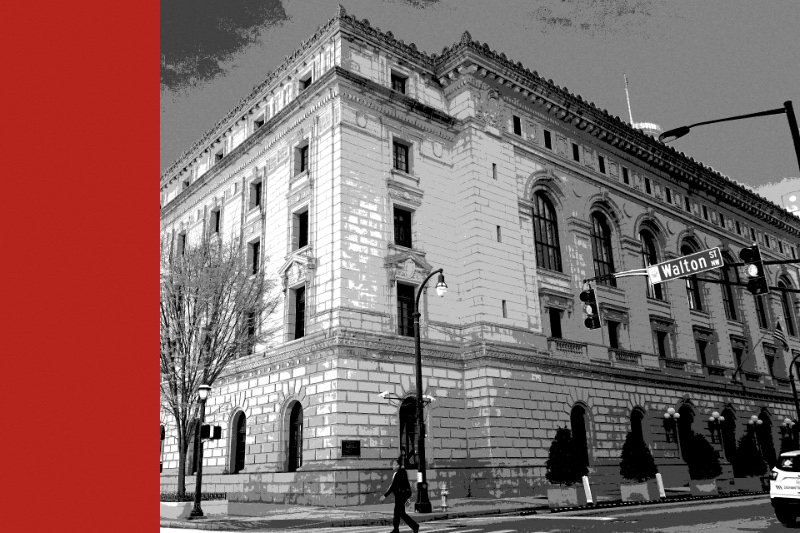
Milonica — CC BY-SA 4.0, via Wikimedia Commons
The Supreme Court on Wednesday 14 October stayed the Fourth Circuit order that had given the Federal Communications Commission 48 hours to rule on four Democratic candidates’ challenge to its guidance on political advertising rates. The five-page unsigned opinion in FCC v. Brown, No. 26A476, does not say whether political parties are entitled to the discounted rate federal law sets for candidates. It says the Commission does not have to answer that question on a court’s timetable. Justice Sotomayor and Justice Jackson would have denied the applications.
The stay also runs longer than the deadline it removes. According to the docket, the Fourth Circuit’s 7 October judgment is stayed “pending the filing and disposition of a petition for a writ of certiorari, if such a writ is timely sought.” If certiorari is denied, the stay ends automatically; if it is granted, the stay lasts until the Court’s own judgment. A companion application from the Republican congressional and senatorial committees, No. 26A477, was denied as moot.
What the panel ordered
The dispute began with a public notice the FCC’s Media Bureau issued on 30 March about the “lowest unit charge” in 47 U.S.C. §315(b)(1)(A), the favourable rate broadcasters must give campaign advertising in the weeks before an election. The notice, as the opinion describes it, said that candidates, joint fundraising committees with noncandidate members, and political parties engaged in coordinated political activity are all entitled to that rate. Sherrod Brown, Jon Ossoff, Roy Cooper and Kristen McDonald Rivet asked the full Commission to set the notice aside. Two months later, with that application still pending, they went to the Fourth Circuit, where a divided panel set the notice aside, reasoning that “the plain text and legislative history of §315(b)(1)(A) limits the availability of the LUC to political candidates.”
The Supreme Court stayed that decision on 4 September in National Republican Congressional Committee v. Brown, No. 26A274, concluding that the Fourth Circuit “likely lacked statutory jurisdiction” because the candidates’ application was still pending before the Commission. This publication followed the next round in The Order to Decide and A Public Notice Is Not an Order. On 7 October the same panel ordered the Commission to resolve the application by 9 October. “If allowed to continue dragging its feet,” the panel wrote, as quoted in the government’s stay application, “the FCC will have evaded meaningful judicial review of its newly created rule.” The Chief Justice entered an administrative stay on 8 October. The per curiam adds that the order came one week after the comment period on the candidates’ application closed, “and in the midst of another comment period for a parallel application the Commission was considering in tandem.”
What the Court said
The opinion applies the usual test for a stay: a reasonable probability that four justices would grant review, a fair prospect of reversal, and a likelihood of irreparable harm. “Each of these factors favors the FCC, so we grant the stay,” it says. Mandamus, it adds, is a “‘drastic and extraordinary’ remedy,” available only where the right to it is “clear and indisputable.”
The holding rests on one sentence about the statute: “The Communications Act requires the Commission to act on every application it receives, but it does not obligate the Commission to act within a particular timeframe.” The Fourth Circuit had nonetheless required a final decision “just five months after it was filed and within just 48 hours—all while the Commission’s deliberation process was still ongoing.” The Court’s conclusion: “Our system of separation of powers does not allow the Judiciary to meddle in ‘the workings of a coordinate branch of the Government’ in this manner.”
On harm, the opinion says that to comply the FCC “must triage its ongoing deliberation process and prepare a final order on an extremely expedited timeline,” and that being made to abandon that process “is itself an injury that cannot be remedied after the fact.”
What the opinion leaves out
The government had argued more than that. Its application said the panel had “seriously erred in trying to short-circuit the Commission’s deliberations,” and that it was “entirely reasonable to refrain from issuing a decision on campaign-finance rules in the middle of the election season.” The candidates’ opposition framed the case as whether an agency may “engage in blatant procedural trench warfare to stave off judicial review of an unlawful agency directive until it is too late to matter.” The per curiam answers neither framing. It does not mention the election calendar. It rests on the absence of a statutory deadline and on how rarely mandamus is available.
The effect on the calendar is plain all the same. The general election is on 3 November, 20 days after the ruling by this publication’s count. The September stay left the Media Bureau’s notice in force, and nothing in Wednesday’s order changes that. The Commission has not ruled on the candidates’ application, and the opinion sets no date by which it must.
Whether parties may buy airtime at the candidates’ rate is still undecided, and so is whether the Fourth Circuit read the statute correctly. What the Court has decided is who sets the schedule. If the Commission rules after 3 November, its answer will govern an advertising window that has already closed.
Further reading
- Per curiam opinion, FCC v. Brown, No. 26A476 (14 October 2026)Supreme Court of the United States
- Docket No. 26A476, FCC v. BrownSupreme Court of the United States
- Application for a stayOffice of the Solicitor General
- Response in oppositionSherrod Brown, et al.
- Justices grant Trump administration’s request to pause lower court ruling in political ad rate disputeSCOTUSblog
Ruth Okonkwo writes for The 13th Bell on law. This piece was edited and fact checked before publication.
Get The 13th Bell in your inbox