The Committee That Outlives the Chamber
Spain’s Congress rejected two housing decrees on 2 October. Four days later, with the Cortes dissolved, the government issued them again. This time they go to a standing committee of 69 deputies, where the arithmetic is different.

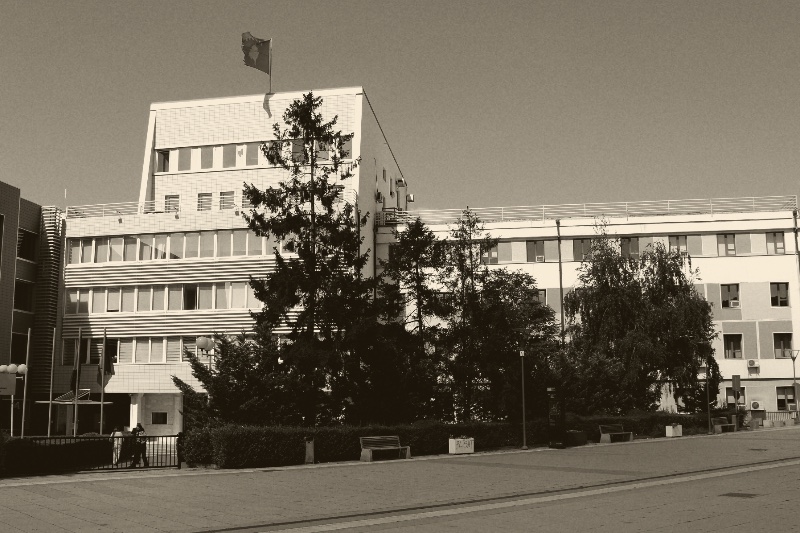
Vickybol — CC BY-SA 3.0, via Wikimedia Commons
On Friday 2 October, Spain’s Congress of Deputies voted down two decree-laws on housing that Pedro Sánchez’s government had issued to answer a wave of protest over rents and evictions. The first, on evictions, speculative purchases and tax incentives, failed by 178 votes to 172; the second, which would have made residential leases renew automatically, failed by 184 to 166, DW reported. Junts, the Catalan party that sometimes supports the government, voted against both with the Popular Party and Vox, Al Jazeera reported.
Three days later the government dissolved the parliament. Royal Decree 806/2026, agreed at a cabinet meeting on Monday 5 October, dissolves the Congress and the Senate elected on 23 July 2023 and calls elections to both for Sunday 29 November. The campaign runs from 13 to 27 November, and the new chambers are to meet on 23 December.
On Tuesday the cabinet approved the housing measures again, as two new decree-laws, numbered 28 and 29 of 2026, which were published in the official gazette on Wednesday. According to the government’s own summary, both “deberán ser convalidadas por la Diputación Permanente del Congreso de los Diputados”: they must be validated by the Standing Committee of the Congress, because the Cortes are dissolved. The deputies who rejected the measures last week will not vote on them as a chamber again. A committee of 69 of them will.
The body that outlives the chamber
A decree-law is legislation the government makes on its own authority. Article 86 of the Spanish Constitution allows it only “en caso de extraordinaria y urgente necesidad”, in a case of extraordinary and urgent need, and it takes effect at once. The price is a vote. Article 86(2) requires that every decree-law be submitted to the Congress “en el plazo de los treinta días siguientes a su promulgación”, within thirty days of its promulgation, and that the Congress pronounce expressly on whether it is validated or repealed. That is how the two earlier decrees were repealed on 2 October.
Article 78 supplies the body that votes when there is no Congress. Each chamber has a Standing Committee of at least 21 members, representing the parliamentary groups “en proporción a su importancia numérica”, in proportion to their numbers. Where the chambers have been dissolved, the committee assumes the powers they hold under Article 86, and under Article 78(3) it goes on exercising its functions until the new Cortes are constituted. When the new Congress meets, Article 78(4) says, the committee reports to it on the matters it dealt with and the decisions it took.
So the dissolution that ended this legislature did not end the vote on the decrees. It changed who casts it.
The arithmetic of 69
The plenary Congress has 350 seats. The Standing Committee has 69, and it is allocated by group size, so its arithmetic should resemble the chamber’s. It does not quite. According to RTVE, the parties that backed the first decree, the Socialists, Sumar, Esquerra Republicana, Bildu, the PNV and Podemos, hold 35 of the committee’s seats. The PP, Vox and Junts hold 34. A measure that lost the plenary by six votes would, on those numbers, pass the committee by one.
The second decree is a different count. The PNV, the Basque nationalists, voted against the lease-renewal measure in the plenary as well, and RTVE calculated that it would again fail in the committee, by 35 votes to 34. RTVE reported that the PNV would wait to read the fine print of the new texts before deciding, after the government contacted it, and that the government said it did not intend to negotiate with Junts.
A body cannot simply be asked the same question twice. RTVE reported that something already voted on could not be taken to the committee unless it contained something new, which is why the government said it would make changes. Ernest Urtasun, the culture minister, said on Monday: “Los decretos no se pueden presentar exactamente igual a como estaban la última vez, pero sí que les puedo garantizar que en ningún caso esas variaciones van a suponer la rebaja de ninguna de las medidas de protección que acordamos, ninguna.” In this publication’s translation: the decrees cannot be presented exactly as they were last time, but he could guarantee that in no case would the changes reduce any of the protections agreed, none.
A decree issued after its own repeal
The preamble to Royal Decree-law 28/2026 addresses the objection before anyone makes it. Approving a decree-law and sending it for validation after a decree of partly or substantially the same content has been repealed, it says, “no es ajena al ordenamiento jurídico y a la práctica gubernamental y parlamentaria española”, is not foreign to Spanish law or to government and parliamentary practice. It lists precedents back to a tobacco-tax decree that failed in 2006 and was reissued weeks later, and including a 2018 rental decree followed by Royal Decree-law 7/2019. It adds that circumstances of extraordinary and urgent need allow the government to issue decree-laws “incluso una vez disuelto el Congreso de los Diputados y el Senado”, even once both chambers are dissolved. The preamble also dates the repeal of the earlier decrees to 29 September, which is the date of the rejected lease decree, Royal Decree-law 27/2026; DW and Al Jazeera reported the votes on Friday 2 October.
The 2019 case is the closest. RTVE recounted that the Sánchez government dissolved the Cortes on 5 March 2019, approved a new rental decree the next day similar to one the Congress had rejected at the end of 2018, and saw it validated by the Standing Committee almost a month later, with support from groups that had opposed the first text. The PP took that validation to the Constitutional Court, arguing that there was no extraordinary and urgent need. The court struck down two additional provisions and upheld the rest. After the dissolution of September 2019, RTVE added, the Standing Committee validated seven decree-laws before the new Congress was constituted.
What the two decrees do
Royal Decree-law 29/2026 is the broader text, and the government’s summary says it takes effect the day after publication. Until 31 December 2030 it restricts funds, companies and large landlords from buying homes for less than 70 per cent of their market value, with exceptions for affordable and social housing. Tenants with leases in force up to 31 December 2028 may request an extraordinary extension of up to two years, provided they are up to date with their rent and have been for the previous eight months. Until the end of 2027, rents above the official reference index may not rise at the annual update, and others may rise by no more than 2 per cent unless the parties agree otherwise. It raises the tax on the residential rental profits of listed property investment companies from 15 to 25 per cent, lets municipalities surcharge property tax on empty and tourist flats, and creates a 10,000 million euro line of interest-free loans, called TU CASA, to help first-time buyers with up to 20 per cent of a home’s price.
Royal Decree-law 28/2026 is the lease measure. It rewrites Article 10 of the Urban Leases Act so that, once a residential lease has run its minimum five years, or seven where the landlord is a company, it renews for further periods of the same length unless one side gives notice. The landlord’s notice rises from four months to six. A landlord who declines to renew must pay the tenant the greater of twelve months’ rent, calculated on the upper value of the state rental price reference system, or one month for each year the tenant has lived there. Its final provision says it enters into force on 15 November 2026, a fortnight before the election.
One vote before the election
Article 86(2) offers the committee two outcomes, validation or repeal, and the new Congress elected on 29 November will hear about whichever it chooses only as a report, under Article 78(4). The committee’s vote is therefore the only parliamentary test the measures face before the election, and it falls in the run-up to an election in which rents and evictions have become major campaign topics. The country’s two largest unions, the UGT and CCOO, announced on Wednesday a general strike over housing for 11 November, subject to ratification by other unions, Al Jazeera reported. It said polls have consistently placed Sánchez behind Alberto Núñez Feijóo of the PP.
Sources
Articles 78 and 86 of the Spanish Constitution were read in the consolidated text published by the Boletín Oficial del Estado; translations from it, from the decree-laws and from the Urtasun quotation are this publication’s. The dissolution, the election date, the campaign dates and the date the new chambers meet are from Royal Decree 806/2026. The contents and entry-into-force dates of the two decree-laws are from their texts in the BOE and from the government’s summary. The vote counts of 2 October are from DW; the parties that voted against are from Al Jazeera. The composition of the Standing Committee, the expected votes on each decree, the PNV and Junts positions, the rule on resubmission and the 2019 precedents are as RTVE reported them. The strike and polling are from Al Jazeera.
Further reading
- Real Decreto-ley 28/2026, de 6 de octubreBoletín Oficial del Estado
- Real Decreto 806/2026, de 5 de octubre, de disolución del Congreso de los Diputados y del SenadoBoletín Oficial del Estado
- Constitución EspañolaBoletín Oficial del Estado
- Medidas urgentes para el fomento y protección del derecho a la viviendaLa Moncloa
- El Gobierno aprobará con algún cambio los decretos de vivienda para llevarlos a la Diputación PermanenteRTVE
- Spain’s parliament rejects housing bill as protests continueDW
- Spain’s parliament rejects gov’t housing decrees amid mass protestsAl Jazeera
- Spanish unions call general strike over housing before snap electionAl Jazeera
Owen Blackwood writes for The 13th Bell on world affairs. This piece was edited and fact checked before publication.
Get The 13th Bell in your inbox