A Speaker Without a Term
Libya’s eastern-based House of Representatives has replaced Aguila Saleh, its speaker for twelve years, after rewriting rules that never gave the post an end date. Saleh says the session that rewrote them had no legal effect.

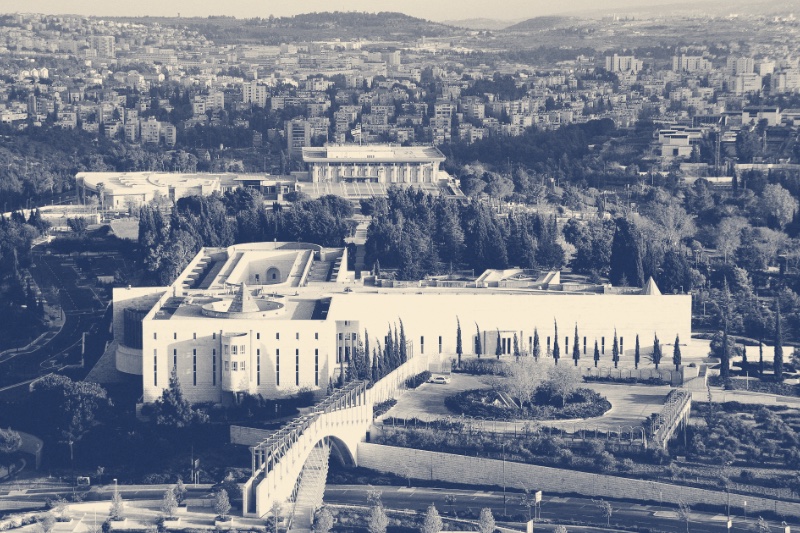
Ahmad Mohamad z — CC BY-SA 4.0, via Wikimedia Commons
Libya’s House of Representatives, the parliament that sits in the east of the country, elected Al-Salihin Abdul Nabi al-Obeidi as its speaker on Tuesday, replacing Aguila Saleh, who had held the post for twelve years. The house’s spokesman, Abdullah Blihaq, announced the result after a session at the parliament’s headquarters in Benghazi, chaired by the second deputy speaker, Misbah Doma, Anadolu Agency reported. Al-Obeidi represents the first electoral district of Tobruk and sits on the house’s foreign affairs committee. Saleh is 82, according to AFP.
The election was the second of two steps. On Monday, according to a member, Mohammed Tamer, 102 deputies attended a session in Benghazi, also chaired by Doma, and 98 of them approved an amendment to the house’s internal rules introducing a parliamentary term and ending the tenure of the existing leadership, Anadolu reported.
A rule with no end date
The rules in question are Law No. 4 of 2014, which adopted the house’s internal regulations and governs its proceedings, the powers of its presidency and its quorum. As Anadolu described it, the law does not set a fixed term for the speaker or require a new election after any period. The Libya Observer reported that the amendment was meant to require periodic elections for the speaker and his two deputies, and that earlier attempts by members to change the regulations had failed because Saleh would not put the amendments on the agenda.
That is the structure of the dispute. A presiding officer with no term can be replaced only by changing the rules, and changing the rules needs a quorate sitting. Two weeks before Monday’s vote, 86 members accused Saleh in a joint statement of preventing them from entering the parliament’s headquarters and holding a quorate session to discuss reform of the rules, Anadolu reported. The Libya Observer reported that a military force had prevented his opponents from holding a session in Benghazi, and that the house had convened only once in the previous eight months.
What Saleh says
Saleh rejected Monday’s session. In a statement, he described it as “unofficial” and said it had “no legal effect,” Anadolu reported, on the ground that the procedures set out in the law governing the parliament and in its internal rules had not been followed, in particular those for amending and adopting laws. A statement attributed to Saleh, reported by the Libya Observer on 5 October, had itself called members to an official session on Tuesday to discuss amending Law No. 4 to introduce a parliamentary term. The vote on the amendment took place on Monday instead, in the session Saleh’s statement rejects.
Saleh has not, in the reports read, said what he will do next, and none of them describes a body that could rule between him and the 98 members. Libya remains divided between rival governments. The Government of National Unity, headed by Abdul Hamid Dbeibah and recognised by the United Nations, governs from Tripoli; the government of Osama Hammad, appointed by the House of Representatives in 2022, governs the east and most of the south from Benghazi.
The east’s other power
The reports place the vote inside the politics of the east, where the military commander Khalifa Haftar holds power. The Libya Observer, citing reports, said that around 70 members had persuaded Haftar to press for the change, amid reports of rivalry among his sons over his succession and of divisions between them over whether Saleh should stay. AFP reported that Saleh has long been considered a staunch ally of the Haftar family but appeared to have been weakened as Haftar’s sons, in particular Saddam Haftar, consolidated their positions. “Aguila Saleh appears to be the latest casualty of Saddam Haftar’s drive to centralize decision-making in eastern Libya and bulldoze his way into a political role,” Emadeddin Badi, an analyst at Chatham House, said, according to AFP. None of the reports read carried a response from Khalifa or Saddam Haftar.
The new speaker comes with a record on one foreign relationship. Al-Obeidi chaired the house’s Libyan-Turkish parliamentary friendship committee, created in April 2024, and has worked to develop ties with Türkiye, according to Anadolu, a Turkish state news agency. AFP reported that his election comes as a United States initiative to revive the political process and unify Libya’s institutions is under discussion. The United Nations mission in Libya has been pursuing a path to national elections that could end the division.
Sources
The election, the Monday vote and its figures, the absence of a term in Law No. 4, the 86-member statement, Saleh’s rejection and al-Obeidi’s background are as reported by Anadolu Agency on 7 October, which cites the house’s spokesman and the member Mohammed Tamer. Saleh’s age, his relationship with the Haftar family, Badi’s remark and the US initiative are as reported by AFP, carried by Daily Sabah on 6 October. The scope of Law No. 4, the purpose of the amendment, the earlier blocked attempts, the military force, the meeting with Haftar and the statement calling a Tuesday session are as reported by the Libya Observer on 5 October, before the vote. Law No. 4 of 2014 and the amendment were not read, and Saleh’s statement was read only as Anadolu reported it.
Further reading
Iris Nakamura writes for The 13th Bell on world affairs. This piece was edited and fact checked before publication.
Get The 13th Bell in your inbox