Ten Days to Answer
DHS has cut from thirty days to ten the time a refugee has to answer a notice that the government means to end their status, and made the change effective on publication. By the department’s own count, up to 186,000 cases could be within its reach.

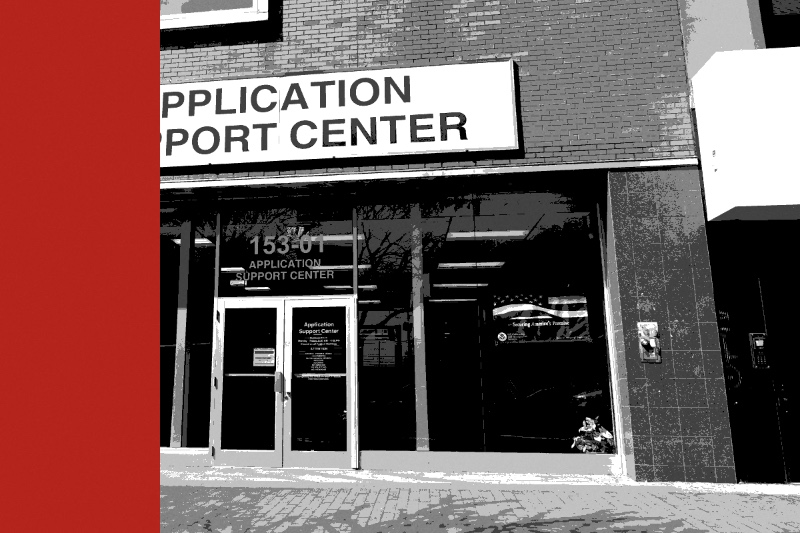
Tony Webster — CC BY 2.0, via Wikimedia Commons
The Department of Homeland Security has cut from thirty days to ten the time a refugee has to answer a notice that the government intends to end their refugee status. The change, an interim final rule titled “Removing 30-Day Refugee Termination Notice,” was published in the Federal Register on Wednesday 14 October at 91 FR 65077 and took effect the same day. Comments are due by 13 November.
The rule rewrites one section of the regulations, 8 CFR 207.9. Under it, U.S. Citizenship and Immigration Services must terminate the status of a refugee who “was not a refugee within the meaning of section 101(a)(42) of the Act at the time of admission.” It must first notify the person in writing of its intent, and the person may then present written or oral evidence. The new text gives “10 days from the date notice is served.” The section goes on: “There is no appeal under this chapter from the termination of refugee status by USCIS,” and after termination the person is processed under the sections of the immigration law that govern inspection, removal proceedings and removal. The rule is signed by the Secretary, Markwayne Mullin.
Ten days, or thirteen
Ten is not always ten. The rule explains that, under a separate regulation on service, 8 CFR 103.8(b), three days are added when a notice is served by mail, “with service considered complete on the date the notice is mailed.” “Therefore,” it says, “applicants who are mailed notices are afforded a total of 13 days to respond.” The clock runs on calendar days, and only a deadline falling on a weekend or federal holiday rolls forward. Thirteen days from the posting of a letter includes the days the letter spends in the post.
The rule also says what follows termination. A refugee’s permission to work comes with the status, so it ends when the status does: the department’s own analysis says work authorisation would be “terminated immediately, which is at least 20 days sooner than without this rule.”
How many people it could reach
The preamble gives a number for the ceiling of the rule’s reach. DHS says it has identified about 186,000 cases of refugees who entered from fiscal 2015 through fiscal 2025 and have not adjusted to permanent residence, and that “this figure could represent the maximum population that could be subject to the IFR,” while USCIS and Immigration and Customs Enforcement work to identify “particular subsets” for vetting. The document does not say how many notices of intent to terminate are pending or planned.
The case for urgency rests on the previous administration’s screening. The rule says processing changes put speed first, among them discouraging officers from asking follow-up questions and raising interview quotas. It cites a USCIS review of more than 14,500 cases, covering more than 31,000 people from Ecuador, El Salvador, Guatemala, Honduras and Venezuela admitted as refugees between 2021 and 2024, which “identified over 1,500 cases (over 3,700 aliens) with indicators of potential public safety concerns.” It also describes Operation PARRIS, short for Post-Admission Refugee Reverification and Integrity Strengthening, and a USCIS Vetting Center set up on 5 December 2025. These are the department’s figures, and a case flagged for an indicator is not a case found ineligible; the rule does not say how many of the flagged cases ended in a finding.
The department’s argument for the shorter window is stated plainly. Thirty days “allows ineligible aliens more time to retain immigration benefits to which they are not entitled,” and “a longer notice period could provide opportunities for aliens to evade enforcement or engage in harmful activities.” On the other side of the scale it says that people “will continue to receive an opportunity to respond,” and that the public-safety and integrity benefits “heavily outweigh any potential reliance interest.”
Why it took effect before anyone could comment
“DHS is issuing this IFR without prior notice or public procedure,” the rule says, invoking two exceptions in the Administrative Procedure Act: good cause, in 5 U.S.C. 553(b)(B), and the exception for a military or foreign affairs function, in 553(a)(1). For the same reasons it skips the usual thirty-day delay before a rule takes effect, under 553(d)(3). For the foreign-affairs ground it relies on a determination by the Secretary of State on 21 February 2025 covering efforts to control the entry and exit of people.
An interim rule that invites comment after it is already in force is a familiar form, and this publication has followed one through to the end. The DHS rule on work-permit extensions took effect without comment and was finalised without changes this month. Comments filed by 13 November on the termination window will be answered, if at all, in a later document.
What it sits beside
The preamble places the rule among other moves on the same population. It cites the two January 2025 executive orders on vetting and on the refugee programme, E.O. 14161 and E.O. 14163. It cites a joint ICE and USCIS memorandum of 18 February 2026 on detaining refugees who have not adjusted status, and notes that a federal court in Massachusetts stayed the policy on 23 March 2026. It also records that on 21 January 2026 the Secretary referred a Board of Immigration Appeals decision, Matter of D-K-, to the Attorney General, asking that it be vacated insofar as it holds that refugees may not be taken back into custody, charged as inadmissible and promptly removed. A 2005 board decision, Matter of Smriko, already held that termination of refugee status is not a prerequisite to removal proceedings.
The sequence is the point. The department is shortening the procedure for ending refugee status while also asking the Attorney General to make that procedure less necessary. The rule’s history section supplies the scale: a ceiling of 125,000 refugees a year from fiscal 2022 to 2025, 100,034 actually admitted in fiscal 2024, and first-term ceilings of 45,000, 30,000 and 18,000. The ceiling decides who arrives; this rule decides how quickly the department can say some of them should not have.
What ten days means in practice depends on things the rule does not regulate: whether the person has moved since the address on file, whether the evidence sits in another country, whether a lawyer can be found in a week and a half. The rule counts the days. The comment docket, USCIS-2026-0397, is where the cost of them will be argued.
Further reading
- Removing 30-Day Refugee Termination Notice, interim final rule, 91 FR 65077 (14 October 2026)Department of Homeland Security, Federal Register
- Full text of FR Doc. 2026-20956GovInfo
- Docket USCIS-2026-0397: comments on the interim final ruleRegulations.gov
Nadia Belkacem writes for The 13th Bell on migration policy and the rules that run it. This piece was edited and fact checked before publication.
Get The 13th Bell in your inbox