The Rule Already in Force
DHS published a final rule on Wednesday ending automatic extensions of expiring work permits, effective the same day. The change itself has applied since 30 October 2025; what the final rule adds is a record that survived public comment.

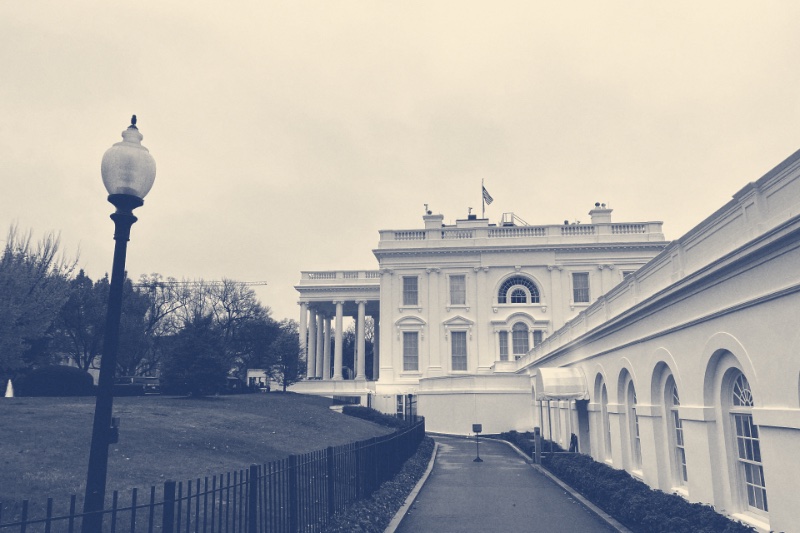
Tdorante10 — CC BY-SA 4.0, via Wikimedia Commons
The Department of Homeland Security published a final rule in the Federal Register on Wednesday 14 October and made it effective the same day. Its title is “Removal of Automatic Extensions for Certain Employment Authorization Documents.” Anyone who reads only the title and the date will conclude that work permits changed this week. They did not. The change took effect almost a year ago, and the final rule says so in its summary: it “reaffirms and finalizes the provisions of the IFR,” the interim final rule of 30 October 2025.
The gap between the two documents is 349 days, by this publication’s count. For all of that time the policy has rested on a rule issued without a prior comment period. The 14 October document closes the procedural loop, and it is worth reading for what it does and does not alter.
What stopped
An employment authorization document, or EAD, is the card that shows a non-citizen is permitted to work. Applicants in several categories, among them people with pending applications for adjustment of status and pending asylum applicants, must renew the card, and for years they were allowed to keep working while a timely renewal was pending. A rule published on 13 December 2024 (89 FR 101208) made that bridge permanent at up to 540 days, according to the final rule’s own account of the history.
The October 2025 rule removed it for renewals filed on or after 30 October 2025. The heading of 8 CFR 274a.13(d) now confines the 540-day extension to renewal applications filed before that date, and a new paragraph (e) says the validity of an expired or expiring EAD will not be automatically extended by a renewal filed on or after it. Extensions provided by law, and those given by Federal Register notice for people with temporary protected status, are left alone.
The rule does not decide whether anyone may renew. In its words, it “does not eliminate employment authorizations or prevent eligible aliens from obtaining EADs for employment purposes or proof of identity.” It removes the period in which a person could keep working on the strength of a filing receipt. The rule gives an illustration: an applicant for adjustment of status whose card expires on 30 May 2026 files for renewal on 4 February 2026. If the renewal is still pending on 31 May, that person cannot keep working from that day unless authorized on some other basis.
Why the old rule is still in the text
The final rule says it “does not affect the validity of EADs that were automatically extended prior to the IFR.” A renewal filed before 30 October 2025 can still carry a facially expired card for up to 540 days from the expiry date printed on it, when paired with a receipt notice showing timely filing. That is one reason the department’s estimates of lapsing permits are dated well into the future.
DHS estimates that between about 20,000 and 33,000 EADs will lapse in a single 18-month window, with a midpoint of about 27,000. The window starts in May 2027, and the rule explains why: DHS chose it “to capture the time in which the initial impacts will first be realized,” which it puts at May 2027, when cards from initial applications filed after the end of the 540-day extension would come up for renewal. The estimate assumes renewals are filed 90 days before expiry, and DHS says the affected population will change with processing times, backlogs and filing behaviour.
The record that was missing
An agency that wants a rule to take effect at once may skip notice and comment if it finds good cause. According to the final rule, the interim rule relied on the good cause exceptions in the Administrative Procedure Act, 5 U.S.C. 553(b)(B) and 553(d)(3), and also on the ground that it “clearly implicates the foreign affairs policy of the United States.” DHS then took comments after the fact: 33 days of them, to 1 December 2025, and 653 public comment submissions. It responded to them and changed nothing. “DHS is reaffirming and finalizing the IFR without changes,” the rule says.
That is also the reason it gives for the same-day effective date. The APA ordinarily requires 30 days between publication and effect; DHS says it has good cause to find the wait “unnecessary” because the final rule addresses comments on an interim rule “that has been in effect since October 30, 2025,” makes no substantive or nonsubstantive changes to it, and so leaves affected parties nothing new to adjust to. “Therefore, a delayed effective date serves no purpose, and this final rule is effective immediately.” To commenters who objected to the original omission, DHS points to that later comment period; whether a court would treat it as enough is a question this piece does not try to answer.
What DHS says it is for
The stated purpose is “to prioritize the proper vetting and screening of aliens and ensure continued eligibility” before a new period of authorization is granted. The rule ties that purpose to an event. A footnote describes the interim rule as explaining that the need to vet renewal applicants “became clear when an alien with an automatically extended EAD perpetrated a terrorist attack that injured many people in Boulder, Colorado on June 1, 2025,” and in its response to comments DHS writes that the person responsible “was the beneficiary of an automatic extension” of his employment authorization. Ending automatic extensions based on a renewal filing alone, the department says, “addresses that systemic vulnerability.” Those are DHS’s statements in its own rule; this piece has not tested them against other sources.
The rule also counts its costs. Over the 18-month window DHS estimates $138.1 million in lost productivity for employers that cannot easily replace workers whose cards lapse, $312.1 million in labour turnover costs to U.S. employers, $138.1 million in earnings transferred from those workers to replacements, and $14.5 million in reduced tax receipts. It puts the number of affected employers at about 1,700 to 2,800, and designates the rule economically significant under Executive Order 12866, the category for rules whose annual effects may exceed $100 million.
The date on the rule is not the date on the policy. For a year, workers, employers and USCIS have applied a rule that was, in procedural terms, interim. From Wednesday it is final, and nothing on the card has changed except the paper behind it.
Further reading
- Removal of Automatic Extensions for Certain Employment Authorization Documents, final rule, 91 FR 65306 (14 October 2026)Federal Register / GovInfo
- Text version of the final rule, FR Doc. 2026-20955Federal Register / GovInfo
Nadia Belkacem writes for The 13th Bell on power. This piece was edited and fact checked before publication.
Get The 13th Bell in your inbox