The Swap Line Is Foreign Policy
A central bank arrangement that most people have never heard of decides which countries can pay their debts in a crisis. It is granted at discretion.

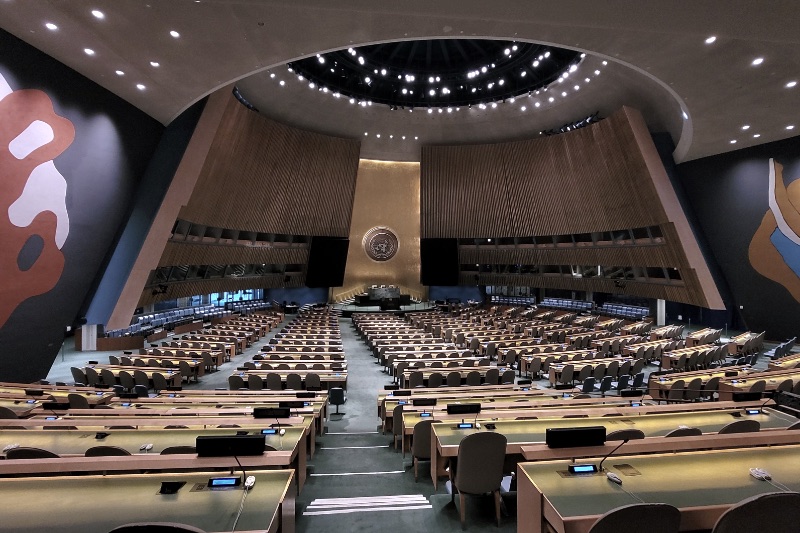
Mojmir Churavy — CC0, via Wikimedia Commons
Most of the world's trade and debt is denominated in a currency most of the world's countries cannot print. That is the whole background, and everything else follows from it.
In ordinary conditions this is unremarkable. A country earns the currency, borrows it, or buys it, and the market functions well enough that the arrangement is invisible.
In a crisis the market stops functioning, and the question becomes who can obtain dollars at all. A swap line is the mechanism that answers it, and it is not available to everyone.
The mechanics are worth stating plainly because the term obscures them. One central bank provides its currency to another in exchange for the second bank's currency, with an agreement to reverse the trade later at the same rate.
The statutory authority for these operations is old and broad, and the discretion it confers sits with a central bank rather than with a foreign ministry.
Structured that way it carries no exchange rate risk for the provider and is not a loan to a foreign government. Those two features are what allow a technically-minded institution to treat it as a monetary operation rather than a fiscal one.
That placement is deliberate and it has a consequence nobody designed. A decision with enormous foreign policy weight is taken by an institution whose mandate is domestic and whose officials are not diplomats.
The economics are sound. The framing is also what keeps the decision inside an institution that would not describe itself as making foreign policy, which is where the accountability gap opens.
The criteria are technical in form. Whether a counterparty's distress would transmit back, whether the collateral is sound, whether the operation serves the granting bank's own objectives.
For a country with access, the effect during a crisis is immediate. Its banks can obtain the currency their obligations are denominated in, and a funding panic does not become a default.
Each is a real consideration and each is also a judgement about which economies matter enough to protect, which is a foreign policy question wearing a technical vocabulary.
For a country without access, the same crisis produces forced asset sales, a collapsing currency and an emergency programme with conditions attached. The difference in outcome is enormous and the difference in cause is a decision made elsewhere.
The institution that operates them publishes the arrangements and the amounts drawn, so the facts are on the record. What is not on the record is why one country has access and a comparable one does not.
The alternatives available to the excluded are all worse. Regional arrangements exist but are smaller than the exposures they would have to cover, and they pool the currencies of countries likely to be in trouble simultaneously.
The governing regulations set out the framework at a level of generality that does not answer the question either, because the decision is discretionary by design.
Bilateral arrangements with other issuers exist too, and are useful for trade settlement, but they do not solve the problem of debts already denominated in a currency neither party issues.
The countries outside the arrangement understand this precisely, and their response is the part with the longest consequences. A state that cannot rely on access accumulates reserves instead.
Which leaves self-insurance through reserves, and self-insurance at the scale required is a permanent drag on development. Money held against a crisis is money not spent on the things that would prevent one.
Reserve accumulation is expensive insurance. It means holding low-yielding assets rather than investing domestically, and the cost is paid continuously by populations who will never hear the term swap line.
The aggregate effect is a system in which the poorer participants lend to the richer at low yields in order to insure against an event whose management is entirely discretionary.
The published statements record the resulting flows, and the pattern is a persistent transfer from the countries without access to the ones whose debt they are obliged to hold.
That is not the result of anyone's intent, which is what makes it durable. Each individual decision is defensible on its own terms, and the pattern only exists at the level nobody is responsible for.
None of this argues the arrangements should be universal. Extending them without limit would create exactly the moral hazard the criteria exist to prevent, and the granting institution is right to have criteria.
It argues that a decision this consequential should be made against published standards rather than case by case, so that a country can know in advance whether it is inside the arrangement or building reserves against being outside it.
Further reading
- Purchase and sale of bills of exchange, 12 U.S.C. § 353Office of the Law Revision Counsel, U.S. House
- Title 12, Banks and BankingU.S. Government Publishing Office
- Board of GovernorsFederal Reserve System
Nadia Belkacem writes for The 13th Bell on world. This piece was edited and fact checked before publication.
Get The 13th Bell in your inbox