Immunity Is the Doorway
Whether a foreign state can be sued at all is decided before anyone asks what it did. The exceptions have become the substance of the law.

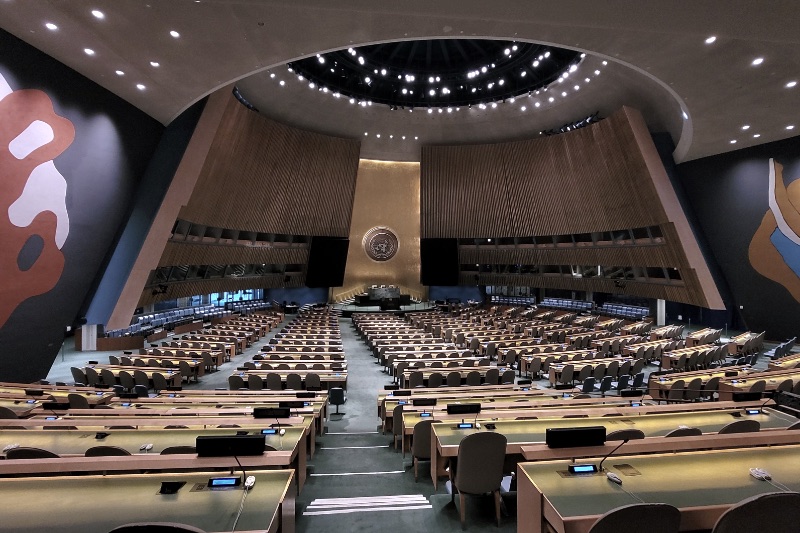
Paul Colin Hennig firstdorsal.eu — CC BY-SA 4.0, via Wikimedia Commons
A state cannot ordinarily be sued in another state's courts. The principle is ancient, close to universal, and follows from the idea that equals do not judge each other.
It is also, taken literally, an answer nobody can live with, because states now trade, borrow, employ and cause harm exactly as private parties do.
The provision listing the exceptions is where the working law sits. The immunity is the rule and the exceptions are what practitioners actually argue about.
The commercial activity exception is the largest. A state acting as a market participant rather than as a sovereign can be sued on that activity.
Distinguishing the two is the whole difficulty, and the test looks at the nature of the act rather than its purpose.
The service question defeats more claims than the doctrine does, and it is almost never discussed.
A state buying boots behaves like any buyer, even if the purpose is to equip an army, so the purchase is commercial and the purpose is irrelevant.
Serving process on a foreign state follows a prescribed sequence, and each step can take months while the claimant carries the cost of waiting.
The published decisions are largely about that line, and reading them shows how much turns on characterising an act rather than on evaluating it.
A claim can therefore fail on the mechanics of delivery long before immunity is argued, which is an odd place for a case to end.
The characterisation happens first, before any evidence about the underlying conduct, which is the pattern this publication keeps finding in threshold doctrines.
That sequence exists to respect the dignity of the state being sued, which is a real interest and one paid for entirely by the claimant.
A defendant who wins on immunity never has to say what happened, and the claimant leaves with no finding either way.
The expropriation exception is narrower and more contested, covering property taken in violation of international law with a commercial connection to the forum.
Both of its limbs are demanding, and cases turn on the connection rather than on whether the taking occurred.
The description of what the federal courts handle places these among ordinary civil matters, which understates the diplomatic weight each one carries.
A judgment against a foreign state is an act with consequences beyond the parties, and courts are conscious of that even where the statute gives them no room to say so.
Enforcement is where the whole structure shows its limits, and it is the part claimants understand last.
Winning a judgment is not the same as collecting one. Property of a foreign state has its own immunity from attachment, on a separate and narrower set of exceptions.
So a claimant can establish liability and find nothing they are permitted to seize, which is a legal victory with no practical content.
The enacted history shows the framework was written to move these questions from the executive to the courts, and that was the reform.
Before it, a foreign state asked the executive for immunity and the executive decided, which mixed diplomacy into individual lawsuits in an obvious way.
Codifying the exceptions was meant to make the answer legal rather than political, and it largely succeeded at the cost of freezing the categories.
Terrorism and human rights exceptions have been added since, each responding to a specific case, each narrow, and each carrying the reciprocity problem the original design avoided.
A state that opens its courts to suits against others invites the same treatment, and the invitation is accepted by states whose courts it trusts least.
That is the honest tension. Every widening is defensible on its facts and every widening is an argument another state can use, and nothing in the statute weighs the second against the first.
Further reading
- General exceptions to jurisdictional immunity, 28 U.S.C. § 1605Office of the Law Revision Counsel, U.S. House
- United States Courts OpinionsU.S. Government Publishing Office
- United States Statutes at LargeU.S. Government Publishing Office
Nadia Belkacem writes for The 13th Bell on world. This piece was edited and fact checked before publication.
Get The 13th Bell in your inbox