The Stockpile Is a Bet on a Timeline
Holding a reserve is not caution. It is a specific prediction about how long a disruption lasts, made by people who will not be there when it is tested.

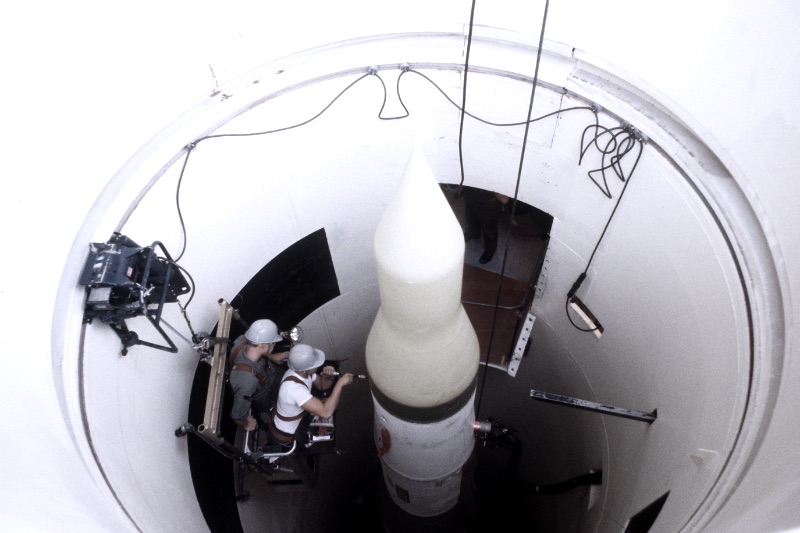
Kecko from Northeast corner of, Switzerland — CC BY 2.0, via Wikimedia Commons
A stockpile looks like the least controversial thing a government can do. Hold a reserve, release it if supply fails, and the argument seems to be only about size.
It is not about size. Every stockpile encodes a duration, and the duration is a forecast about how long an interruption lasts and how quickly production can replace it.
Get the forecast wrong in one direction and the reserve is an expensive warehouse. Get it wrong in the other and it runs out exactly when it was needed, which is worse than not having had it.
The clearest way to see the assumption is to invert the question. Rather than asking how large a reserve should be, ask what interruption it is sized to survive, and the answer immediately becomes contestable.
The statute governing strategic materials sets the framework, and its logic is about surviving an interruption rather than about winning a competition on price.
Ninety days of an input assumes the disruption is a shipping problem. Three years assumes it is a war. Those are different bets about the world, and the reserve cannot be sized correctly for both.
The material question is genuinely hard and is where the minerals assessments do the work. Which inputs have no domestic source, which have one, and how long a substitute takes to qualify.
This is why the argument about stockpiles keeps being conducted in the wrong terms. Participants debate quantities while disagreeing, without saying so, about the scenario the quantity is meant to cover.
Qualification is the constraint people underestimate. A substitute material that exists is not a substitute material that is approved, and approval in a defence context is measured in years.
The domestic production question sits underneath all of it. A reserve buys time for production to start, so the value of the reserve depends entirely on whether there is production capable of starting.
So the honest duration for many items is not how long the reserve lasts. It is how long the reserve lasts plus how long qualification takes, and the second number is rarely in the same document as the first.
Where no domestic capacity exists, the reserve is not buying time to restart. It is buying time to build, which is a much longer clock and one that is rarely the clock the reserve was sized against.
The munitions case is the one that has been tested recently and is instructive precisely because it was not a surprise. Consumption rates in sustained conflict were understood. The production rates to match them were not funded.
Rebuilding a capability is a different problem from restarting one. It requires facilities, equipment with its own lead times, and a workforce that may no longer exist in the country at all.
The budget documents show why. A stockpile is a capital cost with no annual output, competing against programmes that produce something visible each year.
The workforce constraint is the one that resists money most stubbornly. A specialised manufacturing skill that has not been practised domestically for a generation cannot be purchased quickly at any price.
That is the recurring pattern in everything about readiness. The thing that pays off in an unlikely scenario loses to the thing that pays off now, and it loses every year until the scenario arrives.
There is also a maintenance cost that gets omitted from the argument. Stored materials degrade, munitions have shelf lives, and a reserve that has not been rotated is smaller than the number on the inventory.
The authorities that raise and maintain the force are silent on this, because the trade-off is budgetary rather than legal, and budgetary trade-offs are made annually by people optimising for the year.
That gap between the recorded quantity and the usable quantity is discovered at the worst possible moment, because verification is expensive and produces no benefit in any year the reserve is not needed.
What would help is a published assumption. Not the size of the reserve, which is often properly classified, but the duration it is sized against, which is a planning premise rather than a secret.
The through-line is that every one of these is a question about time, and time is the variable a stockpile debate conducted in tonnes never has to state out loud.
Stating it would allow the premise to be argued with. At present the number is chosen inside a process nobody outside can see, defended as prudent, and discovered to be wrong only in the circumstances it existed for.
A reserve is a bet. The only real question is whether anyone outside the building is allowed to know what was bet on.
Further reading
- Strategic and critical materials, 50 U.S.C. § 98Office of the Law Revision Counsel, U.S. House
- Mineral Commodity SummariesU.S. Geological Survey
- Budget of the United States GovernmentU.S. Government Publishing Office
Gregor Vance writes for The 13th Bell on security. This piece was edited and fact checked before publication.
Get The 13th Bell in your inbox