Classification Decides the Debate
The rules for marking information are administrative, reversible and largely unreviewed. They also determine which arguments can be made in public at all.

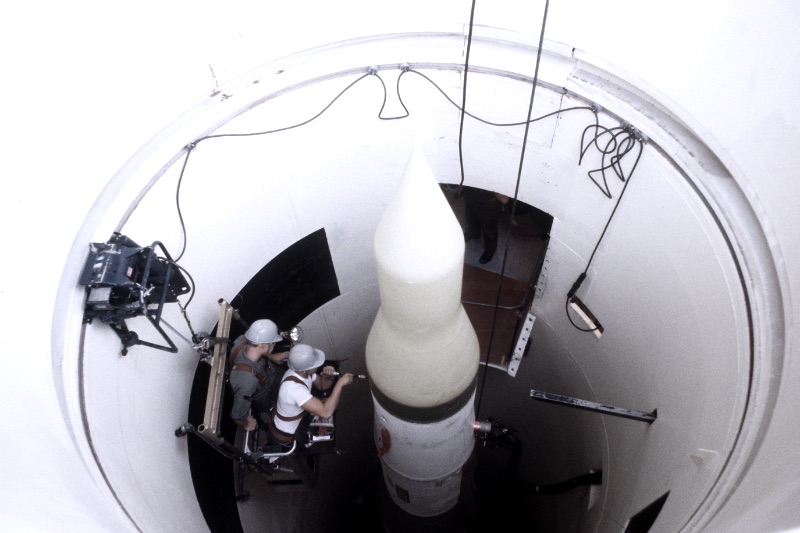
Georges Grondin — Public domain, via Wikimedia Commons
A public argument about national security is conducted between people who have seen the material and people who have not. That asymmetry is created by an administrative act, and the act is far more discretionary than the seriousness of the subject suggests.
Classification runs on an executive order, not a statute. It sets the categories, the levels, the durations and the standard for applying them, and it can be rewritten by the next administration without anyone else's agreement.
The standard itself is not the problem. It requires that disclosure could reasonably be expected to cause damage, which is a real test that real officials apply seriously. The problem is what happens either side of it.
There is a cost to marking a document too high and it is borne by other people. There is a cost to marking it too low and it is borne by you.
That asymmetry produces overclassification without anybody deciding to overclassify. Each individual marking is defensible, the aggregate is a body of material far larger than the standard would justify, and no official is ever penalised for the aggregate.
The oversight machinery exists and is genuinely diligent. The oversight office reports on the system, tracks volumes and audits agencies, and its findings are published in the public record. What it lacks is any power to force a marking down.
The release mechanisms are the other half. The freedom of information statute is the main route by which classified reasoning is tested, and it operates on a timescale that guarantees the answer arrives after the decision it might have informed.
A document released nine years after the debate it belonged to is a contribution to history rather than to the argument.
The effect on public reasoning is structural rather than sinister. Officials can allude to material they cannot describe. Critics cannot check the allusion. The argument becomes a contest of asserted authority, and the side holding the clearance wins it by default.
It also degrades the internal argument, which is the part least often noticed. Compartments restrict who inside government can see a thing, which means the assessment is reviewed by fewer people, and the fewer people share the assumptions of whoever set the compartment.
The reforms most often proposed are procedural and would help: shorter default durations, a real cost attached to overclassification, and mandatory declassification review on a timescale measured against the policy rather than the archive.
None of them touches the deeper thing, which is that a system this consequential rests on an instrument the executive writes for itself and can revise at will. That is worth saying plainly, whatever one concludes about any particular secret.
It is worth separating two objections that are usually run together, because only one of them is tractable.
The first is that secrets exist at all, which is not a serious complaint. Some information genuinely cannot be published without cost, and a state that could keep nothing would be unable to do several things people want it to do.
The second is that the volume is unmeasured and the default runs one way, which is tractable and is what the reforms address. Nothing about shorter durations or a cost for overclassification requires anyone to publish a secret.
The distinction matters because conflating them lets the serious objection be dismissed with the easy answer. Asking why so much is classified is not the same as asking that nothing be.
The compartment problem deserves a sharper statement than it usually gets, because it is the part that damages the government's own reasoning rather than the public's.
Restricting a document to a small group means the assessment is reviewed by people selected by whoever set the restriction. That is a narrower peer review than almost any other field would accept for a consequential judgement.
It also removes the specific reviewers most likely to disagree, since the people excluded are frequently the ones working from different assumptions in an adjacent area.
So the cost is not only that the public cannot check the claim. It is that fewer people inside could check it either, and the ones who could were chosen by the person whose claim it was.
Further reading
- Information Security Oversight OfficeU.S. National Archives
- Classified National Security InformationU.S. National Archives
- Freedom of Information Act, 5 U.S.C. 552Office of the Law Revision Counsel, U.S. House
Gregor Vance writes for The 13th Bell on security. This piece was edited and fact checked before publication.
Get The 13th Bell in your inbox