Is the US-Mexico Border a Military Installation? Six National Defence Areas Cover Part of It
A senior Pentagon aide has written that “the border is now a military installation and a battle lab.” In law, part of it is: six national defence areas, which covered roughly a third of the line by mid-2025. The courts have been less persuaded than the slogan.

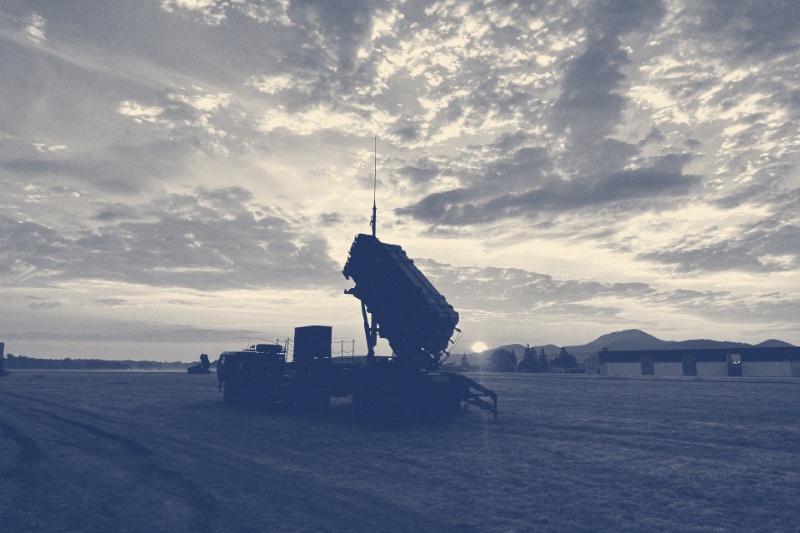
Robert DeDeaux (USACE PAO) — Public domain, via Wikimedia Commons
Parts of the US-Mexico border are, in law, military installations: since April 2025 the administration has transferred federal border land to the Defense Department and created six national defence areas, which covered roughly a third of the border by July 2025. The rest of the line is not.
The distinction has been blurred by a sentence. “The border is now a military installation and a battle lab for testing new systems, to include directed energy weapons,” Patrick Weaver, deputy chief of staff to Defense Secretary Pete Hegseth, wrote on X, International Business Times and Axios reported. It came after CNN obtained a Hegseth memo lending the Department of Homeland Security one Active Denial System for testing. “Battle lab” is not a term in any statute this publication has found. “Military installation” is, and it carries specific powers on specific land.
What makes border land a military installation?
A transfer of jurisdiction. National Security Presidential Memorandum 4, signed on 11 April 2025, directed the relevant departments “to provide for the use and jurisdiction by the Department of Defense over such Federal lands”, “including the Roosevelt Reservation and excluding Federal Indian Reservations”, according to the White House text. The memo relies on “the longstanding authority of a military installation commander to exclude persons” from the installation.
The zones were added piece by piece: a first zone in New Mexico administered by Fort Huachuca in Arizona, a second attached to Fort Bliss, a stretch of the lower Rio Grande administered by Joint Base San Antonio, land near Marine Corps Air Station Yuma, and land in California. In February the Air Force extended the third zone about 40 miles upriver to Roma, Texas, and created a sixth covering 150 miles from Falcon Dam to Del Rio, Defense One reported. The one-third coverage figure dates from before those additions, and this publication has not found a published update. Everything outside those parcels remains civilian land policed by civilian agencies.
What can the military do inside them?
Exclude and detain, then hand over. Troops are tasked with “temporarily detaining trespassers until they are transferred to the appropriate law enforcement authorities,” in the words of an Air Force release quoted by Defense One. Prosecutors have used two statutes: 50 U.S.C. § 797, which punishes violations of security regulations on defence property, and 18 U.S.C. § 1382, which punishes entering military property for a prohibited purpose.
In practice the military role has been small. As of mid-March, about 1,500 troops had made “just 68 apprehensions”, a Joint Task Force-Southern Border spokesperson told ProPublica and The Texas Tribune. Of at least 4,700 migrants charged with military trespass on top of illegal entry, about 60 per cent had the trespass charges dropped or dismissed. At least nine judges in West Texas and New Mexico found the prosecutions legally deficient, mostly on intent: a person cannot knowingly trespass on a base he did not know he was on. In one New Mexico bench trial, Assistant U.S. Attorney Randy Castellano conceded “that we don’t meet the mens rea requirement” the court had set out in an earlier opinion. Magistrate Judge Miguel Torres asked in another case, “What is your evidence that he knew he was accessing a restricted national defense area?” A Justice Department spokesperson said the prosecutions have “proven to be a significant deterrent to both illegal crossings and cartel activity along the border”, without supporting documentation.
Where does Posse Comitatus come in?
At the boundary of the parcel. The Posse Comitatus Act of 1878 bars using the active-duty military to execute the laws unless the Constitution or a statute expressly authorises it, a line this publication has examined before. On 14 August the Justice Department’s Office of Legal Counsel released an opinion that troops may act against people who unlawfully entered a defence area after they have left it, operating “in the immediate vicinity of the NDA”, relying on the “military purpose” doctrine and on 10 U.S.C. § 2672. Chris Mirasola, an assistant professor at the University of Houston Law Center, argued in Lawfare that although § 2672 lets the Secretary designate “military or civilian personnel” to protect property, its off-base provisions speak only of “civilian officers and agents”, and so are not the express authorisation the act requires. His article, published on 24 August, records no court ruling on the opinion, and this publication has found none since.
The memo on the Active Denial System follows the same line from the other side. As quoted by Military.com, it provides that the system “shall not be operated by DoW (Department of War) personnel.” The weapon is lent for seven months from September, and Homeland Security would operate it. The passages reported do not explain the restriction, and this publication does not infer a reason for it. What it does mean is that whatever is tested on the border will be operated by a civilian agency, on whichever land it is used.
What does the phrase change?
Nothing in law. An installation is defined by a jurisdiction transfer recorded parcel by parcel, and a statement on social media transfers none. The phrase may describe how the department sees its mission. The defence areas are the part of that description that has been put in writing, and in roughly three of every five trespass cases the government has not made the charge stick.
Further reading
- Military Mission for Sealing the Southern Border of the United States and Repelling Invasions (NSPM-4)The White House
- The Trump Administration’s ‘Disturbing’ New Legal Strategy to Prosecute Border Crossers Is Taxing Courts and Testing the LawProPublica and The Texas Tribune
- OLC’s Dangerous (and Wrong) Opinion About the Posse Comitatus ActLawfare
- The US military is taking control of more Texas borderlandDefense One
- DOD Memo Greenlights DHS Use of Military ‘Heat Ray’ at US-Mexico BorderMilitary.com
Gregor Vance is a house byline used by The 13th Bell’s Security desk. This piece was checked against the sources listed below before an editor approved it. See How we use AI.
Get The 13th Bell in your inbox