The Reserve Component Is the Force
Planning still describes a reserve that surges briefly and goes home. The mobilisation authorities describe something else.

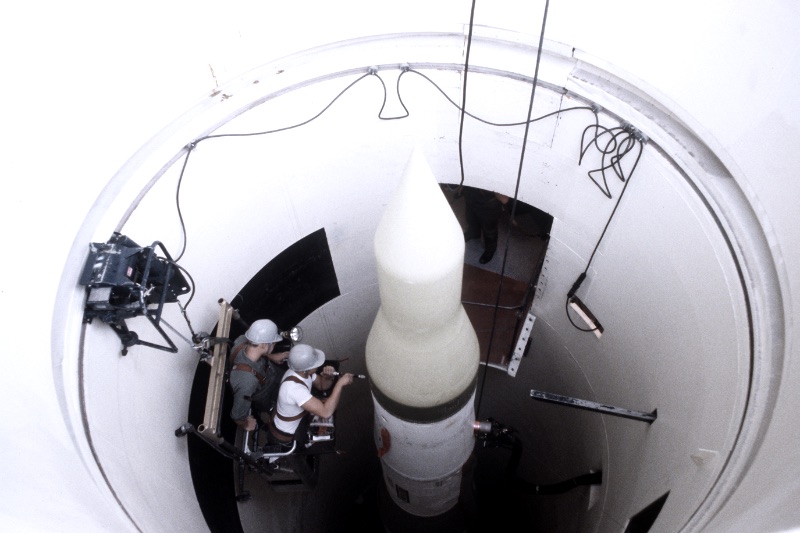
Sgt. 1st Class Carlos Sanchez — Public domain, via Wikimedia Commons
The reserve components were designed around a particular story. A crisis arrives, a president reaches for a statutory authority, part-time formations mobilise for a defined period, and when the crisis ends they go back to their civilian employment. Everything about the structure follows from that story.
The pay model follows from it. So does the training calendar, the equipment allocation, the promotion timeline, and the assumption that an employer will hold a job open. Each of those is calibrated to a commitment measured in months and separated by years.
The authorities themselves are more flexible than the story suggests. Mobilisation is available in several forms, under different conditions, with different limits and different consent requirements, and the differences among them matter enormously to the people called.
What has changed is not the statute but the pattern of use. Employing reserve formations for recurring, scheduled rotations rather than for a single unforeseen emergency turns a surge instrument into a standing one, without any of the structure being redesigned for standing use.
A part-time force used continuously is a full-time force with part-time pay, part-time medical continuity and part-time career protection.
This shows up first in retention, and it shows up in a way that is easy to misread. People do not generally leave because a deployment was hard. They leave because the second one was scheduled before the first was over, and because the civilian half of the arrangement stopped being viable.
The civilian half is the part planners have least visibility into and least control over. An employer that can absorb one absence may not absorb a predictable pattern of them. Statutory job protection settles the legal question and does not settle the practical one, which is whether the position is still meaningfully there.
There is a further complication in the dual status of the National Guard, which answers to a governor in one posture and to federal authority in another. That duality is a genuine constitutional feature rather than an accident, and it means the same formation can be committed by two different principals for two different purposes.
For planning, the consequence is that the same unit appears in two sets of assumptions. State emergency plans assume it will be available. Federal force planning assumes the same. Both are correct in isolation, and they cannot both be satisfied in the weeks when they conflict.
None of this is hidden. The authorities are public, the administrative rules are published, and the budget documents that fund the components are available every year. The difficulty is that no single document is required to reconcile the picture, because no single office owns the whole of it.
The uncomfortable question is whether the category still describes anything. If a component is used continuously, planned around continuously, and relied upon in two chains of command at once, then calling it a reserve is a statement about its pay table rather than about its role.
That would be a manageable problem if it were stated plainly. The risk is the reverse: a force treated as an active component in every respect except the ones that cost money, with the difference absorbed privately by the people in it and by the employers who are not consulted.
The employer side carries a cost that no defence budget records.
Repeated mobilisation of the same individuals falls on the firms that employ them, disproportionately small ones, and protections against dismissal do not compensate for the absence.
So a force structure that looks cheap to the state is partly financed by employers who never agreed to fund it and cannot decline.
Further reading
- Reserve components generally, 10 U.S.C. § 12301Office of the Law Revision Counsel, U.S. House
- Title 32, National DefenseU.S. Government Publishing Office
- Budget of the United States GovernmentU.S. Government Publishing Office
Gregor Vance writes for The 13th Bell on security. This piece was edited and fact checked before publication.
Get The 13th Bell in your inbox