The Limitations Period Is a Policy
How long a wrong stays actionable is presented as a procedural detail. It decides which wrongs are worth committing.

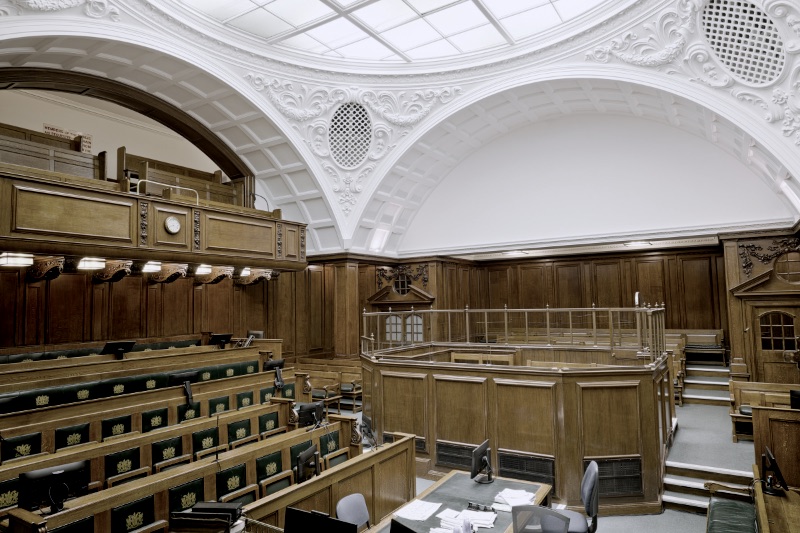
Gianluca Miscione — CC BY-SA 4.0, via Wikimedia Commons
Every legal system limits how long a claim survives. The reasons are sound: evidence degrades, witnesses die, and indefinite exposure is its own injustice.
The general period for penalties sets a default, and defaults of this kind are the most consequential provisions nobody campaigns about.
A limitations period does not weigh the merits. It disposes of strong claims and weak ones identically, on a calendar, which is what makes it efficient and what makes it blunt.
The efficiency is real. Without it, courts would be asked to reconstruct events decades old on evidence nobody can test, which serves nobody.
The bluntness is where the policy sits. A period calibrated to how long evidence lasts is a different instrument from one calibrated to how long a wrong takes to surface.
The continuing violation doctrine is where the boundary does its most contested work, because it decides whether a long-running practice is one wrong or a series of them.
Most sophisticated wrongdoing takes longer to surface than to commit. Financial misconduct, environmental damage and systemic regulatory failure are discovered years after the conduct ends.
Treated as one, the clock ran from the beginning and the claim is dead. Treated as a series, each instance restarts it and the practice remains reachable.
A period running from the conduct rather than from the discovery therefore protects exactly the conduct that was best concealed, which is the inverse of what anyone would design.
The same conduct therefore produces opposite outcomes depending on a characterisation that has nothing to do with how harmful it was.
The discovery rule exists to answer this and is applied inconsistently, so whether it saves a claim depends on the forum and the cause of action rather than on the facts.
That is not a defect anyone introduced deliberately. It is what happens when a rule designed for discrete events is applied to conduct that has no discrete moment.
The published opinions contain a great deal of litigation about when a period began, which is a reliable indicator that the boundary is doing heavy work.
Most modern regulatory failures are of exactly that shape, which means the doctrine least suited to them is the one that governs them.
Arguing about the start date is arguing about the case without addressing it, and a defendant who wins on the date never has to say what happened.
That is the property that makes limitations the most valuable defence available: it is complete, it is cheap, and it requires no account of the conduct at all.
The caseload figures show why courts favour it. A system at this volume needs disposals that do not require trying the merits, and this is the cleanest one available.
So the instrument is loved by defendants for one reason and by courts for another, and there is no comparable constituency on the other side.
Claimants who lose on limitation are individually aggrieved and collectively invisible. They never became a case, so they never became a statistic anybody publishes.
The regulations add further periods of their own, shorter and subject-specific, and a claimant must satisfy every applicable one rather than the most generous.
Layering periods this way means the effective deadline is frequently far shorter than the statute a person would think to read, and finding the shortest requires counsel.
Which produces the pattern that runs through every technical rule: it is navigable by the represented and a trap for everyone else.
Tolling doctrines soften it. Fraudulent concealment can stop the clock, and a defendant who hid the conduct cannot always benefit from the time that passed while it was hidden.
Proving concealment is hard and requires the evidence the concealment prevented anyone from obtaining, which is a familiar circularity.
None of this argues against limitations, which are necessary. It argues that the length of a period is a policy judgement about which wrongs will be reachable.
Setting it should therefore look like a policy decision. At present it looks like a number in a procedural provision, and numbers in procedural provisions are amended without anyone noticing.
Further reading
- Time for commencing proceedings, 28 U.S.C. § 2462Office of the Law Revision Counsel, U.S. House
- Caseload statisticsAdministrative Office of the U.S. Courts
- United States Courts OpinionsU.S. Government Publishing Office
Ruth Okonkwo writes for The 13th Bell on law. This piece was edited and fact checked before publication.
Get The 13th Bell in your inbox