Judge Trina Thompson Bars the Justice Department From Threatening California Election Workers
A federal judge in San Francisco issued a restraining order on Friday that forbids threats of prosecution against election workers who count ballots the government disputes. It runs past Election Day, and the Justice Department said within hours that it would seek to dissolve it or appeal.

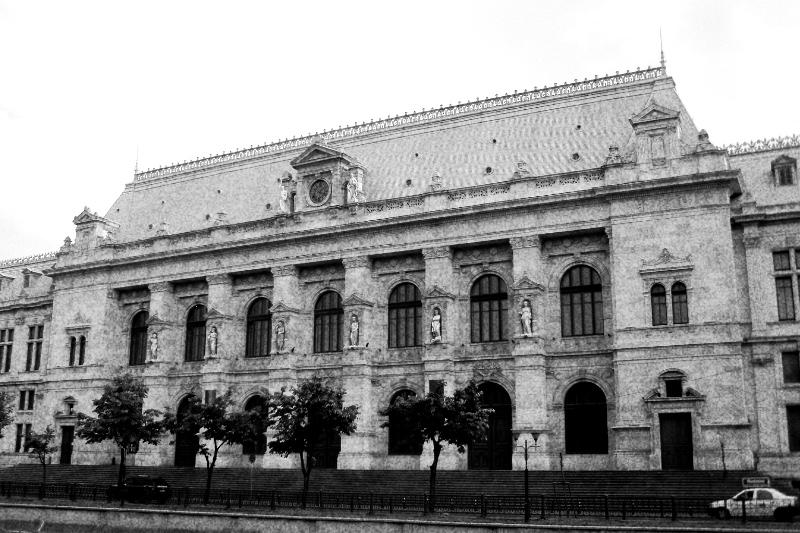
Marincyclist — CC BY-SA 4.0, via Wikimedia Commons
A federal judge in San Francisco on Friday 30 October barred the Justice Department and the Department of Homeland Security from threatening California election workers with prosecution for processing or counting ballots the government says were cast by ineligible voters. Judge Trina L. Thompson’s eight-page temporary restraining order expires at 5 p.m. on 16 November.
The plaintiffs are the Service Employees International Union, the American Federation of State, County and Municipal Employees, the League of United Latin American Citizens and the NAACP. They sued on 29 October, according to the complaint in Service Employees International Union v. United States Department of Justice, No. 3:26-cv-12800. The defendants are the two departments, Attorney General Todd Blanche and the Homeland Security Secretary, Markwayne Mullin. The order came the same day the plaintiffs asked for it.
It is the third ruling against the government in three days over the same set of roughly 20,000 California voters the department calls likely noncitizens. The first two concerned the ballots. This one concerns the people who handle them.
What does the order forbid?
Threats, demands and the use of prosecution as leverage. The order lists six paragraphs. The departments may not threaten or coerce election officials to stop processing a registered voter’s ballot “solely on the basis that the ballot belongs to an individual alleged by Defendants to be ineligible to vote”; may not demand that officials remove such voters from the rolls, refuse them ballots or “segregate or otherwise not count” their ballots on that basis; and may not threaten prosecution for refusing those demands, or for counting ballots in compliance with state and federal law. The government must tell every state and county it wrote to that the demands have been enjoined, and the Justice Department must tell the court of “any pending search warrant applications, grand jury subpoenas, or other demands” for election materials tied to its lists.
The order also states a proposition of law in plain terms. When election employees count ballots “in the manner required by their state and federal laws governing the administration of elections, they do not violate federal criminal law even if a particular ballot belongs to a registered voter alleged by Defendants to be ineligible to vote.”
On what law did the judge rely?
Chiefly Section 11(b) of the Voting Rights Act of 1965. That provision, 52 U.S.C. §10307(b), says that no person, “whether acting under color of law or otherwise,” shall intimidate, threaten or coerce anyone “for urging or aiding any person to vote or attempt to vote.” Judge Thompson found the departments likely violated it, and likely exceeded their authority under the Elections Clause, which leaves the mechanics of congressional elections to the states. She declined to reach the plaintiffs’ due process and Administrative Procedure Act claims “given the urgency.”
The facts she recited come from the complaint. On 13 October, it says, the government demanded that the Secretary of State and the Los Angeles County Registrar sequester the ballots of about 20,000 voters; on 23 October the Justice Department delivered letters across California threatening prosecution of any election worker who processed such a ballot, letters “delivered by armed DHS officials”; and the department opened a criminal investigation and issued grand jury subpoenas. These are the plaintiffs’ allegations, accepted at this stage; the government had not yet filed a response.
Where does this sit among the other rulings?
Alongside two decisions on the ballots themselves. On 28 October Judge David O. Carter, in United States v. California in the Central District, refused to order the ballots set aside; Judge Thompson’s order quotes his finding that the public interest “also favors the protection of election staff.” On Friday a divided Ninth Circuit panel, Judges Mark Bennett and Gabriel Sanchez with Judge Patrick Bumatay dissenting, again refused the government’s request, Al Jazeera reported. This publication covered the original request and the Ninth Circuit’s first dismissal.
The following timeline is this publication’s compilation from the order and the docket; the day counts are our arithmetic.
| Date | Step | Source |
|---|---|---|
| 13 October | Demand to sequester about 20,000 ballots | Order, citing complaint |
| 23 October | Letters threatening prosecution of election workers | Order, citing complaint |
| 28 October | Judge Carter refuses to set ballots aside | Order |
| 29 October | Unions and civil rights groups sue | Complaint |
| 30 October | Restraining order issued; Ninth Circuit rules 2–1 | Order; Al Jazeera |
| 2 November, noon | Government response due | Order |
| 3 November | Election Day | Order |
| 13 November, 11 a.m. | Preliminary injunction hearing | Order |
| 16 November, 5 p.m. | Order expires | Order |
How long can an order like this last?
Ordinarily 14 days. The judge found that the conditions for an order without notice under Federal Rule of Civil Procedure 65(b) were met. Rule 65(b)(2) says such an order expires at a time “not to exceed 14 days” that the court sets, unless the court extends it for good cause or the other side consents. From 30 October to 16 November is 17 days by our count. The order does not say whether the extra three days rest on good cause.
The government did not wait. In a notice filed the same day, the Justice Department said it would seek relief “by tomorrow, October 31, 2026,” either a motion under Rule 65(b)(4) to dissolve or modify the order, which a court must decide “as promptly as justice requires,” or an appeal to the Ninth Circuit. Either way, the order binds the departments through Election Day unless it is lifted in the next three days.
Further reading
- Order Granting Temporary Restraining Order, SEIU v. U.S. Department of Justice, No. 3:26-cv-12800-TLT (N.D. Cal. 30 October 2026)US District Court, via CourtListener
- Defendants’ Notice of Intent to Seek Modification or Dissolution of the Temporary Restraining OrderUS District Court, via CourtListener
- Judge orders DOJ to stop trying to “intimidate” and “threaten” California election officialsCBS News
- US appeals court again rejects Trump bid to set aside California ballotsAl Jazeera
- Rule 65. Injunctions and Restraining OrdersCornell Legal Information Institute
- 52 U.S. Code §10307, Prohibited actsCornell Legal Information Institute
Ruth Okonkwo is a house byline used by The 13th Bell’s Law desk. This piece was checked against the sources listed below before an editor approved it. See How we use AI.
Get The 13th Bell in your inbox