Judge Boasberg Orders the Justice Department to Name Every State It Sent Noncitizen-Ballot Letters
Chief Judge James Boasberg gave the government until noon on Friday to list every state that received a federal letter about alleged noncitizen voters. Whether those letters command anything is the question he has promised to answer by Monday, the eve of the election.

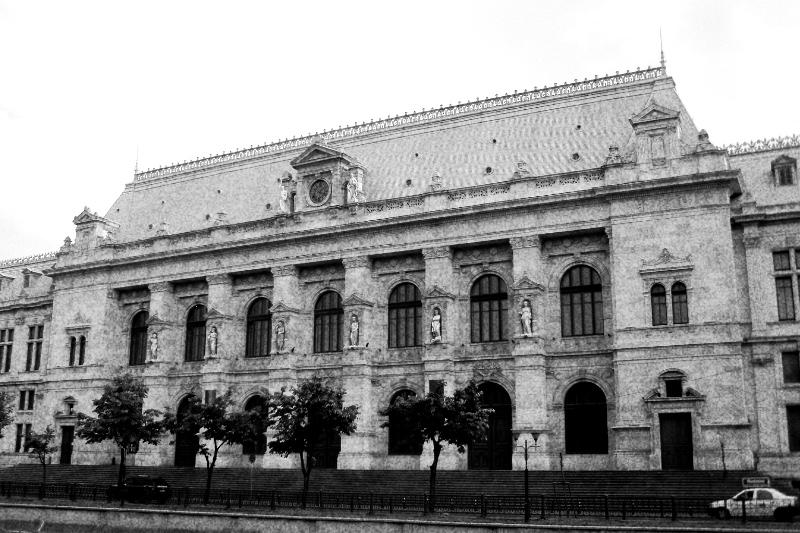
Cliffordsnow — CC BY-SA 4.0, via Wikimedia Commons
Chief Judge James E. Boasberg of the federal district court in Washington on Thursday 29 October ordered the Justice Department to give Democratic plaintiffs, by noon on Friday, a list of every state to which it or the Department of Homeland Security has sent letters about alleged noncitizen voters, MS NOW reported. He said he would decide by Monday 2 November whether to stop the government sending any more.
The suit was filed on 20 October by the Senate Minority Leader, Chuck Schumer, the House Minority Leader, Hakeem Jeffries, and the Democratic Senatorial Campaign Committee, Democratic Congressional Campaign Committee and Democratic Governors Association, the Associated Press reported. Roll Call adds the Nevada Democratic Party, and MS NOW an individual California voter. The defendants are President Trump, the Justice Department, Attorney General Todd Blanche, the Department of Homeland Security and its Secretary, Markwayne Mullin. Only two recipients of the letters are publicly known: California and Washington. The plaintiffs want the rest, because, their lawyer Uzoma Nkwonta argued, without the list they cannot know whether other states quietly complied, Roll Call reported.
The order matters less for what it decides than for what it sets up. Judge Boasberg did not rule on the injunction the plaintiffs want. He asked for the list, allowed the plaintiffs a further brief by the end of Saturday, and left the government a way to end the case before he rules.
What did the judge order?
Disclosure, and a timetable. The government must name the states; the plaintiffs may use that list in a supporting brief; and the court will rule by Monday unless the case becomes moot first. “I’ll issue an opinion by Monday,” the judge said, according to Roll Call, adding that the parties could “get it done earlier so people can go trick or treating, that’s fine, or you can stay up until the witching hours.”
The way out is a promise. The government can moot the request by stating that it will send no more such letters before the election, Roll Call and the AP reported. “But until you say that and the threat remains, I will continue to hear from the plaintiffs,” the judge told the department’s lawyers, according to MS NOW. He also signalled doubt about the plaintiffs’ case. “The harder question for me is your standing to do it,” he said, the AP reported. Standing is the threshold requirement that a plaintiff show a concrete injury the court can remedy; the government’s filing called the claimed injury “a speculative chain of hypotheticals,” MS NOW reported.
What do the letters require?
On the government’s account, nothing. “There is nothing about the actual transmission of the letter that forces the recipient to do anything,” Christian Dibblee, arguing for the department, told the court, according to Roll Call. “It just notifies them of a potential violation of federal law,” he said, the AP reported, and whether a state acts is “up to them. That’s their own choice.” Judge Boasberg noted that the letters require no state action unless a court orders it, the AP reported.
The plaintiffs read them as orders in all but name. The letters demand that states remove named voters from the rolls, withhold their ballots or set those ballots aside rather than count them, MS NOW reported. “The government cannot use threats of prosecution to coerce officials” into doing what it could not do itself, Mr Nkwonta told the court, Roll Call reported. Their claims rest on two parts of the Constitution. The Elections Clause provides that “the times, places and manner of holding elections for Senators and Representatives, shall be prescribed in each state by the legislature thereof,” subject to laws Congress passes. The Tenth Amendment’s anti-commandeering doctrine, set out in Printz v. United States (1997), holds that “Congress cannot compel the States to enact or enforce a federal regulatory program,” and that the federal government may not conscript state officers to administer one. A letter that merely informs commands nothing, which is why the government describes them that way. The judge appeared unconvinced that this one only informs: reading the language, he said, “I would have thought, ‘wow, we better act here or we’re going to be in trouble’,” MS NOW reported.
What happened in the two known states?
In California the department went beyond a letter. It demanded that about 20,000 ballots from voters it calls “likely” noncitizens be set aside, sued when the state refused, and on Wednesday 28 October lost its request for a temporary restraining order before Judge David O. Carter, a ruling it has appealed. This publication has followed that case from the department’s first demand to the Ninth Circuit’s decision that the judge’s silence was not a denial.
In Washington it has so far sent only a letter. On Monday 26 October federal prosecutors Neil Floyd and Pete Serrano asked the Secretary of State, Steve Hobbs, to set aside the ballots of more than 400 people they allege are noncitizens, with a 48-hour deadline, warning that otherwise “the United States will have no choice but to seek emergency relief,” CBS News reported. Mr Hobbs replied that a preliminary review found “many of the persons on your list are United States citizens.” No suit had been filed by Thursday afternoon, CBS reported. That gap, between a 48-hour demand and a lawsuit that has not arrived, is the space in which the Democrats say coercion operates. A separate order this month already limited Homeland Security field interviews of likely citizens in nine states.
How much time is left?
Very little, on this publication’s arithmetic. The table below sets out the dates from the reporting cited here.
| Date | Step | Source |
|---|---|---|
| July onwards | Justice Department sends demands to states | Roll Call |
| 20 October | Democrats file suit in Washington, DC | AP |
| 26 October | Letter to Washington: about 400 names, 48 hours | CBS News |
| 28 October | Judge Carter denies the California restraining order | AP, CBS News |
| 29 October | Hearing; list of states ordered | Roll Call, AP, MS NOW |
| 30 October, noon | List due to the plaintiffs | MS NOW |
| 31 October | Plaintiffs’ supporting brief due by end of day | MS NOW |
| 2 November | Ruling promised | MS NOW |
| 3 November | Election Day | CBS News |
From filing to the promised ruling is 13 days; from the Washington letter to Election Day is eight. Washington had already received more than 1.3 million mail ballots by Wednesday, CBS reported. Whatever Judge Boasberg decides on Monday, it will govern letters that have not yet been sent, not the ones already on officials’ desks.
Further reading
- Judge orders Justice Department to disclose noncitizen voter lettersRoll Call
- Judge presses the Trump administration for details on its campaign to stop noncitizens from votingThe Associated Press, via WSLS
- Judge weighs whether Trump administration has unlawfully interfered with state election administrationMS NOW
- U.S. citizens included on Justice Department list of 400 alleged noncitizens, Washington state saysCBS News
- Printz v. United States, 521 U.S. 898 (1997)Cornell Legal Information Institute
Ruth Okonkwo is a house byline used by The 13th Bell’s Law desk. This piece was checked against the sources listed below before an editor approved it. See How we use AI.
Get The 13th Bell in your inbox