Justice Department Asks California to Set Aside Ballots From Voters It Calls Likely Noncitizens
The Justice Department wants California to set aside ballots from voters it calls likely noncitizens. Federal law bars purging voters in the 90 days before an election, and the case turns on whether holding a ballot is different from removing a voter.

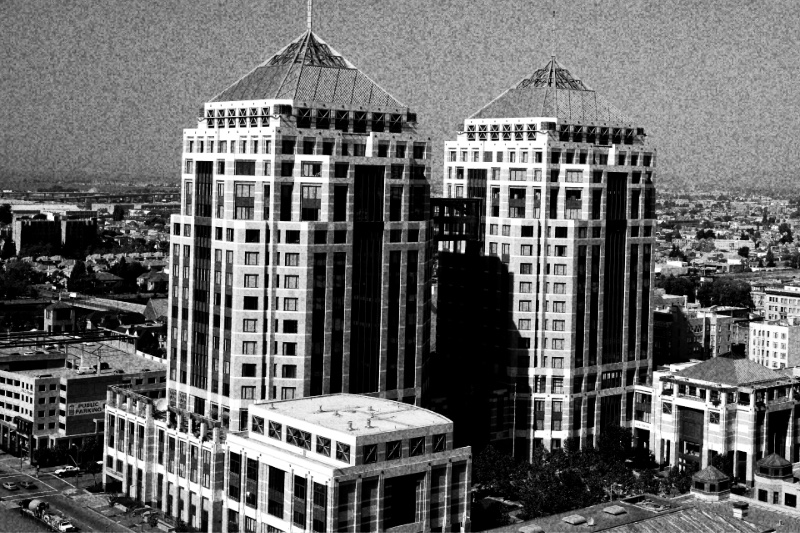
Carol M. Highsmith — Public domain, via Wikimedia Commons
The Justice Department wrote to county registrars across California on Friday 23 October asking them to set aside returned ballots from voters that federal agencies identify as likely noncitizens. It is asking a federal judge in Santa Ana to order the same thing statewide, and its answer to a federal ban on purging voters in the 90 days before an election is that holding a ballot is not removing a voter.
The county lists varied widely in size. Solano County said its list had 170 names, Santa Cruz 81, Marin 48, Napa 42, Nevada County 10 and Modoc one, according to a CNN report carried by Scripps News. Santa Clara, Butte and Amador also confirmed receiving letters. Napa’s registrar, John Tuteur, told the Associated Press that two uniformed Homeland Security officers delivered his. Bill Essayli, the first assistant US attorney in Los Angeles, wrote to San Bernardino County that officials who knowingly count such ballots “risk becoming aiders and abettors to a federal crime.”
What is the Justice Department asking the court for?
An order that ballots be held, not that voters be struck off. The department sued California, Secretary of State Shirley Weber and the Los Angeles County registrar, Dean Logan, on 15 October in the Central District of California, after Mr Logan refused to review a password-protected thumb drive of names sent on 13 October with a 48-hour deadline, saying that doing so would conflict with “established data privacy and information security protocols,” CBS News reported. On 19 October it applied for a temporary restraining order requiring officials to set aside mail ballots from people federal agencies identify as likely noncitizens and to verify their citizenship before counting them. “Once illegally cast ballots are counted and commingled with lawful votes, the resulting harm is impossible to remedy,” the department says in a later filing.
The case is United States v. State of California, No. 2:26-cv-12025, before Judge David O. Carter, who received it on 21 October and set argument for Tuesday 27 October at 1 p.m. The department had asked for a ruling “by November 3, 2026”. The same evening it asked for one by noon the next day. When none came, it filed a notice of appeal on 22 October arguing that “the Court’s silence is a constructive denial,” and took the case to the Ninth Circuit as No. 26-7070. Judge Carter’s order of 23 October answered that he “will rule promptly after hearing from the Parties at oral argument on Tuesday, October 27, 2026.”
Why does the difference between holding and removing matter?
Because federal law freezes removals close to an election. Under the National Voter Registration Act, a state must complete “any program the purpose of which is to systematically remove the names of ineligible voters” no later than 90 days before a federal election, 52 U.S.C. § 20507(c)(2)(A) provides. For 3 November, the window opened on 5 August. California’s opposition of 24 October says the measures sought would violate “the prohibition on removing voters from ‘the official list of eligible voters’ within 90 days of a federal election,” as well as the Voting Rights Act and state rules on ballot secrecy and voter challenges.
The department’s reply, filed on Sunday 25 October, is built on the gap in that wording. “In all events,” it says, “the United States does not seek to ‘remove the names’ of anyone ‘from the official lists of eligible voters,’ only to segregate select ballots.” It also cites the Ninth Circuit’s 2025 decision in Mi Familia Vota v. Fontes for the point that the provision bans “systematic cancellation programs” but not “individualized removals.” The registrations would stay on the rolls. Whether the votes on them would be counted is the part the department wants paused.
Los Angeles County’s opposition answers that the distinction has no statute behind it. “Congress has never required election officials to preserve the Executive’s ability to pull particular ballots while it pursues its suspicions,” it says. “Any urgency, moreover, is self-inflicted,” the county adds: federal agencies had the voter data by 8 May, and the department waited until 13 October to send its list.
How good are the lists?
The government has not said publicly how they were made, and the one comparable list that was checked shrank sharply. Trent McCotter, the acting deputy attorney general, said the 20,000 names were those the department had most confidence in after Homeland Security cross-referenced government databases, NPR reported. In Nevada, according to Scripps, Homeland Security described an initial finding of 15,900 possible noncitizen registrants as preliminary and said it had confirmed 185 by manual review; Nevada officials said last month that their own review found all 185 to be citizens, which the department disputes. By this publication’s arithmetic, 185 is about 1.2 per cent of 15,900.
The county lists have shown similar problems. Santa Cruz County Clerk Tricia Webber said most of her 81 names were “either canceled or inactive records,” and that at least one had never been registered in the county. On 19 October the department charged 28 green-card holders in California with election crimes; all 28 were on the list of 20,000, NPR reported, a number do not appear to have voted, and some registered more than 20 years ago. Rick Hasen of UCLA noted that the state has “over 20 million registered voters.”
How have the department’s related cases gone?
Badly. The Civil Rights Division has filed 31 lawsuits seeking unredacted state voter rolls, CBS News reported, and NPR counts 26 federal judges who have dismissed such demands. Attorney General Todd Blanche said: “State-facilitated voter fraud is unacceptable in the United States of America.” Ms Weber called the earlier federal claim of 190,000 noncitizens on California’s rolls “unsubstantiated,” according to CBS.
The registrars were given 48 hours. The statute’s deadline passed on 5 August. The department’s letters, and its reply brief, are written to fit in the space between the two, and on Tuesday Judge Carter will be asked whether that space exists.
Further reading
- Order Reiterating Briefing Deadlines re Temporary Restraining Order, United States v. State of California, No. 2:26-cv-12025 (23 October 2026)U.S. District Court, C.D. Cal., via CourtListener
- United States’ Reply in Support of the Ex Parte Application for Temporary Restraining Order (25 October 2026)U.S. District Court, C.D. Cal., via CourtListener
- State Defendants’ Supplemental Opposition to Application for a Temporary Restraining Order (24 October 2026)U.S. District Court, C.D. Cal., via CourtListener
- 52 U.S.C. § 20507, Requirements with respect to administration of voter registrationCornell Legal Information Institute
- Justice Department orders California counties to set aside ballots from suspected noncitizensScripps News
- DOJ charges 28 in California with voting crimes as election tensions escalateNPR
Owen Blackwood is a house byline used by The 13th Bell’s Politics desk. This piece was checked against the sources listed below before an editor approved it. See How we use AI.
Get The 13th Bell in your inbox