Judge Bars DHS Election Field Interviews Likely to Involve US Citizens in Nine States
A federal judge has barred DHS from election-related field interviews likely to involve U.S. citizens in nine states until 3 November. Six of the plaintiffs’ seven claims fell away, and the order rests on the Voting Rights Act’s protection for people who help others vote.

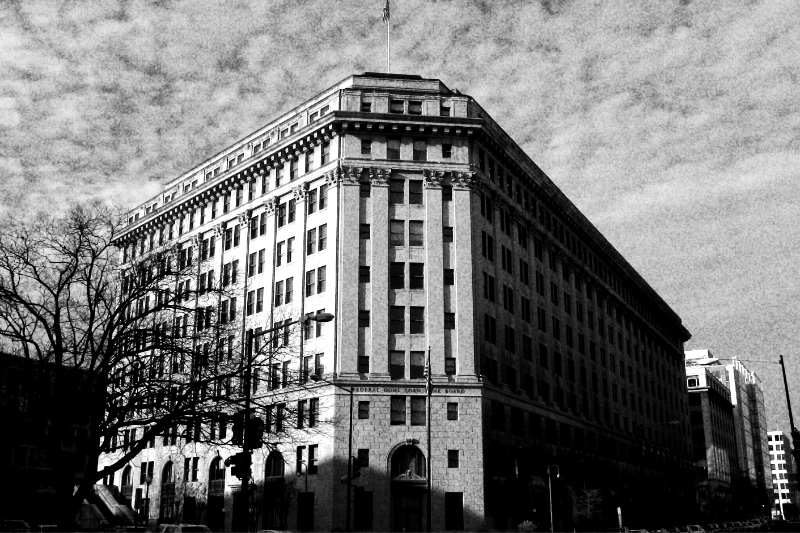
Carol M. Highsmith — Public domain, via Wikimedia Commons
A federal judge in Oakland has barred the Department of Homeland Security, until polls close on 3 November, from election-related field interviews in nine states that are likely to involve people it knows or should suspect are US citizens. Of the seven legal claims put to her, one carried the order.
Judge Araceli Martínez-Olguín of the Northern District of California signed the 19-page order in California Nurses Association v. Mullin, No. 26-cv-10680, on Wednesday 21 October. The nine states are California, Connecticut, Georgia, Missouri, Nevada, New York, Pennsylvania, Washington and Wisconsin. The order was stayed until 5 p.m. on Friday 23 October to give the government time to appeal. The plaintiffs were the California Nurses Association and National Nurses United, the City and County of San Francisco, Santa Clara County and the Voto Latino Foundation.
What is the programme the order limits?
DHS calls it the Unlawful Voter Initiative. According to the order, the department’s general counsel directed Immigration and Customs Enforcement in June to pursue penalties, including deportation, against non-citizens believed to have registered or voted; in August, U.S. Citizenship and Immigration Services began producing target lists for investigation, and on 31 August an internal “Surge Initiative Guidance” told Homeland Security Investigations agents to prioritise field interviews about voter eligibility in the nine states.
The judge’s account of the lists is the core of the case. The source data, she found, included 48.2 million records DHS received “through independent sources” and 50.6 million records from the Justice Department, drawn from state voter rolls or, where states refused to share them, commercial versions. During the surge, agents were ordered to complete at least 40 reviews each, which allowed “no more than twelve minutes to eliminate a person from the target list.” She wrote: “Even under the best conditions, there is a high likelihood of error in review because there is no federal database containing citizenship status of U.S. residents.” Naturalised citizens are targeted where the data suggest they voted before naturalisation.
Why did six of the seven claims fall away?
Standing and the shape of the challenge. The plaintiffs pleaded voter intimidation under Section 11(b) of the Voting Rights Act, intimidation of people who help others vote under the same section, a violation of the constitutional right to vote, three Administrative Procedure Act versions of those claims and an arbitrary-and-capricious claim. The judge then took the plaintiffs one by one.
San Francisco and Santa Clara failed to show standing: their costs for educational materials and the “erosion of trust” were too speculative. Voto Latino failed because the Ninth Circuit, sitting en banc this year, rejected the diversion of an organisation’s resources as an injury. The nurses’ unions succeeded through their members, at least four of whom said in declarations that they feared being wrongly targeted; members had stopped attending campaign events, and one would no longer sign up as a poll monitor. Their claim that members’ own votes were burdened failed, because the declarations said at most that members would vote by mail. The APA claims were not reached, because the plaintiffs had not identified a final agency action, as distinct from a “broad, programmatic challenge.”
That left one claim. Section 11(b), 52 U.S.C. § 10307(b), provides, as the order quotes it, that “[n]o person, whether acting under color of law or otherwise, shall . . . intimidate, threaten, or coerce, or attempt to intimidate, threaten, or coerce any person for urging or aiding any person to vote or attempt to vote.” The case was won on the second half of that sentence: the protection for people who urge or help others to vote, not for the voter.
What did the government argue?
That Section 11(b) gives private parties no right to sue, that it does not reach federal officers, and that the specific statutes authorising immigration and fraud investigations override it. The judge rejected all three. She followed district courts that have found a private right of action in the section, held that “whether acting under color of law or otherwise” leaves no basis to exempt federal agents, and found no conflict for the specific-over-general rule to resolve. She also wrote: “Plaintiffs do not claim, nor does the Court find, that it is unlawful for federal officials to undertake investigations into unlawful voting in federal elections.”
The intimidation she found lay in the combination: lists built on data “widely known to inadvertently include U.S. citizens,” field interviews in the weeks before an election, and DHS and HSI social media posts showing armed officers at front doors and arrests for voting offences. An internal 28 August memo, she noted, told agents to log findings in a portal so that photographs and video could be used for “[m]edia and [r]eporting.”
What does the injunction actually stop?
Less than “halt the investigation,” the phrase in early headlines. The order enjoins two things in the nine states: election-related field operations and field interviews “that involve or are likely to involve persons whom the Enjoined Parties know, suspect, or should reasonably know or suspect are U.S. citizens,” and election-related field operations based “wholly on TECS records” generated by the matching process against such people. TECS is a DHS law enforcement database.
| Activity | Under the order |
|---|---|
| Building and refining target lists | Not enjoined |
| Field interviews likely to involve people DHS knows or should suspect are citizens | Enjoined in the nine states |
| Field operations based wholly on TECS records, against such people | Enjoined in the nine states |
| Investigating suspected non-citizen voters | Not enjoined |
| Activity in other states | Not covered |
DHS said after the ruling, according to the Associated Press: “We have no plans to question or investigate people we believe to be U.S. citizens.” The order’s standard is wider than belief. It reaches people the department “should reasonably” suspect are citizens, and the judge’s own findings about twelve-minute reviews and the absence of a citizenship database are the evidence on which that will be measured. The bond is $100, which the judge set as nominal because she saw “little to no prejudice” to the government.
This publication reported this month on a separate ruling against the Justice Department’s collection of state voter rolls, the source of some of the records in these lists. The order here expires at 8 p.m. on 3 November, whatever happens to the list.
Further reading
- Order Granting Preliminary Injunction, California Nurses Association v. Mullin, No. 26-cv-10680-AMO (21 October 2026)U.S. District Court, N.D. Cal., via CourtListener
- Case: California Nurses Association v. MullinCivil Rights Litigation Clearinghouse
- 52 U.S.C. § 10307, Prohibited actsCornell Legal Information Institute
- Federal judge orders Trump administration to halt noncitizen voting investigation in 9 statesAssociated Press, via WGEM
Owen Blackwood is a house byline used by The 13th Bell’s Politics desk. This piece was checked against the sources listed below before an editor approved it. See How we use AI.
Get The 13th Bell in your inbox