Eighty-One Votes and a Court Law
Kosovo’s Assembly elected Justina Shiroka-Pula president with one vote to spare, in a ballot that opened minutes before a midnight deadline. Just before it, the Assembly passed the opposition’s law narrowing the Hague-based court that convicted Hashim Thaçi.

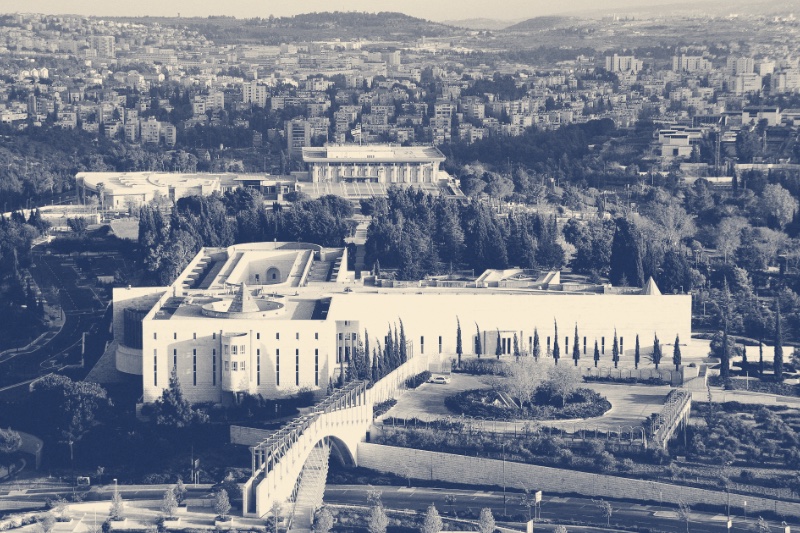
Arianit — CC BY-SA 4.0, via Wikimedia Commons
Kosovo’s Assembly elected Justina Shiroka-Pula president of the republic early on Wednesday, in a secret ballot that began just before the midnight deadline for choosing a head of state and finished after it. She received 81 votes in the 120-seat Assembly, one more than she needed, and won in the first round, RFE/RL reported. The other candidate was Eliza Hoxha of the opposition Democratic Party of Kosovo, the PDK. Shiroka-Pula took the oath before the Assembly the same night. “This mandate does not belong to one person alone. It belongs to our citizens, our institutions, and the state for which so many generations sacrificed,” she said.
The vote ended a vacancy that began in April, when Vjosa Osmani’s term expired, Al Jazeera reported. It also avoided another general election. Had no president been elected, the Assembly would have been dissolved and a new parliamentary election held within 45 days, European Western Balkans reported; Al Jazeera reported that 15 November had emerged as a likely date.
Why eighty
The number comes from Article 86 of the constitution. “The President of the Republic of Kosovo shall be elected by a two thirds (2/3) majority of all deputies of the Assembly,” it says, which in a 120-seat Assembly is 80. If nobody reaches that in two ballots, a third ballot between the two leading candidates needs a majority of all deputies, 61. If that fails too, “the Assembly shall dissolve and new elections shall take place within forty five (45) days.”
The two-thirds rule does a second job. Because at least 80 deputies must take part for the election to go ahead, as Al Jazeera described the quorum, a large enough minority can stop the vote by staying away. That is what the opposition did. The PDK and other opposition parties boycotted the voting sessions, and on Monday the Assembly failed to reach the 80 deputies it needed.
The price of a quorum
The boycott ended with a law about a court. On 16 September the Kosovo Specialist Chambers, which belong to Kosovo’s justice system but sit in The Hague, convicted at first instance four former leaders of the Kosovo Liberation Army of war crimes. The former president Hashim Thaçi and Jakup Krasniqi were sentenced to 25 years in prison, Kadri Veseli to 18 and Rexhep Selimi to 13, according to RFE/RL. All four were acquitted on other charges of crimes against humanity, and their defence teams have said they will appeal. The verdicts brought weeks of protest in Pristina. On 5 October some demonstrators threw bottles and pyrotechnics and police used tear gas and water cannon; police said six officers were injured and 11 civilians sought medical attention, and Kosovo’s Police Inspectorate opened a preliminary inquiry into the police response, RFE/RL reported.
The PDK, which Thaçi once led, proposed amendments to the law governing the Chambers and insisted they pass before it would join a presidential vote. Prime Minister Albin Kurti first wanted the order reversed. His third offer, made late on Tuesday evening, combined both: Shiroka-Pula, a former PDK deputy, as candidate, and the court law first. The PDK leader, Bedri Hamza, accepted her candidacy and put Hoxha up against her. The Assembly then passed the amendments in their second and final reading with 88 votes.
As RFE/RL summarised them, the amendments narrow the court’s jurisdiction to the period from 1 July 1999 to 31 December 2000, leaving out the war itself, and to offences directly linked to the alleged organ-trafficking operations at detention sites identified in a 2011 Council of Europe report. They cap sentences at 15 years, require sentences to be served in Kosovo, and make people convicted by final judgment eligible for presidential pardon. The pardon the amendments contemplate is a presidential one, and the presidency was filled minutes later.
What the constitution already says
The Chambers do not rest on an ordinary statute alone. They were created through Article 162 of the constitution, adopted in 2015, which begins: “Notwithstanding any provision in this Constitution.” It ties the court to Kosovo’s “international obligations in relation to the Council of Europe Parliamentary Assembly Report Doc 12462 of 7 January 2011,” and it provides that anyone found guilty and sentenced to imprisonment “may be transferred to serve their sentence in a third country, outside the territory of Kosovo.” It also gives exclusive authority over constitutional referrals concerning the Chambers to a Specialist Chamber of the Constitutional Court made up of three international judges.
Whether amendments passed by a simple statute can change what Article 162 set up is the question that body would answer if the law were referred to it. Parliamentary approval does not by itself establish whether the changes can take effect, RFE/RL reported, and legal experts have warned that they could face constitutional review. No referral had been announced by Wednesday.
Three minutes, or twelve
The other open question is the clock. European Western Balkans reported that the Constitutional Court had set a 60-day deadline that began on 8 August and expired at midnight on 6 October, that voting ended at 00:03 and that the count finished at 00:14. RFE/RL reported that the ballot opened six minutes before midnight and that the process did not end until 12 minutes after it, which some experts said could invite a legal challenge. None had been announced. “The process started on time. Counting and declaring the results, even if they take a few minutes after the deadline, is not a constitutional issue,” Enver Hasani, a former president of the Constitutional Court, told Kosova.Pres, as European Western Balkans reported.
Shiroka-Pula, an economist, has led the Academy of Sciences and Arts of Kosovo, the first woman to do so. She was minister of energy and mining from 2008 to 2011 and a PDK deputy from 2011 to 2014. Under Article 87 her term is five years, beginning with the oath.
Sources
Articles 86, 87 and 162 of the Constitution of Kosovo were read in the English text (as revised in 2016) published by the Constitute Project. The vote, the candidates, Shiroka-Pula’s address, the sequence of offers, the 88 votes for the amendments and their content, the convictions and sentences, and the protest figures are as reported by RFE/RL. The vacancy since April, the boycott and quorum, and the likely November date are as reported by Al Jazeera. The court-set deadline, the timings of 00:03 and 00:14 and Hasani’s remark are as reported by European Western Balkans, citing FoNet and Kosova.Pres. The text of the amendments was not read.
Further reading
- Kosovo Elects President After Opposition Agrees To Last-Minute DealRFE/RL
- Justina Shiroka-Pula elected President of Kosovo by ParliamentEuropean Western Balkans
- Amid protests, Kosovo’s political deadlock raises prospect of new electionsAl Jazeera
- Constitution of the Republic of Kosovo (rev. 2016)Constitute Project
Nadia Belkacem writes for The 13th Bell on world affairs. This piece was edited and fact checked before publication.
Get The 13th Bell in your inbox