The Court a Country Built to Try Its Own Founders
Kosovo's parliament created a court under Kosovo law, then placed it in another country and staffed it with foreigners. Wednesday's convictions are the reason that design exists.

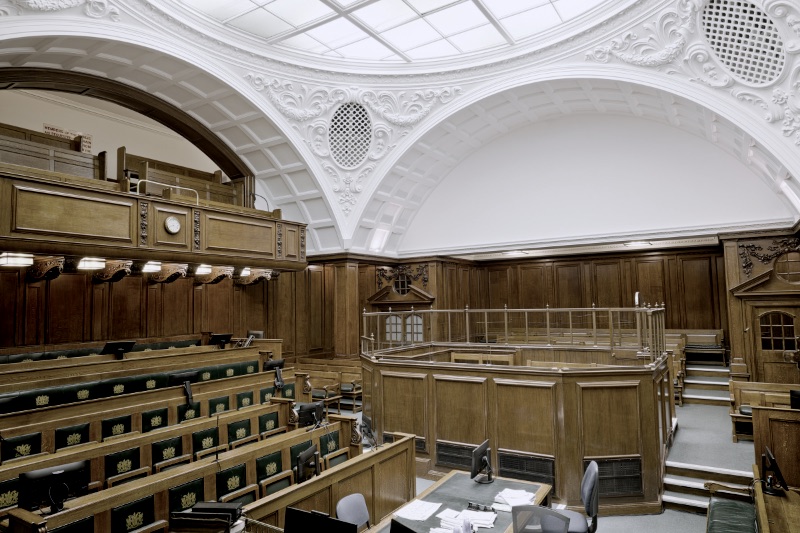
Flutur Gërbeshi — CC BY 3.0, via Wikimedia Commons
A court in The Hague convicted Kosovo's former president of war crimes on Wednesday and sentenced him to twenty-five years. The institution that did it is stranger than the headline suggests.
The Chambers' own account of themselves begins with the fact that explains everything else: they are part of Kosovo's justice system.
Not a United Nations tribunal. Not a chamber of the permanent international court. A Kosovo court, created by Kosovo's parliament, applying Kosovo law.
The Kosovo law that created them then removes almost everything a court normally takes from the country it belongs to. The judges are international. The prosecutor is international. The seat is in the Netherlands. The detention facilities, the registry and the witness protection arrangements are all outside Kosovo.
A state built a court to try its own founders and then exported every part of it that could be pressured.
The reason is in the subject matter. These proceedings concern the conduct of the Kosovo Liberation Army, the side the West supported in 1999, against political opponents and people it regarded as collaborators.
Cases of that kind are close to impossible to run domestically. The defendants are widely regarded as the men who ended a campaign of expulsions and delivered independence. Witnesses live among their supporters. Intimidation cases have dogged every earlier attempt.
Nor could the ordinary international route be used. The permanent international court, for contrast has jurisdiction over crimes committed on the territory of states party to its statute or referred by the Security Council. Kosovo is not a party, and a Russian veto made a referral unthinkable.
The earlier UN administration is the other half of the background. The UN mission that governed Kosovo ran the territory after 1999 and left behind a justice system that had already tried, and largely failed, to bring KLA cases to verdict.
So Kosovo's partners asked Kosovo to legislate. In 2015 its parliament did, under considerable pressure, creating chambers attached to its own courts but sitting abroad.
The result is a hybrid with an unusual property: every criticism of it is, in form, a criticism of Kosovo's own law.
That was the design's purpose. A court imposed from outside would have been rejected as victor's justice in reverse; a court run inside Kosovo would not have been believed elsewhere. Placing a domestic court abroad was the compromise that let both claims be made.
The costs of that compromise are visible in the reaction. Thousands watched the verdict in Pristina, and the sentences are widely resented as the price of independence rather than the punishment of crimes.
There is a defensible answer to that resentment, and it is not comfortable. A liberation movement that committed crimes is both things at once, and a state that wants the rule of law cannot make the first fact cancel the second.
The narrower legal question the judges answered is worth noting for what it says about the evidence. They convicted on war crimes and acquitted on crimes against humanity, finding no widespread or systematic attack on a civilian population had been established.
That distinction matters beyond this case. Crimes against humanity require a pattern; war crimes require only the conduct and an armed conflict. A court willing to draw the line where the proof ran out is a court behaving like a court.
Whether the design succeeds will not be settled by these verdicts. It will be settled by whether Kosovo's institutions, having created this court under pressure, treat its judgments as their own.
The appeal will take years. The politics will move faster, and every party in Pristina now has to say what it thinks a court it voted for is for.
Further reading
- Law on Specialist Chambers and Specialist Prosecutor's OfficeKosovo Specialist Chambers and Specialist Prosecutor's Office
- Kosovo Specialist Chambers and Specialist Prosecutor's OfficeKSC-SPO
- About the CourtInternational Criminal Court
Ruth Okonkwo writes for The 13th Bell on law. This piece was edited and fact checked before publication.
Get The 13th Bell in your inbox