The Consent Decree Outlives the Administration
A settlement negotiated in one year becomes the operating manual of an agency for the next twenty, enforced by a judge nobody elected to run it.

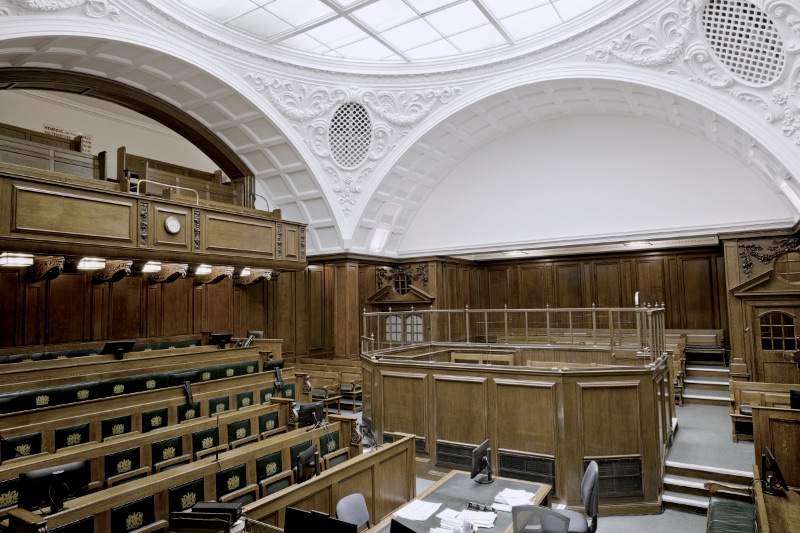
Carol M. Highsmith — Public domain, via Wikimedia Commons
A consent decree is a settlement that a court adopts as its own order under the judicial code. Both sides agree, the judge signs, and the agreement acquires the enforcement machinery of a federal court.
The device exists because some disputes cannot be resolved by a payment. If the complaint is that an institution operates unlawfully, the remedy has to be a change in how it operates, and a change in operations has to be supervised.
What follows is a form of governance that fits awkwardly into anyone's account of how policy is made. The decree specifies staffing, procedures, timetables and reporting, all of it enforceable through the ordinary rules of practice. A monitor is appointed. Compliance is measured against terms fixed at the moment of settlement.
The agreement was negotiated by officials who have since left, on assumptions about budgets and conditions that stopped being true years ago.
Duration is the crux. A decree ends when its terms are met, which sounds straightforward until you notice that the terms were written by parties with an interest in setting them high, and that the party who must meet them is not the party who agreed to them.
Modification is possible. The civil rules provide for relief from a judgment, and courts do release institutions from decrees. But the burden sits with the institution seeking release, and the record it must build is the record its predecessors' failures created.
There is a democratic objection here that deserves to be stated at its strongest, because it is not frivolous. A decree can bind an elected administration to the policy preferences of a previous one, agreed with a private litigant, enforced by a judge, and insulated from the ordinary means of changing policy.
The answer is that the decree exists because the ordinary means produced an unlawful condition that the ordinary means did not correct. That is a real answer. It is not a complete one, because it says nothing about how long the extraordinary remedy should persist after the condition is fixed.
Practice varies enormously, which is itself informative. Some decrees carry explicit sunset provisions and end. Others run for decades, and the published record of that supervision is the main place where the details of the arrangement are visible at all.
The reform that has the most support across the argument is also the least dramatic: write decrees with defined endpoints, require periodic judicial review of whether continued supervision is warranted, and state the exit criteria in terms the institution can actually satisfy.
None of that weakens the remedy. A decree with a defined end is easier to enforce, because compliance is the route out rather than an indefinite condition that no amount of effort concludes.
The alternative is what many institutions now live under: a set of obligations that no current official negotiated, measured against a standard nobody has revisited, in a proceeding that has outlasted the problem it was opened to solve.
Termination is the part of the arrangement that gets least attention and determines its length.
Ending a decree usually requires demonstrating sustained compliance, and demonstrating it costs money that the institution under the decree would rather spend elsewhere.
So decrees persist not because anyone thinks they are still needed but because nobody has an incentive to fund the exit.
A sunset requiring the court to ask the question on a schedule would change that, and would face objection from every party who prefers the certainty of the status quo.
Further reading
- Current rules of practice and procedureAdministrative Office of the U.S. Courts
- Title 28, Judiciary and Judicial ProcedureOffice of the Law Revision Counsel, U.S. House
- United States Courts OpinionsU.S. Government Publishing Office
Ruth Okonkwo writes for The 13th Bell on law. This piece was edited and fact checked before publication.
Get The 13th Bell in your inbox