Canada Cannot Join, So the Offer Is Something Else
The treaties open membership to European states and nobody claims Canada is one. Everything the European Union can actually offer Ottawa already has a name, a legal base and a known weakness.

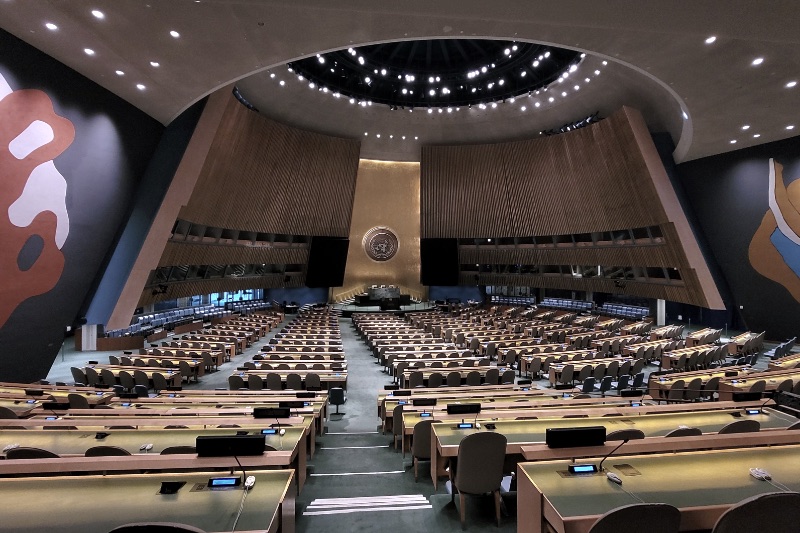
Diliff — CC BY-SA 3.0, via Wikimedia Commons
The president of the European Commission invited Canada on Wednesday to become the Union's first associate member. There is no such category, which is the interesting part.
The Treaty on European Union settles the question of who may join in a single clause. Any European state which respects the Union's values and is committed to promoting them may apply. Canada satisfies the second half of that sentence and not the first.
That is not a technicality anyone can drafting-fix. The geographic limit has been in every version of the treaties since the founding ones, and it is the reason Morocco's application in 1987 was refused.
The Union's own account of enlargement sets out what applicants then face: an opinion from the Commission, unanimous agreement among existing members to open talks, negotiation over thirty-odd chapters of law, and ratification in every national parliament. It is a decade of work for a state that qualifies.
So the offer to Ottawa has to be built from the instruments that exist for countries which are not going to join. There are three families of them, and each has a known cost.
The first is association. The functioning treaty allows the Union to conclude agreements with a non-member establishing an association with reciprocal rights and obligations, common action and special procedures.
That is the legal base for the deepest relationships the Union has with its neighbours, and it is capacious. An association agreement can create joint councils, align whole areas of law, and run for decades.
What it cannot do is give the other party a vote. Association bodies work by agreement between two sides; they are not the Council, and they do not amend Union law.
The second is the European Economic Area. The agreement Norway and Iceland signed gives them the single market almost in full: free movement of goods, services, capital and people, with Union rules applying inside their borders.
The price is the one every British debate rehearsed for a decade. EEA states adopt the relevant law without sitting where it is made. They are consulted, they shape drafts at official level, and at the end they take what the Union decides.
The third is a sectoral patchwork of the Swiss kind: dozens of separate bilateral agreements, each covering one field, renegotiated whenever the underlying law moves. It preserves sovereignty on paper and consumes governmental attention permanently.
Set the Strasbourg proposal against that list and the shape of the problem is clear. Trade, defence production, critical minerals, artificial intelligence and Arctic policy are exactly the areas where the Union is currently writing rules that will bind its own members.
If Canada is to be inside that rule-writing, the arrangement is unlike anything in the treaties and would need them changed, which means unanimity among twenty-seven governments and ratification in each.
If Canada is to be outside it, taking the rules and gaining access, the arrangement is association or the EEA with a new name, and the Norwegian objection applies with equal force to a G7 country on another continent.
There is a third possibility, and on the evidence it is the likeliest. The phrase may be doing political work rather than legal work: a signal to Washington, to Canadian voters and to European capitals that the relationship has changed category, with the content to be filled in later by officials using the instruments they already have.
That is not cynicism about the proposal. Treaties have been preceded by slogans before, and the Union's habit is to announce a destination and then spend years building the road.
It does mean the word to watch is not "membership" but "association", because one of them has a legal base, a procedure and precedents, and the other has a press release.
The test will come in the text agreed at the leaders' summit next month. A document that cites the association article is a serious agreement inside existing law.
A document that repeats the phrase without citing anything is a promise that eventually has to be redeemed in twenty-seven parliaments, several of which are not currently ratifying anything.
Further reading
- Treaty on European Union, consolidated versionEUR-Lex, Publications Office of the European Union
- Treaty on the Functioning of the European Union, consolidated versionEUR-Lex, Publications Office of the European Union
- EU enlargementEuropean Union
Iris Nakamura writes for The 13th Bell on world. This piece was edited and fact checked before publication.
Get The 13th Bell in your inbox