A Speech in the First Person
Trump’s address to the United Nations was built on a single pronoun. Nearly every decision he announced was made somewhere other than the hall, and the one constraint he named was the one he insisted did not apply to him.

The Charter of the United Nations begins with the words “We the peoples.” Donald Trump’s address to the General Assembly on Tuesday, about thirty-five minutes long by CBS News’s count, began in substance with “I.”
“While others have talked, I have acted,” he told the hall, sticking closely to his script, CNN noted. “While others have spoken of peace I have made peace. While others have ignored threats, I have confronted them. While others have talked of courage, America has shown it. While others have promised strength, I have used it to make America the most powerful country in the world.”
It would be easy to hear the cadence as style. It is better read as a description of how American power now works, offered by the man who exercises it, in the one room built on the premise that power should not work that way.
The question he put to himself
The line that will be remembered is about Iran, where the war the United States and Israel began on 28 February is nearing its eighth month. Trump framed the choice as a question addressed to himself, in front of the world’s governments. “Will a deal be made with Iran that lets them rebuild and create a far greater country than it ever was before, maybe one of the greatest in the Middle East or even the world? Or do I annihilate the Islamic Republic and do it quickly, never giving them a chance to kill and destroy people and countries again?” Then, as NBC News and CBS both reported it: “Do I drive them into hell with no chance of survival and no hope of future greatness or generations?”
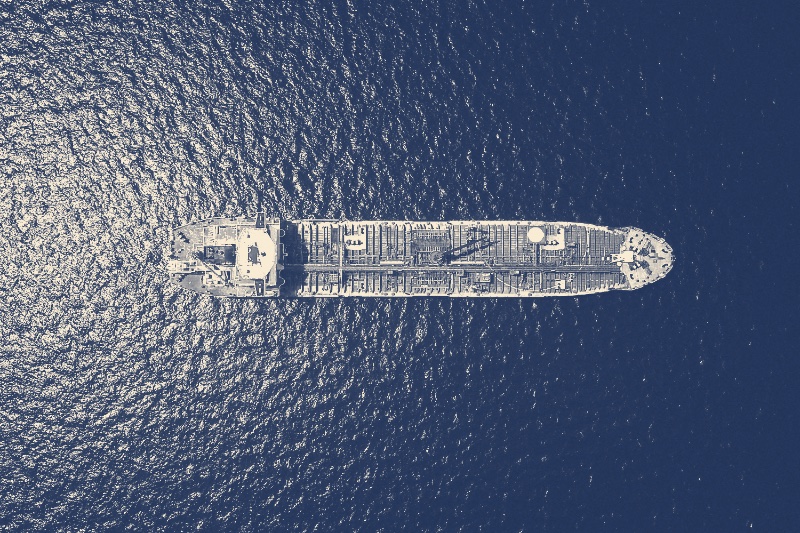
The grammar matters. The first question is about what a deal would do. The second is about what he will do. The Assembly was asked for nothing, and nothing in the speech suggested its view would enter the calculation. The Security Council appeared once, thanked for “voting overwhelmingly to pass a resolution condemning Iran’s despicable terrorist attacks on commercial shipping.” It is the one organ of the United Nations in which the United States holds a veto.
Decisions made elsewhere
Almost everything Trump announced had been settled, or will be settled, somewhere other than the hall. The United States will “immediately begin the process of developing a large military presence” on Greenland, including “two very major military bases,” under a deal with Denmark and Greenland that he said gives Washington “permanent control” of the island’s security. “No US adversary will ever be permitted to establish a military presence in Greenland anymore, or make sensitive investments there without our express written approval,” he said. That agreement was reached among three governments, not 193.
On Cuba, which he called “an absolutely failed state,” the forum was a single negotiator. “He’s deep into negotiations with Cuba,” Trump said of Secretary of State Marco Rubio. “Let’s see what happens.” “Communism will never be coming to America, but freedom will be coming to Cuba,” he added, according to CNBC. The Cuban delegation, led by Foreign Minister Bruno Rodríguez Parrilla, stood up and walked out.
On the Western Hemisphere he was plainest of all. “To the victor belong the spoils, you’ve all heard that,” he said. “Our actions in Venezuela are proof that the United States will no longer permit threats to America to gain a foothold anywhere in the Western Hemisphere. And if necessary, we will use our unmatched military might to secure the vital national interests of the United States.” Of Mexico: “It’s unacceptable for the United States to share a 2,000-mile border with a territory controlled by enemy cartels.” And beyond the region: “We are reasserting American power, including American military power, where necessary in our region and around the world.”
Even the institution he held up as an engine of peace was his own creation. He praised the Board of Peace, the body he set up to oversee the reconstruction of Gaza, as a “significant group of people.”
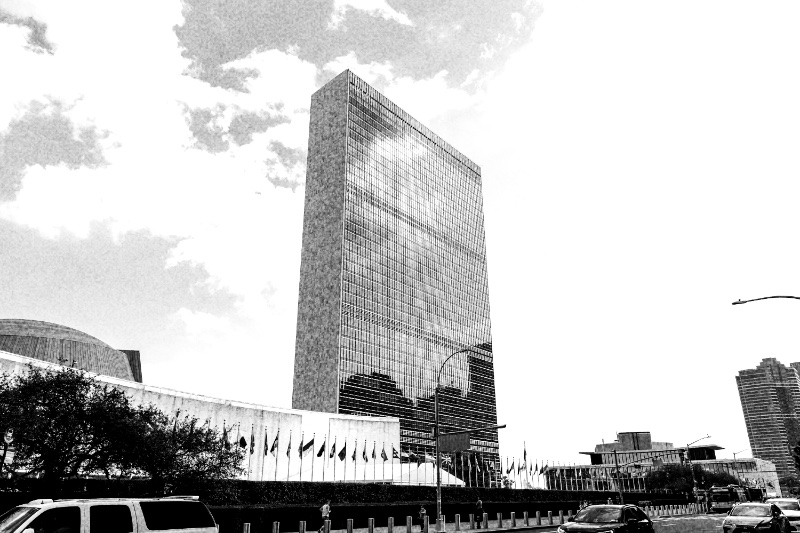
None of this is new as policy. What was new was how openly the setting was used. This magazine noted yesterday that the one part of the United Nations the host country operates alone is the door. On Tuesday the host treated the hall the same way, as a place to announce decisions rather than to make them. The most powerful leader absent from the room will make the same point from the other side on Thursday, when Xi Jinping meets Trump at the White House instead of addressing the Assembly at all.
The constraint he denied
There was one limit on American power that Trump did acknowledge, and he acknowledged it by denying it. “I believe we’ll make a deal right after the election, because it doesn’t make sense for them not to,” he said of Tehran. “They’re waiting to see how I do in the midterm election. What they don’t realize is that I’m not running.” And, as the Associated Press reported: “I gave absolutely no credence and will not give credence to the election when it comes to Iran. It doesn’t even enter my mind.”
It was an unusual thing to tell the General Assembly. On the president’s own account the war has a timetable, and the timetable is set by an American vote on 3 November. He has said so before; “It’s gonna end right after the election,” he told Fox News earlier this month. The pressure is not hard to find. Gasoline averages $4.47 a gallon, according to AAA figures cited by CNN, and a poll the network cited on Tuesday found only 26 percent of Americans approving of his handling of Iran. CNN’s own reading was that the line was meant to convince Tehran he will not bend before November.
That may be right. But the sentence concedes the point it was meant to refute. A speech that placed every other decision in the first person singular placed the end of a war in the calendar of an election in which, he stressed, he is not a candidate. It named the one audience whose judgment he cannot overrule, and that audience was not in the hall.
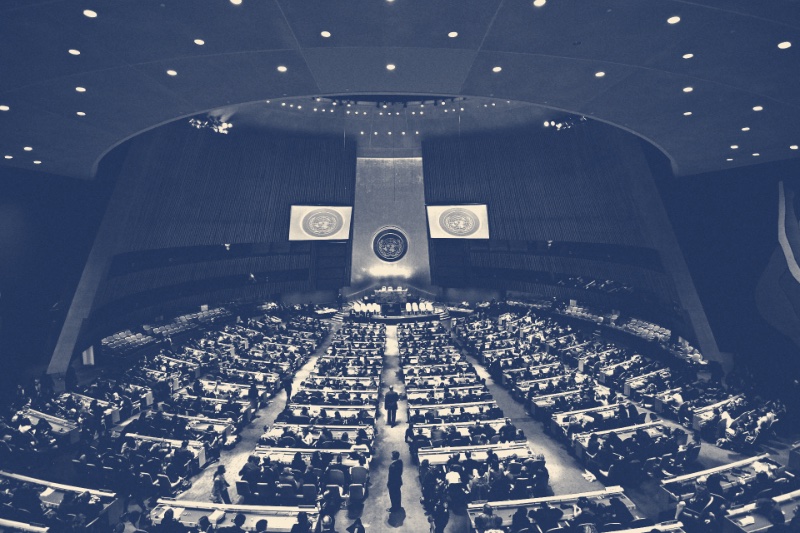
The Assembly, now in its eighty-first session, exists so that states which cannot command can at least be heard. On Tuesday it heard a president explain that he would decide, that he had already decided a good deal, and that the only verdict likely to hurry him would be delivered by American voters six weeks from now. That is not quite a rejection of the United Nations. It is an accurate map of where, in September 2026, the decisions are made.
Further reading
- UNGA 2026 live: Trump says he faces a decision on Iran to make a deal or ‘annihilate’ the countryCNN
- In U.N. speech, Trump threatens to “annihilate” Iran and defends handling of global conflictsCBS News
- Trump addresses the U.N. General Assembly as Iran war rumbles onNBC News
- Trump slams Iran and Cuba, boasts about record in UN speechCNBC
Nadia Belkacem writes for The 13th Bell on world. This piece was edited and fact checked before publication.
Get The 13th Bell in your inbox