The Buyer Is the Broker
Xi Jinping will spend UN week at the White House rather than the General Assembly, offering himself as the leader who can talk to both Washington and Tehran. His standing in Tehran rests on the oil trade the United States is trying to sanction, which makes the trade truce and the war one negotiation.

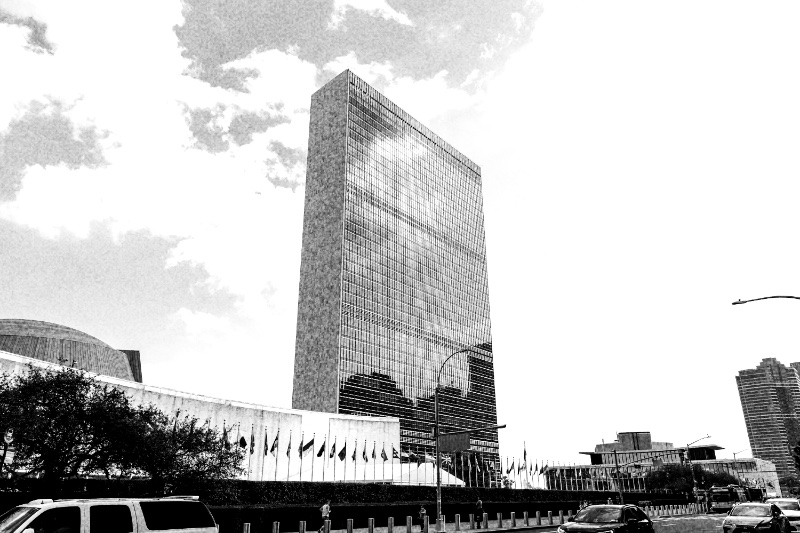
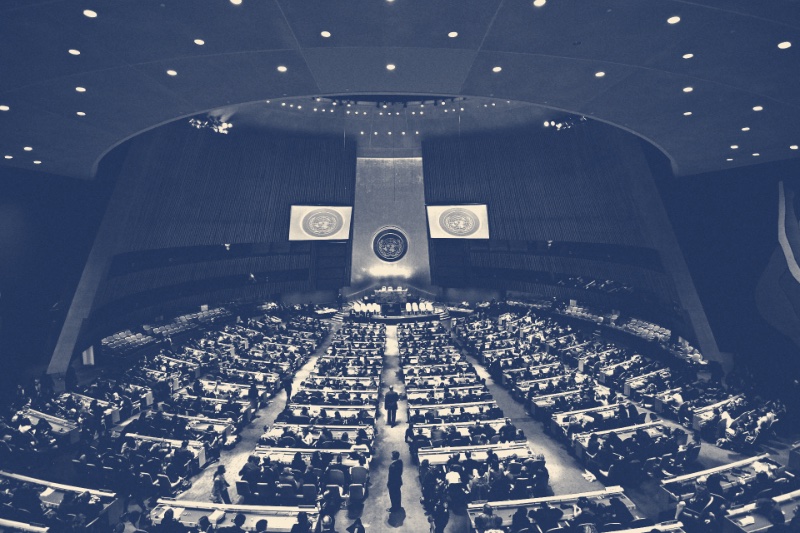
This morning the leaders of the world take turns at the rostrum of the General Assembly in New York. Tomorrow Xi Jinping lands at Joint Base Andrews, where, according to the White House, Donald Trump will greet him in person. On Thursday there is an arrival ceremony on the South Lawn with 479 members of the armed forces, then talks and a state dinner. On Friday Xi tours the National Archives and flies home.
The last time Xi came to the White House, in September 2015, he went on to New York and addressed the Assembly’s seventieth-anniversary session. This time the itinerary stops in Washington. It is the first state visit by a Chinese leader in eleven years, as NPR noted, and the two men’s second meeting this year, after Trump’s visit to Beijing in May.
The stated business is trade. The unstated business is Iran. The argument of this piece is that they are the same business, and that the reason is the oil.
The truce
The trade truce Trump and Xi struck in South Korea last October traded lower American tariffs for Chinese action on fentanyl precursors, renewed soybean purchases and a pause in rare-earth export controls, as Reuters summarised it this week. It expires on 10 November, a week after the midterm elections.
Neither side expects the summit to settle it. Jamieson Greer, the trade representative, told Bloomberg Television on Monday that an extension of three to six months was the range Washington could support, and that talks would continue. He blamed Beijing for the uncertainty, saying it was still holding back on rare-earth supplies, and made clear he expected no grand bargain. Melanie Hart of the Atlantic Council expects the two presidents to agree a six-month extension anyway.
A short extension suits Washington because it keeps Beijing on probation. It also means the tariff truce will be renegotiated at exactly the moment the United States is deciding how hard to squeeze the country that buys Iran’s oil.
The go-between
Beijing has spent the past week presenting itself as the one capital that talks to both sides of the war. On 16 September Wang Yi, the foreign minister, received Iran’s Abbas Araghchi in Beijing. According to Xinhua’s account, Wang said the prolonged conflict was “not in the common interest of the parties concerned” and urged Iran and the United States to “return to the Islamabad Memorandum of Understanding (MoU) at an early date.” Araghchi said Iran “does not want the conflict to continue,” that the memorandum “remains valid,” and that Iran had reached a plan with Oman on reopening the Strait of Hormuz. The next day Wang spoke by phone with Marco Rubio, and the Middle East was on the agenda.
Mediation usually trades on distance: the broker is trusted because it has no stake. China’s claim runs the other way. It is heard in Tehran because it is Iran’s economic lifeline, buying the great majority of the country’s oil exports, more than 90 percent by some estimates, as Ali Ahmadi of the Geneva Centre for Security Policy noted in Foreign Policy today. That trade is Iran’s main source of foreign currency. It is also the thing the United States is trying to cut.
In late August the Treasury secretary, Scott Bessent, announced what he called an “economic D-Day”, Operation Economic Outcast, aimed at the money behind Iran’s war effort. The first round designated nearly sixty entities, individuals and vessels, many in China and Hong Kong, but spared China’s large banks and the independent refiners in Shandong that buy Iranian crude. Beijing said it would take “all necessary measures” to protect its trade.
The same lever
Here is the structural problem Thursday’s meeting cannot make go away. The leverage Washington wants Xi to use on Tehran and the trade it threatens to sanction are the same lever. If the Treasury goes after the big Chinese banks, it collides with the truce the president is trying to extend. If it does not, Beijing keeps both its oil and its standing as the indispensable go-between.
There is a second dependency, less discussed. Oil has hovered near $100 a barrel, not the $150 some analysts feared when the war began in February, and the Associated Press reported last week that one reason is China. Beijing had built a reserve of about 1.4 billion barrels, the world’s largest, and cut its crude imports by 32 percent between the first and second quarters. “We’ve been free-riding off Beijing in a weird way,” Rosemary Kelanic of Defense Priorities told the AP. A China that went back to buying at its old pace would be felt at every American gas pump before the midterms.
None of this is hidden from the Chinese side, and its conduct at the United Nations shows how it prefers to use the position. In April China and Russia vetoed a Gulf states’ draft resolution on protecting shipping in the Strait of Hormuz, which had eleven votes in favour; China’s ambassador, Fu Cong, said it “failed to capture the root causes and the full picture of the conflict.” In the room where fifteen countries vote, Beijing blocked. In the room where two leaders meet, it offers to help.
That is the real meaning of the week’s itinerary. The Assembly is where middle powers make their case to one another. A state that holds a stake on both sides of a war does not need to make its case there. It needs one meeting, in one building, with the one leader who can decide whether the lever gets pulled. Xi will have it on Thursday. The truce he wants extended and the war Beijing says it wants ended will be on the same table, because for Beijing they were never separate files.
Further reading
- Wang Yi holds talks with Iranian foreign minister Araghchi, 16 September 2026Xinhua
- Trump’s ‘Economic D-Day’ Against Iran Risks U.S. Ties With ChinaForeign Policy
- Oil prices are high but could be much worse. Trump has China’s Xi to thank for thatAssociated Press
- What to expect at the Trump-Xi summit in WashingtonAtlantic Council
Iris Nakamura writes for The 13th Bell on world. This piece was edited and fact checked before publication.
Get The 13th Bell in your inbox