Lula Wins Brazil’s Runoff by 4.4 Million Votes as Flávio Bolsonaro Vows to Seek Annulment
Luiz Inácio Lula da Silva won Brazil’s presidential runoff on Sunday by about 4.4 million votes. Flávio Bolsonaro has reportedly refused to recognise the result and says he will ask the courts to annul it, but the constitution allows a narrow challenge, and only after certification.

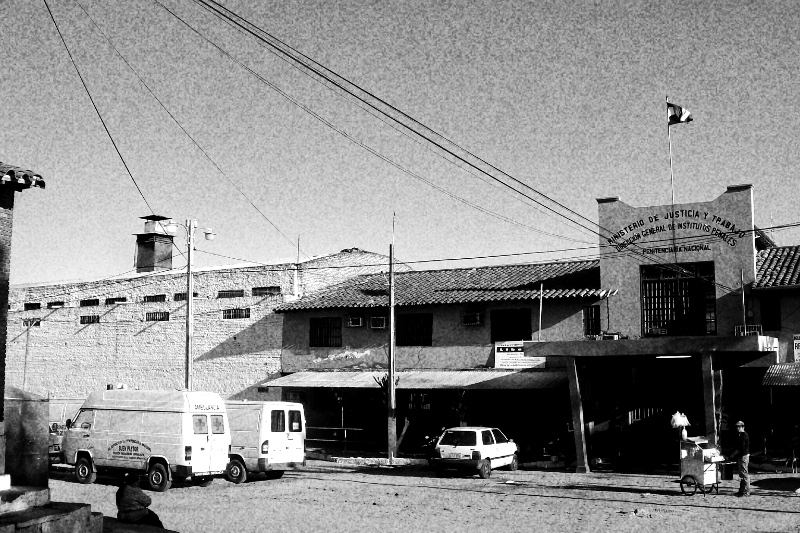
Eurico Zimbres — CC BY-SA 2.5, via Wikimedia Commons
Luiz Inácio Lula da Silva won Brazil’s presidential runoff on Sunday 25 October with 51.79 per cent of valid votes to Flávio Bolsonaro’s 48.21 per cent, a margin of 4,430,191 votes on the electoral court’s final count, The Rio Times reported. He begins a fourth term on 5 January 2027.
Bolsonaro, a senator and the son of the former president, has not accepted it, according to The Rio Times’ live coverage, which is the only account of his response this publication has been able to find. The paper reports that he said on Sunday night that he cannot recognise the result and will ask the courts to annul it over a two-hour extension of voting. That is The Rio Times’ paraphrase; this publication has not found a transcript, a recording or a second report of the statement. The Associated Press, reporting the result, said only that the extension “may trigger legal action by Bolsonaro.” What he can actually file, and when, is set by the constitution, and it is narrower than the announcement.
What was the extension?
An order that kept polls open for two more hours. “Brazilian Supreme Court Justice Cristiano Zanin ruled three minutes before the scheduled end of voting,” the Associated Press reported, extending voting in every state to 7 p.m. Brasília time, according to The Rio Times. The ruling followed requests from both campaigns. Lula’s cited bus transport problems in São Paulo and Salvador; Bolsonaro’s cited heavy rain in southern Brazil, where he is favoured. “It was unclear how many polling stations stayed open after the scheduled closing time,” AP said. The Bolsonaro ally Nikolas Ferreira pointed out that Zanin is Lula’s former lawyer.
Two features of the order matter for any challenge. Bolsonaro’s own campaign asked for an extension, so the complaint cannot be that extending voting was improper in itself; it would have to be about how this extension was granted or applied. And the reports describe Zanin as a justice of the Supreme Federal Court (STF), not of the Superior Electoral Court (TSE) that runs the count. Under Article 119 of the Constitution, the TSE has at least seven members, three of them drawn from the STF. None of the reports this publication has read says whether Zanin issued the order as a member of the electoral court or as an STF justice, and that decides which body’s procedure a challenge would attack. He is separately, as an STF justice, the rapporteur of a challenge to a TSE ruling that decided the Rio de Janeiro governor’s race in the first round, The Rio Times reported.
What does the constitution allow?
The constitution itself names one action, with a fixed window and a fixed list of grounds; Brazil’s electoral statutes provide other procedures, which this piece does not examine. Article 14, paragraph 10, provides that an elected mandate “poderá ser impugnado ante a Justiça Eleitoral no prazo de quinze dias contados da diplomação”: it may be challenged before the electoral courts within fifteen days of the diplomação, the formal certification of the winner. The action must be supported by evidence of abuse of economic power, corruption or fraud. Paragraph 11 requires it to proceed under seal and makes the person who files it answerable under the law if the action is reckless or in manifest bad faith.
Three consequences follow. Nothing can be filed under this provision until Lula is certified. The TSE’s calendar for 2026, Resolution 23.760, requires the electoral courts to complete certification by 18 December, NSC Total reported, and the TSE certifies the president itself; this publication has not found an announced date. A grievance about voting hours has to be fitted into abuse, corruption or fraud; the constitution does not list a procedural objection to a court order as a ground on its own. And the final word rests with the TSE, whose decisions, under Article 121, paragraph 3, “são irrecorríveis”, not subject to appeal, “salvo as que contrariarem esta Constituição”, except those that contravene the constitution. That exception leads to the STF, the court on which Zanin sits.
How large is the margin the challenge would have to overcome?
About 3.6 points. On The Rio Times’ TSE figures, Lula had 64,256,232 votes and Bolsonaro 59,826,041, out of 124,082,273 valid votes; the gap is 3.57 per cent of valid votes (this publication’s arithmetic). AP described it as an “unassailable lead of nearly 4.4 million votes.” Article 77 elects the president by “maioria absoluta de votos, não computados os em branco e os nulos”, an absolute majority with blank and spoiled ballots excluded, so the valid-vote figure is the one that counts.
| Round | Lula | Flávio Bolsonaro |
|---|---|---|
| First round, 4 October | 45.16% | 47.03% |
| Runoff, 25 October | 51.79% (64,256,232) | 48.21% (59,826,041) |
The table gives shares of valid votes as The Rio Times reported the TSE’s totals. No report this publication has read quantifies how many votes were cast during the extra two hours. Without that number, the claim that the extension changed the result is an assertion, not yet an argument. The Rio Times reported on Sunday night that “the courts have accepted nothing so far.” The TSE has declared Lula the winner.
What happens without a petition?
The calendar runs. Under Article 82, as amended in 2021, the presidential term “terá início em 5 de janeiro do ano seguinte ao de sua eleição.” Governors take office on 6 January and the new Congress on 1 February. Outside Brazil, President Trump said Brazil had applied Joe Biden’s playbook, offering no evidence, and Washington had not said whether it accepts the result, The Rio Times reported; those statements have no role in the procedure.
The constitution gives the losing side fifteen days to make its case, and starts the clock on the day the winner receives his diploma.
Further reading
- Lula beats Bolsonaro in Brazil runoff, securing fourth presidential termAssociated Press via PBS NewsHour
- Brazil Election 2026: Presidential Runoff, Lula vs FlávioThe Rio Times
- Constituição da República Federativa do Brasil de 1988Palácio do Planalto
- Eleições 2026: mandatos vão durar mais tempo com novas datas de posses; veja novos prazosNSC Total
Claire Vantassel is a house byline used by The 13th Bell’s World desk. This piece was checked against the sources listed below before an editor approved it. See How we use AI.
Get The 13th Bell in your inbox