A Majority of Valid Votes
Brazil’s Constitution elects a president on an absolute majority of the votes, leaving out blank and null ballots. On the eve of the first round, the court that runs the count is still deciding which votes are null.

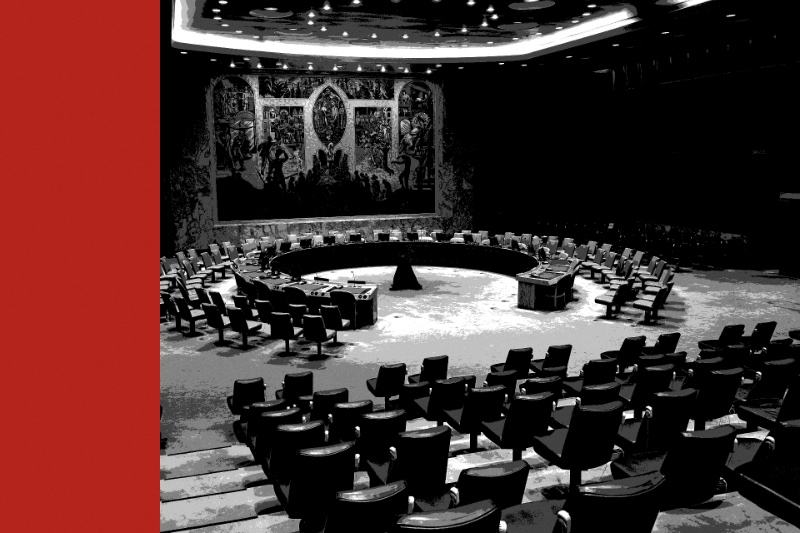
O Tribunal da Democracia — Public domain, via Wikimedia Commons
More than 158 million Brazilians are registered to vote on Sunday, and each of them will cast six votes on an electronic voting machine. The order of the screens is fixed by the elections law: federal deputy, state or district deputy, senator (two this year), governor, and last, president. Polls close at 5pm Brasília time, the Tribunal Superior Eleitoral says, and the machines’ tallies start moving to the court as soon as they do.
What those tallies have to show is set by one clause. Article 77 of the Constitution elects the candidate who wins “a maioria absoluta de votos, não computados os em branco e os nulos”: an absolute majority of the votes, not counting the blank and the null. If no one does, the two leaders meet again on the last Sunday of October, which this year is 25 October. Abstentions do not enter the sum either. The figure that matters on Sunday night is a candidate’s share of the votes cast for candidates, and nothing else.
That clause is why Brazilian pollsters publish two sets of numbers. Quaest’s final national survey, released on Saturday and reported by O Globo’s Extra, put President Luiz Inácio Lula da Silva on 40 per cent of all voters and Senator Flávio Bolsonaro on 38, with 10 per cent saying they would vote blank or null. Its valid-vote estimate, which leaves out blank and null ballots and abstentions and which Quaest builds with a model of who is likely to turn out, read 46 to 45. Neither figure is a result. Much of the difference between them is the constitutional denominator at work.
Who is on the machine
The court’s own candidate file, published as open data and regenerated at 19.31 on Saturday, lists twelve presidential tickets whose votes will be counted as valid. The two that matter, by AP’s account, are Lula’s, for the Workers’ Party with Geraldo Alckmin as running mate, and Flávio Bolsonaro’s, for the Liberal Party with Alfredo Gaspar. The others include Ronaldo Caiado of the PSD, Romeu Zema of Novo, Augusto Cury of Avante and Renan Santos of Missão.
The Bolsonaro on the ballot is the son. Jair Bolsonaro, who lost to Lula in 2022, has been barred since 30 June 2023, when the court’s plenary voted 5 to 2 to declare him ineligible for eight years from that election, for abuse of political power and misuse of the media at a meeting with foreign ambassadors. He was also sentenced to 27 years in prison over a coup attempt, as AP noted on Saturday.
A thirteenth ticket shows how the denominator is policed. The PRTB nominated Pablo Marçal, and on 11 September the court’s seven ministers unanimously refused to register him, Agência Brasil reported. He is ineligible until 2032 over the 2024 São Paulo mayoral race, and prosecutors also argued he had not joined the party in time. The party substituted Leonardo Avalanche, whose application the court’s file dates to 14 September. That was the last possible day. Article 13 of the elections law lets a substitution take effect only if requested “até 20 (vinte) dias antes do pleito”, twenty days before the vote, except when a candidate dies. On 30 September Avalanche withdrew. No replacement was possible, and his name stays on the ballot: the court’s file still records him as inserted in the voting machine, with votes for him classed as a “nulo técnico”. Under the court’s resolution on totalisation, votes for a ticket that, “embora constando da urna eletrônica” (though it appears on the machine), has a renouncing candidate who was not replaced are counted as null. A voter who types 28 will see a name and cast a null vote.
The count, and what is not counted
Counting begins at the polling station. When voting ends, each machine prints a bulletin of its results, one copy is posted at the station, and the result file is transmitted over encrypted channels to the electoral courts’ systems, where the Tribunal Superior Eleitoral adds them up. The court’s IT secretary, Júlio Valente, said in August that files are checked for the machine’s digital signature before they are added, Agência Brasil reported. On Saturday the court held a public check that the four programs that receive and total the results were the ones signed and sealed on 4 September, and printed the “zerésima”, the report showing the presidential tally database empty. Results are published as bulletins arrive, through the court’s app and results portal, and the court publishes each station’s data so the totals can be checked against the posted bulletins.
The court that runs that machinery is also the court that rules on who may stand, and on Saturday the two roles met in Rio de Janeiro. The regional electoral court has rejected the candidacy for governor of Anthony Garotinho, a former governor running for Republicanos; his appeal to the Tribunal Superior Eleitoral is pending. On Friday a minister of the court ordered his votes recorded as “anulados sub judice”, and on Saturday another refused a writ in which he sought to restore his candidacy, O Globo reported. The court’s candidate file lists his votes the same way.
The resolution provides that such votes are included when each candidate’s percentage is published, and that their status does not stop a ticket going to a runoff. O Globo reported that Eduardo Paes’s campaign reads the minister’s order as taking Garotinho’s votes out of the calculation, and that the question of whether they count toward the 50 per cent could decide whether Rio’s race ends on Sunday. Garotinho told reporters he expects his appeal to be heard on Monday or Tuesday.
The rest of the ballot
The presidency is one of six choices. The court’s seat data lists 513 federal deputies, 1,035 state deputies, 24 district deputies in Brasília, 27 governors and 54 senators. The Senate figure is two per state and the Federal District, because the Constitution renews its 81 seats “alternadamente, por um e dois terços”, a third and two-thirds in turn, and 2026 is a two-thirds year. Senators are chosen under the majoritarian principle with no runoff. Governors, under article 28, follow the presidential model: a runoff on the same 25 October if no one takes a majority of valid votes.
The calendar after that is fixed as well. A 2021 constitutional amendment, Emenda Constitucional 111, moved inauguration from 1 January, starting with this election. Whoever wins the presidency takes office on 5 January 2027, and governors the next day.
Sources
Article 77, article 28 and article 46 of the Constitution, Law 9.504 of 1997 (articles 2, 13 and 59), the Electoral Code and Constitutional Amendment 111 were read on the Planalto’s legislation site. The candidate list, each ticket’s status, Avalanche’s registration date and the “nulo técnico” and “anulado sub judice” classifications are from the court’s open-data candidate files (generated 3 October), and the seat counts from its vacancies file. TSE Resolution 23.677 on totalisation, as amended, the court’s 2023 ruling on Jair Bolsonaro, its 27 and 30 September notices on the path of the vote and on results, its 3 October notice on the systems check and the court president’s 3 October address (the source of the 158 million voters and six votes) were read on tse.jus.br. Marçal’s rejection, Avalanche’s withdrawal and Valente’s remarks are from Agência Brasil; the Quaest figures from Extra; the Garotinho rulings and the Paes campaign’s reading from O Globo; Jair Bolsonaro’s sentence from AP. Minister Floriano de Azevedo Marques’s order in the Garotinho case was not read.
Further reading
- Constituição da República Federativa do Brasil (arts. 28, 46, 77)Presidência da República (Planalto)
- Lei nº 9.504, de 30 de setembro de 1997 (Lei das Eleições)Presidência da República (Planalto)
- Emenda Constitucional nº 111, de 28 de setembro de 2021Presidência da República (Planalto)
- Candidatos 2026 (open data)Tribunal Superior Eleitoral
- TSE rejeita por unanimidade o registro de candidatura de Pablo MarçalAgência Brasil
- TSE nega novo recurso de Garotinho e mantém decisão que anula votos no ex-governador até julgamento finalO Globo
Claire Vantassel writes for The 13th Bell on political language and constitutional procedure. This piece was edited and fact checked before publication.
Get The 13th Bell in your inbox