The Report Is the Formality
A statute requires the executive to notify the legislature within days of committing forces. It is complied with, and it has stopped meaning anything.

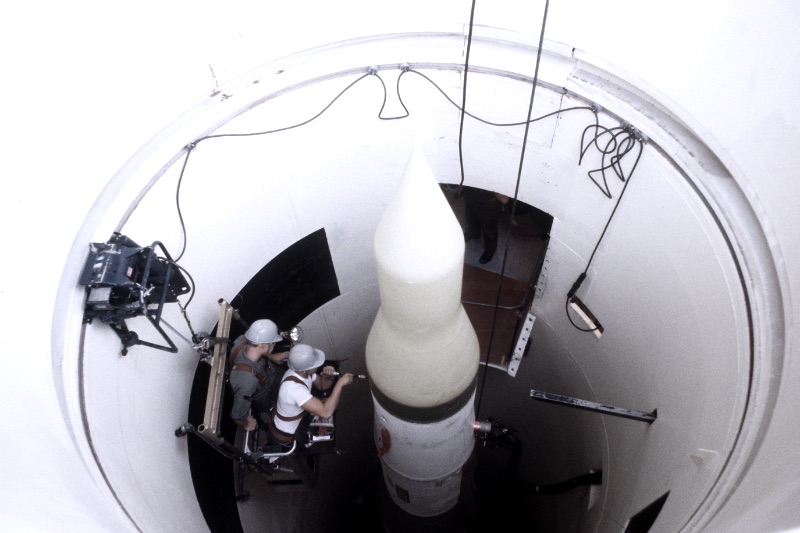
Rcc8j — CC BY-SA 4.0, via Wikimedia Commons
The decision to use force is the gravest a state makes, and the arrangement governing who makes it is a compromise nobody defends and nobody replaces.
The reporting requirement obliges the executive to notify the legislature within a short window after forces are committed, and to keep reporting periodically thereafter.
Compliance is generally good. Reports are filed, within the window, in the required form, which is what makes the provision such a useful study in how a safeguard fails.
A requirement to notify is not a requirement to obtain permission, and the gap between those two things is where the entire subject lives.
The drafters understood this. The notification was meant to start a clock, after which continued deployment would require authorisation or the forces would have to be withdrawn.
There is a coalition dimension that the framework does not address at all, and it now covers a large share of what forces actually do.
The clock is the part that has not held. It can be restarted, characterised around, or simply allowed to run while the question of what happens at the end is not tested.
Support to another state's operation — refuelling, targeting, logistics — involves no commitment of forces into hostilities on any narrow reading, and is decisive to the operation it supports.
Nobody wants to test it. An executive that lost would be constrained permanently; a legislature that lost would have established that its central check is unenforceable.
A state can therefore be materially responsible for a campaign without ever crossing the threshold that would trigger a report about it.
So both sides prefer ambiguity to a ruling, and the ambiguity has now lasted long enough to be the settled position.
The proceedings contain the debates, and the striking feature of a run of them is how much argument concerns the characterisation of the operation rather than the merits.
Whether something is hostilities, or an operation short of hostilities, decides which obligations attach, and it is a determination the executive makes about its own conduct.
A definitional question answered by the party the definition constrains is not much of a constraint, and the practice of answering it narrowly is bipartisan and consistent.
The legislature's remedy is the one it always has, which is money, and money is a blunt instrument aimed at the wrong moment.
The budget documents show why. Funding is appropriated in advance and in aggregate, so withholding it means defunding a force already deployed.
No legislature will do that, because the immediate consequence falls on the people in the field rather than on the officials who sent them.
Which means the only enforceable check is one nobody is willing to enforce, and everyone involved knows this before the argument starts.
There is a further problem in what modern operations look like. The framework was written for the commitment of ground forces into hostilities, which is a visible event.
Standoff strikes, support to partner forces and sustained operations conducted from outside a theatre do not resemble that event, and the reporting obligations map onto them awkwardly.
Each of those can be characterised as falling outside the trigger, and each characterisation is individually arguable, and the cumulative effect is a framework that covers less every year.
The enacted history shows the provision surviving unamended through decades in which the character of military operations changed completely.
A rule that is never amended is usually described as durable. This one is better described as abandoned in place: still on the books, still complied with, no longer doing the work.
The reform most often proposed is a stronger clock with automatic consequences, and it fails for the reason every version has failed, which is that it requires the legislature to want the responsibility.
Voting on a war is the hardest vote there is. A framework that lets members criticise an operation without ever having authorised it is, for most of them, the preferable arrangement.
The honest reform is therefore not procedural but political, and it is the one nobody proposes: require a recorded vote within a fixed period, with no mechanism for avoiding it.
That would not produce better decisions. It would produce attributable ones, which is the thing the current arrangement is designed, in practice, to prevent.
Further reading
- Reporting requirement, 50 U.S.C. § 1543Office of the Law Revision Counsel, U.S. House
- Congressional RecordU.S. Government Publishing Office
- United States Statutes at LargeU.S. Government Publishing Office
Gregor Vance writes for The 13th Bell on security. This piece was edited and fact checked before publication.
Get The 13th Bell in your inbox