The Venue Rule Decides the Case
Where a dispute is heard is settled before anyone examines what it is about, and the answer frequently determines the result.

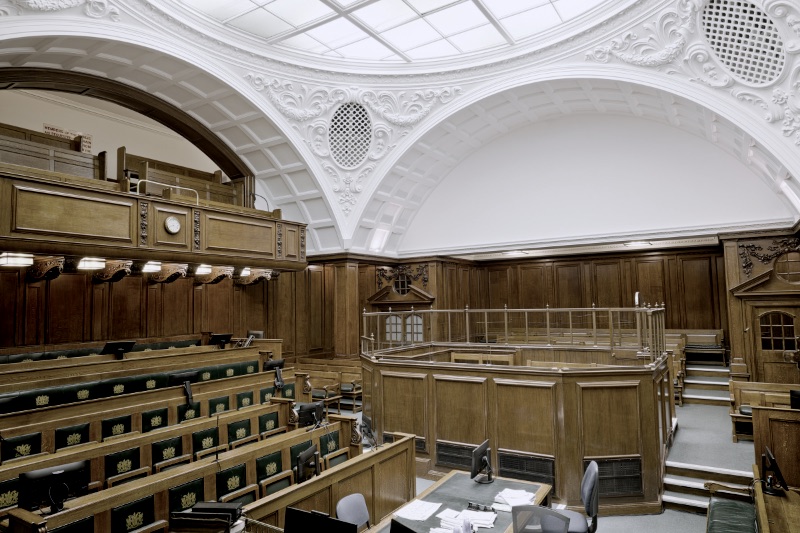
Mike Rayner — CC BY-SA 2.0, via Wikimedia Commons
The first contested question in most litigation is not what happened. It is where the argument about what happened will take place.
The general venue provision sets out where a case may be brought, and it offers more than one permissible answer in most disputes.
Where a rule permits several answers, the choice belongs to whoever moves first, and the party that moves first is the party that has been preparing.
That is the whole mechanism. Venue is not usually decided by a court weighing convenience; it is decided by a plaintiff filing, and then defended.
The differences between forums are substantial and entirely legitimate. Judges differ, juries differ, the pace of the docket differs, and settled local precedent differs.
The multi-district mechanism is the system's own answer to concentration, and it is revealing about how the problem is understood.
None of that is impropriety. A body of law developed over decades in one circuit genuinely does differ from another, and both are the law.
Consolidating related cases before one judge is efficient and it makes the selection question sharper rather than softer, because now a single assignment governs thousands of claims.
The published opinions make those differences visible to anyone who reads enough of them, which in practice means to specialists rather than to parties.
That assignment is made by a panel on stated criteria, published, and reviewable — which is precisely the treatment ordinary venue selection never receives.
So the party with counsel who reads that material chooses the forum, and the party without it discovers the choice has been made.
The contrast is the argument. When the system decides concentration is consequential enough to matter, it builds a transparent process for it.
The concentration this produces is the striking part. Particular kinds of case cluster in particular districts to a degree that no distribution of underlying disputes could explain.
Everywhere else the same concentration happens by private choice, at the same scale, and nobody has ever been asked to justify it.
The caseload tables show the clustering plainly, and a district receiving a wildly disproportionate share of one kind of case is receiving it because it was selected.
Selection of that kind is rational for the party doing it and corrosive for the system, because a forum that attracts filings has an incentive to remain attractive.
Nobody need act improperly for that incentive to operate. A court known for moving quickly will keep moving quickly, and speed favours one side in most disputes.
Transfer is the corrective and it is weaker than it sounds. Moving a case requires a motion, a ruling and time, and the time is itself part of what was being bought.
A defendant who wins a transfer after a year has still spent the year, and the expenditure was frequently the point rather than a side effect.
The description of what the federal courts handle sets out the categories, and the categories say nothing about where within the system a case will land.
That silence is where the discretion lives. The jurisdictional question — may a federal court hear this at all — is heavily litigated and comparatively principled.
The venue question — which one — is decided in an afternoon by whoever drafts the complaint, and it is at least as consequential.
Contractual forum clauses do the same work in advance, which is more honest and no more balanced, since the clause is written by the party with the drafting pen.
A consumer or employee agreeing to a forum clause has selected a court in the same sense that they have selected the font, and courts enforce it anyway for reasons that are not unreasonable.
The reform that would matter is not a narrower rule. It is publication: a routine, per-district account of what proportion of each case type is filed there against what the district's share would otherwise be.
Concentration that survives being counted in public is concentration somebody has to defend, and at present nobody is ever asked to.
Further reading
- Venue generally, 28 U.S.C. § 1391Office of the Law Revision Counsel, U.S. House
- Caseload statisticsAdministrative Office of the U.S. Courts
- United States Courts OpinionsU.S. Government Publishing Office
Ruth Okonkwo writes for The 13th Bell on law. This piece was edited and fact checked before publication.
Get The 13th Bell in your inbox