The Waiver Without a Clock
Two days before the Russia sanctions law was due to take effect, the President waived nearly all of it, using the waiver the law itself provides. Ending a sanction under the Act would have needed a peace deal and a 30-day review by Congress. The waiver needs a certification and has no end date.

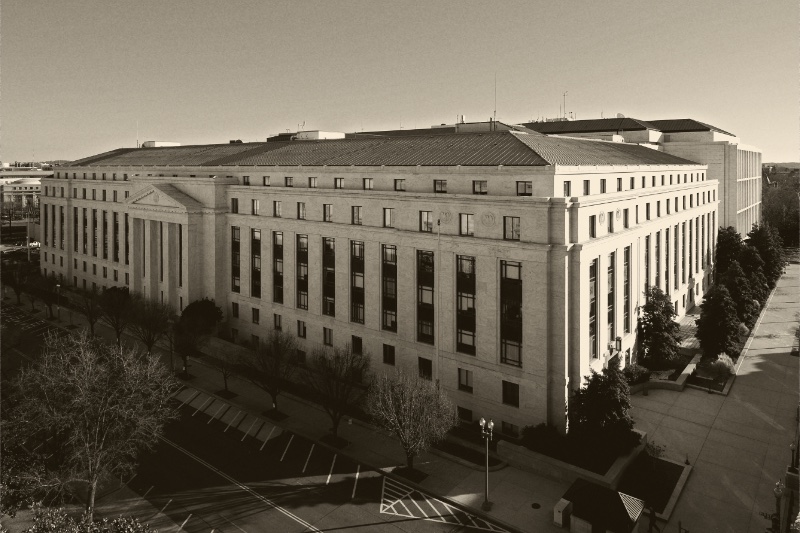
Tatiana Bashinskaya — CC BY 3.0, via Wikimedia Commons
The executive order is dated Friday 16 October and is titled “Implementing the Lindsey O. Graham Sanctioning Russia and Iran Act of 2026”. Its second section sets out the duties the law requires: a 500 per cent ad valorem increase on goods from Russia, and 100 per cent on goods from the five largest importers of Russian crude oil and natural gas that knowingly make new purchases on or after 18 October, and from the top five facilitators of Russian oil-sanctions evasion. Each of those sentences ends with the same qualification: “subject to . . . the waivers issued in section 4 of this order.”
Section 4 waives them. The order came two days before the law’s measures were due to take effect, Radio Free Europe/Radio Liberty reported, and it waives what RFE/RL called “nearly all substantive sanctions, tariffs, and restrictions” in a statute that President Trump signed on 18 September and that Congress named for the late Senator Lindsey Graham.
What Section 4 waives
The order has four waiver paragraphs. Paragraph (a) waives “any duties provided for in sections 112 and 113 of the Graham Act or this order.” Paragraph (b) waives section 102(d). Paragraph (c) waives sections 102(a), 102(e), 103 through 111, and 117. Paragraph (d) supplies the duration: the waivers “shall remain in effect until such time as the President or the Secretary of State, in consultation with the Secretary of the Treasury and the Trade Representative, as appropriate, determine that further action is appropriate.” There is no date in it.
The enrolled text of the Act, H.R. 5334 as published by the Government Publishing Office, shows what those numbers held. Sections 112 and 113 told the President that “not later than 30 days after the date of the enactment of this Act” he “shall, notwithstanding any other provision of law,” raise the duties. Sections 103 to 111 cover, among other things, Russian financial institutions, state-linked entities, transfers of funds, listing on US exchanges, investment, energy, sovereign debt and uranium, according to a Morgan Lewis summary that matches the section headings. Section 102(d) is shorter. It said that sanctions under the executive orders on Russia’s “specified harmful foreign activities”, as they stood the day before enactment, “shall remain in effect.”
That is the one Congress wrote to stop a president lifting the older sanctions by executive order. The waiver of it does not lift them. The same paragraph of the order says “for the avoidance of doubt” that nothing in it affects those sanctions. But it removes the statutory floor under them, which, as ABC News put it, clears the way for the President “to take unilateral action on them as well.”
Two doors out of the statute
The Act has two ways to stop applying a sanction, and they are built very differently. Section 117, headed “Termination”, lets the President end a sanction on Russia only if he certifies that Russia has “signed a peace agreement that is accepted by the free and independent Government of Ukraine” and ceased hostilities. Even then the termination “shall not take effect” for 30 calendar days, during which Congress can pass a joint resolution of disapproval on a fast-track procedure the section sets out.
Section 115, headed “Waiver”, has no such conditions. The President may waive “any sanctions provision with respect to a foreign person, any restriction with respect to a person, or any duty under this title”, provided that before he does so he submits to Congress “a certification in writing that the issuance of the waiver is in the national interests of the United States” and “a report explaining the basis for the certification.” The report must be unclassified but may carry a classified annex. There is no waiting period and no disapproval vote. Morgan Lewis noted in September that the waiver is not conditioned on the sanctioned person having stopped the conduct.
Friday’s order uses the second door, and it also lists section 117 among the provisions waived. Whether a termination procedure is itself a “sanctions provision” that section 115 lets a president waive is a question the text of section 115 does not answer in terms. The order states, in each paragraph, that the certification and report have been submitted to Congress. Neither has been published. RFE/RL reported that the White House had not publicly detailed the justification.
One reporting requirement may already have been missed. Section 113(g) requires a written justification to six congressional committees “not later than 10 days before imposing a duty.” Counting back from the 30-day deadline of 18 October gives 8 October. Sources familiar with the matter told RFE/RL that the administration missed an 8 October deadline under those requirements. That account rests on sources RFE/RL did not name, and no other outlet has reported it.
The objections, and the defence
The White House spokesperson, Taylor Rogers, said in a statement on Saturday, ABC reported: “Enforcing the sanctions provisions now would impede ongoing U.S. efforts to negotiate a durable and comprehensive peace agreement between Ukraine and Russia.” The President, she said, “retains the ability to exercise these authorities at any time.” Senator Thom Tillis, Republican of North Carolina, called the waiver “Beyond irresponsible” and asked: “What part of enforcing a law passed 86-11 by the Senate does the President and his advisors not understand?” Senator John Cornyn of Texas said Graham “would be appalled.” Senator Elizabeth Warren, the ranking Democrat on the Banking Committee, said in a statement: “Tonight’s announcement is another abject and predictable failure in leadership.”
The defence of the order on the merits came from a Republican who opposed the law. “I was one of only 7 republicans to vote against the short-sighted [Lindsey] Graham sanctions bill,” Representative Thomas Massie of Kentucky said, according to ABC. “Glad to see Trump has used the executive authority granted to him by Congress to waive almost all of the provisions of this stupid law that pertain to Russia.” As a description of the mechanism, that is accurate. Congress wrote section 115, and the order cites it in every paragraph.
The order sits beside the diesel arrangement this publication examined on 10 October. ABC reports that the Treasury’s general licence runs through April and that without the waiver the law would have required tariffs on Russian petroleum products such as diesel. Representative Gregory Meeks, the senior Democrat on the House Foreign Affairs Committee, introduced bipartisan legislation on 16 October to block the diesel deal, RFE/RL reported. A bill to reverse the waiver would face the ordinary path: passage by both chambers and the President’s signature, or a two-thirds vote to override his veto.
The statute has an end date. Section 203 terminates the division of the Act that holds the Russia measures five years after enactment, which puts it in September 2031. The waiver has none. It lasts until the President or the Secretary of State decides otherwise, and section 5 of the same order delegates the President’s section 115 authority to the Secretary of State.
Further reading
- Implementing the Lindsey O. Graham Sanctioning Russia and Iran Act of 2026 (executive order, 16 October 2026)The White House
- H.R. 5334, enrolled bill: sections 102, 112, 113, 115, 117 and 203U.S. Government Publishing Office
- Trump Waives Graham Act Sanctions On Russia Before They Take EffectRadio Free Europe/Radio Liberty
- Trump signs order waiving Graham Act sanctions on Russia, drawing backlash from some lawmakers and ZelenskyyABC News
- President Signs Lindsey O. Graham Sanctioning Russia and Iran Act of 2026Morgan Lewis
- Warren Statement on Trump Administration Decision to Waive Applying Sanctions on Russia under Graham BillSenate Banking Committee (minority)
Gregor Vance writes for The 13th Bell on security. This piece was edited and fact checked before publication.
Get The 13th Bell in your inbox