The Shipyard and the Donor
Anduril will spend $3.7 billion on a submarine-parts yard in Maryland, and the Navy will pay up to $2.9 billion more. The governor whose state helped land the deal says the White House barred him from speaking at the announcement; the White House says he was invited as a guest.

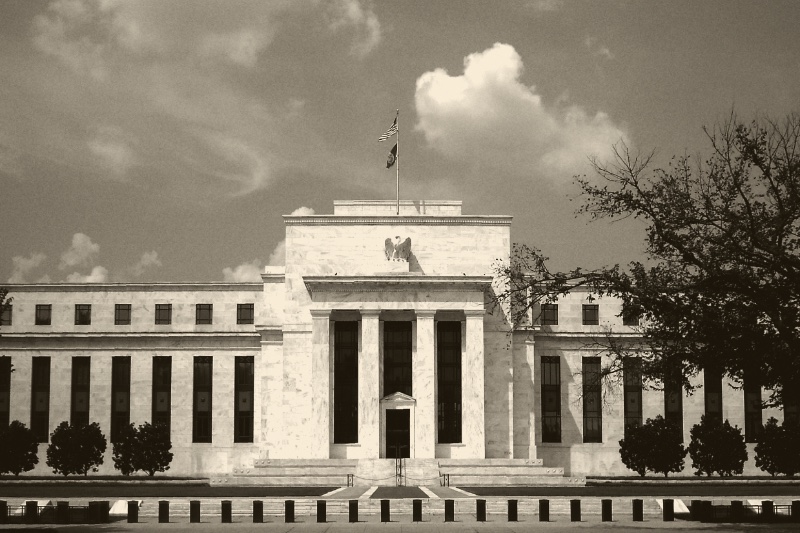
Jstuby — CC0, via Wikimedia Commons
On Tuesday 6 October, at a currently unused shipyard in Sparrows Point, Maryland, President Donald Trump and the secretary of war, Pete Hegseth, announced a new shipyard, the Department of War reported. Anduril Industries, the defense technology company founded by Palmer Luckey, will spend $3.7 billion building a facility at Tradepoint Atlantic, on the site of the former Bethlehem Steel plant, to make components for the Navy’s submarines. The Navy has awarded the company a contract worth up to $2.9 billion for what the yard produces. Together the commitments come to as much as $6.6 billion, Reuters reported, aimed at a single problem: America cannot build submarines fast enough.
The facility, called Arsenal-2, is planned to cover 187 acres, with more than two million square feet of production space and a 1,200-foot graving dock, Baird Maritime reported. It will make components and large assemblies for the Navy’s Virginia-class attack submarines and deliver them to General Dynamics Electric Boat and to Huntington Ingalls Industries’ Newport News Shipbuilding, which will continue to do final assembly. Anduril is starting with torpedo tubes at a new plant in California and plans to move on to larger modules and hull sections once the Baltimore County yard is running, according to Reuters. Maryland’s announcement calls it a “software-defined shipyard,” which means, in practice, that a company built on autonomous systems and software is going to try to bring to shipbuilding what it has brought to drones.
The industrial logic is serious. Congress has generally funded two Virginia-class boats a year, but actual output has been roughly 1.1 to 1.4 a year, constrained by workforce shortages and supply-chain problems, gCaptain reported, citing the Congressional Research Service. A senior administration official said the yard could eventually add about nine million production labor hours a year, roughly a fifteen percent increase in Virginia-class capacity. The contract structure is unusual and worth noting: Navy payments are tied to demonstrated production outcomes, and the company says that this means “Anduril, not the taxpayer, takes on the majority of the execution risk.” If the yard fails, the company’s own money is the money that burns first. The yard is not due to begin operating until 2030.
The governor who did not speak
Then there is the politics, which arrived on schedule. Maryland’s Democratic governor, Wes Moore, whose administration says it spent two years in discussions to bring Anduril to the state, was not on the stage. The state and Baltimore County have committed to match up to 13 percent of Anduril’s investment through incentives, some of which still need legislative approval, according to the governor’s office. Moore said he had been told by the White House that he would not be allowed to speak, and stayed away. “If the president of the United States wants to bring the circus into town and tell me that I’m not allowed to speak despite the fact that we were the ones that helped bring the deal, then I will let the circus be conducted while I go back to work for the people of Maryland,” he said, Maryland Matters reported. The White House said Moore had been invited to attend as a guest, and accused him of “throwing a tantrum”. Trump did not mention the governor. Anduril’s chief executive, Brian Schimpf, thanked him by name.
This is a small skirmish in the scheme of a $6.6 billion industrial program, and it would be a mistake to treat it as the story. But it is a revealing detail, because it shows how credit is now contested. The deal is real. The jobs, if they come, are real: more than 3,100 new permanent positions and more than 14,000 jobs supported in all, by the state’s estimate, which calls the project the largest single private investment and the largest job creator in Maryland in over a decade. The dispute over the stage is also real, though the two sides tell it differently.
Moore’s office got its own version out first, in a release posted at 9 a.m., hours before the ceremony, praising the jobs and the economic output and thanking Anduril for choosing Maryland. The governor took the win and, this time, also took the fight. Either way, the episode will be remembered in statehouses, where the lesson is that cooperating with this administration on industrial policy can buy you the project and cost you the stage.
The donor in the room
The other political fact was the one the governor’s statement did not mention. Anduril’s founder, Palmer Luckey, is a major Republican fundraiser who has given $5.9 million to Republican causes since 2017, the Guardian reported. At the event Trump called Luckey “a friend of mine”. Luckey was not there. This does not make the shipyard corrupt. The Navy’s submarine shortfall is real, the capacity math is real, and the contract’s risk-sharing structure is genuinely unusual. A defense startup winning a major industrial contract on the merits would be a healthy sign for a Pentagon that has spent decades complaining about the sclerosis of its prime contractors.
But in a system where the president’s friends keep winning, the merits become harder to see, and harder to trust. Every contract awarded to a donor’s company invites the question that cannot be answered from the outside: would this deal have happened anyway? The administration’s answer is that the results will speak for themselves. The skeptic’s answer is that results and favoritism are not mutually exclusive, and that the appearance of the latter corrodes confidence in the former. The Guardian noted that the company has never before played any known role in building crewed submarines, which is exactly the kind of fact that makes the question louder.
This is the permanent tension of industrial policy in a patronage age. The United States needs more shipyards, more factories, more of almost everything it stopped building. The government is, correctly, trying to rebuild the industrial base. But industrial policy requires public trust to survive its inevitable failures, and public trust requires the belief that contracts go to the best builder, not the best-connected donor. Each sidelined governor and each donor’s windfall makes that belief a little harder to hold.
What Arsenal-2 will prove
The honest assessment is that Arsenal-2 is both things at once: a serious attempt to fix a genuine strategic vulnerability, and a political production staged for maximum credit and minimum sharing. The shipyard will be judged, eventually, by whether it delivers submarine parts on time and on budget, starting around 2030. The politics will be judged much sooner, by whether other governors, other companies and other states decide the game is worth playing.
America’s attack submarines are among its most important military assets, and the Navy cannot get enough of them. If a software company can help build them faster, that is good news regardless of who cuts the ribbon. But ribbons matter too, because the next shipyard, the next factory, the next $3.7 billion will need a governor willing to do the work. The administration might consider letting them speak.
Sources
The announcement by Trump and Hegseth at Sparrows Point on 6 October is from the Department of War’s news story. The investment and contract figures, the $6.6 billion total, the plan to start with torpedo tubes and move to larger modules and hull sections, and Anduril’s founding by Palmer Luckey are from Reuters, read as republished by Baird Maritime. The site size, floor space, graving dock, the delivery to Electric Boat and Newport News, the 2030 start, the contract-risk statement and the 13 percent state and county match are from Baird Maritime’s report and the Maryland governor’s press release of 6 October, which is also the source for the “software-defined shipyard” description, the jobs and economic estimates and Moore’s written statement. The production-rate figures, the Congressional Research Service citation and the nine-million-hour and fifteen percent estimates, attributed to a senior administration official, are from gCaptain. Moore’s remarks, the White House response, the two years of talks, the timing of the governor’s release and Schimpf’s thanks are from Maryland Matters. Luckey’s fundraising and donations, Trump’s description of him, his absence from the event and the company’s lack of a known record in crewed-submarine construction are from the Guardian. Anduril’s own press release, the Navy contract and The Hill’s reporting were not read directly.
Further reading
- Trump, Hegseth Announce New Maryland ShipyardU.S. Department of War
- America's biggest shipyard: new $3.7b facility to build US Navy submarine partsReuters, via Baird Maritime
- Anduril unveils plans for $3.7b submarine component production facilityBaird Maritime
- State of Maryland, Baltimore County Announce Anduril Industries to Invest $3.7B, Create Over 3,100 Jobs with New Shipbuilding FacilityOffice of Governor Wes Moore
- Anduril to Build Massive Maryland Shipyard for Virginia-Class Submarine ComponentsgCaptain
- Moore says White House prevented him from speaking at Anduril announcementMaryland Matters
- Sparrows Point shipyard could bring thousands of jobs, promises billions in investmentsMaryland Matters
- Trump announces $6.6bn defense shipyard owned by top Republican donor’s firmThe Guardian
This piece was edited and fact checked before publication. Corrections are made under our editorial standards.
Get The 13th Bell in your inbox