Sweden’s Riksdag Votes on 3 November on Elisabeth Thand Ringqvist as Prime Minister
Sweden’s Speaker will put Centre Party leader Elisabeth Thand Ringqvist to the Riksdag on Tuesday 3 November, eight days after she reported finding no support for a centrist government. It is the second of the four proposals the constitution allows before an extra election.

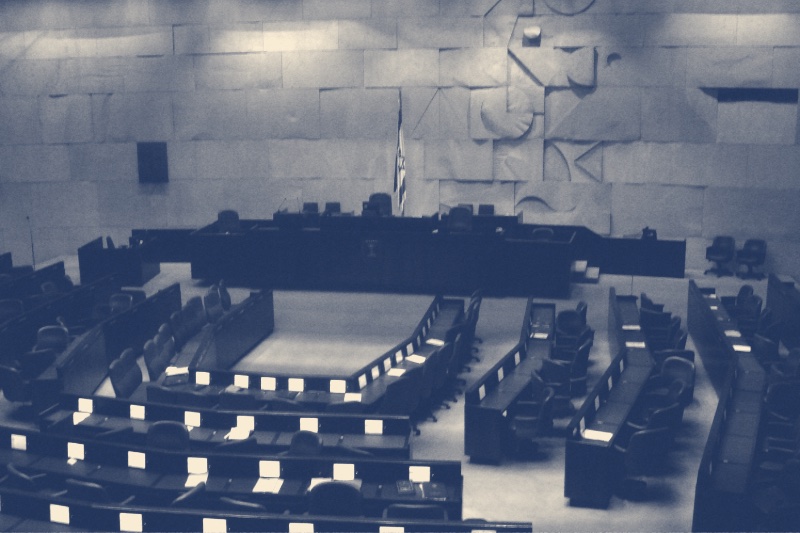
Axadem — CC BY 4.0, via Wikimedia Commons
Sweden’s Riksdag will vote at 13:00 on Tuesday 3 November on Elisabeth Thand Ringqvist, leader of the Centre Party, as prime minister of a five-party government, the Riksdag announced on Thursday 29 October. It will be the second of the four proposals the Speaker may make before the constitution requires an extra election.
Three days earlier she had reported back to the Speaker, Andreas Norlén, on her assignment to explore a government the Riksdag could tolerate, the Riksdag recorded. There was no support for a centrist government as things stood, she said then, and “Våra röda linjer kring V i regering ligger kvar”: her red lines on the Left Party in government still stood, SVT reported. On Thursday she said: “Därför har jag accepterat att prövas som statsministerkandidat för en mittenregering”, that she had therefore accepted being tested as candidate for prime minister of a centrist government.
The government named in the proposal is the Centre Party, the Social Democrats, the Christian Democrats, the Greens and the Liberals. On Thursday afternoon SVT reported that the Christian Democrats would vote no; their leader, Ebba Busch, wrote that the party remained ready to take part in forming a government “utifrån att det finns en höger/mitten majoritet i riksdagen”, on the basis that there is a right-centre majority in the Riksdag. Magdalena Andersson, the Social Democratic leader, said the reasonable course “hade varit att låta Ulf Kristersson sondera för sitt högeralternativ”, would have been to let Ulf Kristersson explore his right-wing alternative. Amanda Lind of the Greens called the decision “mycket anmärkningsvärt”, very remarkable.
How does a Swedish prime ministerial vote work?
A candidate is approved unless a majority of all members votes against. Under chapter 6, section 4 of the Instrument of Government, the Speaker consults the party groups, confers with the deputy speakers and makes a proposal, which the Riksdag must put to a vote “inom fyra dagar, utan beredning i utskott”, within four days and without committee preparation. “Om mer än hälften av riksdagens ledamöter röstar mot förslaget, är det förkastat. I annat fall är det godkänt.” If more than half the members vote against, the proposal is rejected; otherwise it is approved. With 349 members, that threshold is 175, as this publication set out before the first vote. The proposal is tabled on Friday 30 October and again on Monday 2 November, and the vote on Tuesday falls on the fourth day.
Can the parties in the proposed government defeat it?
Yes, and only they can. The seat figures below are this publication’s, taken from the Riksdag’s party table for the first vote on 15 October, adding the two members absent that day to their parties; the totals assume every member votes.
| Group | Parties | Seats |
|---|---|---|
| Named in the proposal | Social Democrats 99, Centre 25, Christian Democrats 22, Greens 22, Liberals 19 | 187 |
| Outside it | Moderates 70, Sweden Democrats 62, Left 30 | 162 |
| Votes needed to reject | 175 |
If every member of the three parties outside the proposed government voted no, the total would be 162, thirteen short of rejection, and Thand Ringqvist would be approved. Neither the Moderates nor the Left had said by Thursday evening how they would vote. The Christian Democrats’ 22, if they vote no as SVT reported, would take the no side to 184 on this arithmetic. The decision therefore rests with parties the Speaker has named as members of the government he is proposing. On 15 October, the first proposal, for Andersson at the head of a Social Democratic government, was rejected by 248 votes to 99.
What happens if she is rejected?
The Speaker has already said. If the vote fails, Kristersson, the caretaker prime minister and Moderate leader, will be given the exploratory assignment: “I så fall kommer han att få en vecka på sig,” Norlén said, in that case he will have a week, SVT reported. Two proposals would then remain. Chapter 6, section 5 provides that after four rejections the procedure is broken off and resumes only after an election to the Riksdag: “Om inte ordinarie val ändå ska hållas inom tre månader, ska extra val hållas inom samma tid.” Unless an ordinary election is due within three months anyway, an extra election must be held within that time.
The Election Authority has said it is prepared. “Vi är redo,” we are ready, its head of administration, Anna Nyqvist, told SVT on 28 October, while adding: “Det är jättekort tid för att utföra ett val enligt svenska processen”, that it is very little time to carry out an election under the Swedish process. Kristersson called a vote on a centrist government natural after it had been explored. Nooshi Dadgostar of the Left said that with a clear conclusion for that alternative, “kan processen tas vidare till nästa steg”, the process can move to the next step. A proposal that some of its own named parties mean to vote down still counts as one of the four.
Further reading
- Talmannen lägger fram Elisabeth Thand Ringqvist (C) som förslag till statsministerSveriges riksdag
- Talmannen har tagit emot rapport från Elisabeth Thand Ringqvist (C)Sveriges riksdag
- Senaste nytt om valet 2026SVT Nyheter
- Valmyndigheten: Vi är redo för extravalSVT Nyheter
- Regeringsform (1974:152)Sveriges riksdag
Thomas Rennick is a house byline used by The 13th Bell’s World desk. This piece was checked against the sources listed below before an editor approved it. See How we use AI.
Get The 13th Bell in your inbox