The Oath Is Optional, For Now
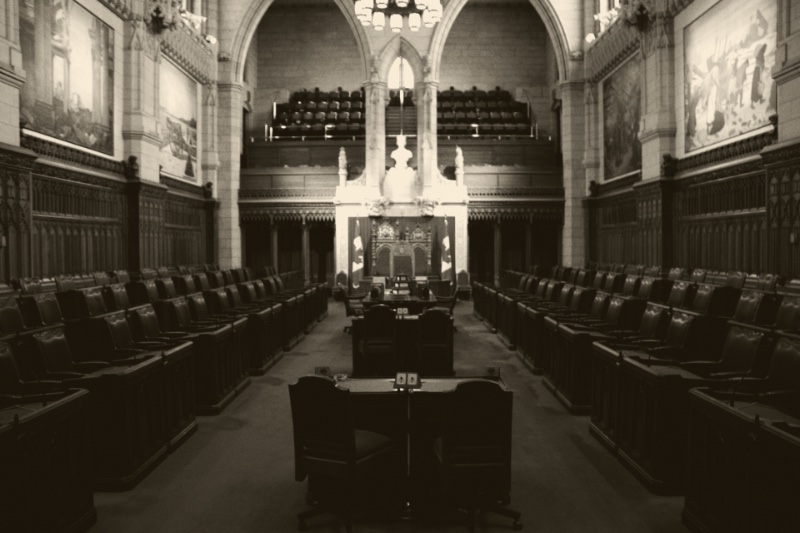
The Parti Québécois caucus was sworn in on Thursday with a pledge to “the people of Quebec” and none to the King, as a 2022 law allows. A Superior Court judge will hear a bid to suspend that law some time between 19 October and 9 November.

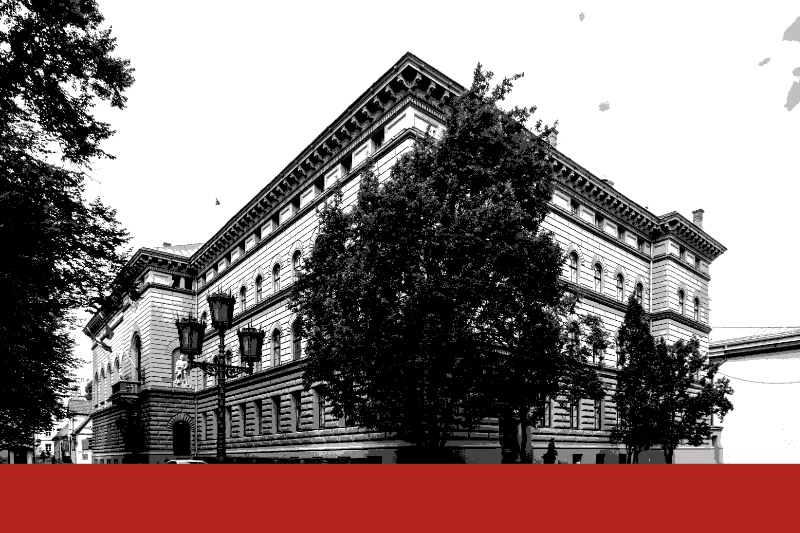
Thomas1313 — CC BY-SA 4.0, via Wikimedia Commons
Paul St-Pierre Plamondon was sworn in as a member of Quebec’s National Assembly on Thursday 15 October without promising allegiance to the King. “I, Paul St-Pierre Plamondon, solemnly declare that I will be loyal to the people of Quebec and that I will perform my duties as a Member of the National Assembly with honesty and justice, in accordance with the Constitution of Quebec,” he said, in the English rendering of the National Post’s report of the ceremony. The 58 other members of his Parti Québécois caucus then repeated the same declaration one by one, so all 59 PQ members now sit on that oath alone.
The ceremony was lawful under the statute now in force. That statute is also the subject of a pending court challenge, and the man who brought it has asked a judge to suspend it before the Assembly next sits. Nothing has been decided.
What the 2022 law changed
Section 128 of the Constitution Act, 1867 requires every member of a provincial legislative assembly, before taking his seat, to take and subscribe the Oath of Allegiance “before the Lieutenant Governor of the Province or some Person authorized by him.” In December 2022, after PQ members who refused that oath had been temporarily barred from taking their seats, the Assembly passed Bill 4, An Act to recognize the oath provided in the Act respecting the National Assembly as the sole oath required in order to sit in the Assembly. It inserted a new provision into the 1867 Act itself. Section 128Q.1 reads, in full: “Section 128 does not apply to Quebec.”
The federal Justice Department’s consolidation prints that line with a note saying the provision “aims to amend the constitution of the province under the unilateral amending procedure set out in section 45 of the Constitution Act, 1982.” Section 45 lets a province amend its own constitution alone. Whether the oath to the Crown belongs to Quebec’s constitution, or to the part of the Canadian one that a province cannot touch, is the whole case.
The arithmetic of the new Assembly gives the question weight. Élections Québec’s results for the 5 October election, updated after the official addition of the votes, give the PQ 59 of the 127 seats, the Liberals 40, the Conservatives 19 and Québec solidaire nine. The Coalition Avenir Québec, which governed from 2018, won none. A majority is 64, so the PQ will govern in a minority, which also bears on any referendum question, since only the Assembly can adopt one. The totals are not yet final. Élections Québec says definitive figures will follow the judicial recounts under way. The Court of Quebec has granted the PQ a recount in Vachon, which the Liberal candidate won by 10 votes, and it is due to begin on 19 October. The PQ is also seeking one in Champlain, where the Conservative candidate won by 191 votes, Global News reported.
What the challenge argues
Lawrence David, a University of Ottawa law professor and founder of the Public Interest Litigation Institute, filed the challenge in August. He argues that Quebec exceeded its constitutional powers with Bill 4, because a province cannot amend the Constitution unilaterally without the consent of Parliament and the ten provinces, CP24 reported. His filing also says Quebecers’ right to effective representation is at stake.
The consequence he draws is the part that matters for governing. “An elected politician who refuses or otherwise fails to take the Oath of Allegiance is not lawfully entitled to take their seat in the legislature or to participate in parliamentary activities,” the court filing states, as quoted by CP24. “This is because members are not allowed to vote or adopt bills without having taken the oath.”
Frédéric Berard, a constitutional lawyer, agrees that a bill passed without a majority of members having sworn the oath to the Crown could be rendered invalid, CTV News reported. That is a lawyer’s assessment of a risk, not a court finding. Philippe Lagassé of Carleton University told the National Post that the federal Justice Department and the Quebec government seem to have accepted the law prima facie, but that it has never been tested in court. “And I would say that there is a strong view amongst experts of the Constitution that this is likely not constitutional,” he said.
The injunction and the calendar
David filed for an injunction in Superior Court on Tuesday 6 October, the day after the election. It asks a judge to suspend Bill 4 while the main case proceeds, which would reinstate the mandatory oath to the Crown. “Time is of the essence,” he told CTV News that day. On Friday 9 October a judge could not set a date because of scheduling problems, but said the hearing would be held some time between 19 October and 9 November and that the parties would be given a date the following week, CP24 reported. As of the National Post’s report on 15 October, the hearing was still “expected to be held sometime between Oct. 19 and Nov. 9.” This publication found no report of a date by Saturday.
The rest of the calendar is fixed. Liberal members are to be sworn in on Monday, Québec solidaire on Tuesday and the Conservatives on Thursday, according to Noovo. On 21 October St-Pierre Plamondon is to take office as premier and present his cabinet. The two happen together: Le Soleil reports that he will be sworn in with his cabinet that day, and Noovo that he will present his council of ministers the same day. The 44th legislature opens on 17 November.
The Lieutenant-Governor
A second question sits beside the oath. Lieutenant-Governor Manon Jeannotte was not at Thursday’s ceremony; Noovo reported that she was not invited. She gives royal assent to bills, and a Quebec bill cannot become law without it. On 6 October St-Pierre Plamondon said he would seek legal advice “in order to evaluate the different options available so that the lieutenant-governor [of Quebec] does not participate” in the opening of the session. He has said he does not intend to swear the oath to the King when he is sworn in as premier, and he has promised to defund her office, which received $1.163 million in the last provincial budget, according to CTV News.
Lagassé told the National Post that ministers are in effect advisers to the Crown, so the cabinet swearing-in will be worth watching. “So, it’ll be interesting to see if they go out of their way to have a separate public ceremony, and then secretly do all their oaths with the lieutenant-governor behind closed doors. It’s entirely possible,” he said. A PQ government would still need her to sign bills into law, he added.
The oath is not a PQ issue alone. The Liberal leader, Charles Milliard, told FM93 radio that he does not intend to swear allegiance to the King either, while saying he does not want a “monarchical crisis” in Canada, the National Post reported. Daniel Béland of the McGill Institute for the Study of Canada questioned how far the new government will push the matter. “At the same time, the question is to know whether he will really focus on this because he said his priorities are homelessness, the cost of living, government spending and so forth,” he told Global News.
What is not known is the hearing date, the judge, and what position either government will take on the injunction. If it is refused, the question stays in the main case, and the Assembly opens on 17 November with at least 59 of its 127 members seated on an oath that rests on a provision the challenge says Quebec had no power to enact.
Further reading
- Parti Québécois caucus members swear allegiance to ‘the people of Quebec’ — not the KingNational Post, via Yahoo News Canada
- Judge to hear arguments in injunction that would force Quebec MNAs to swear oath to KingCP24
- Newly-elected premier takes first shot at abolishing the monarchy in QuebecCTV News, via CP24
- The Constitution Acts, 1867 to 1982: sections 128 and 128Q.1Department of Justice Canada
- Résultats des élections générales provinciales 2026Élections Québec
- Transition gouvernementale: St-Pierre Plamondon et Fréchette se rencontreront mardiLe Soleil
- Quebec’s incoming, outgoing premiers meet as transition of power beginsGlobal News, via Yahoo News Canada
Owen Blackwood writes for The 13th Bell on politics. This piece was edited and fact checked before publication.
Get The 13th Bell in your inbox