The Tariff Schedule Is a Tax Code
A document nobody calls a tax code sets thousands of different rates on thousands of different goods, and almost every rate has a reason nobody remembers.

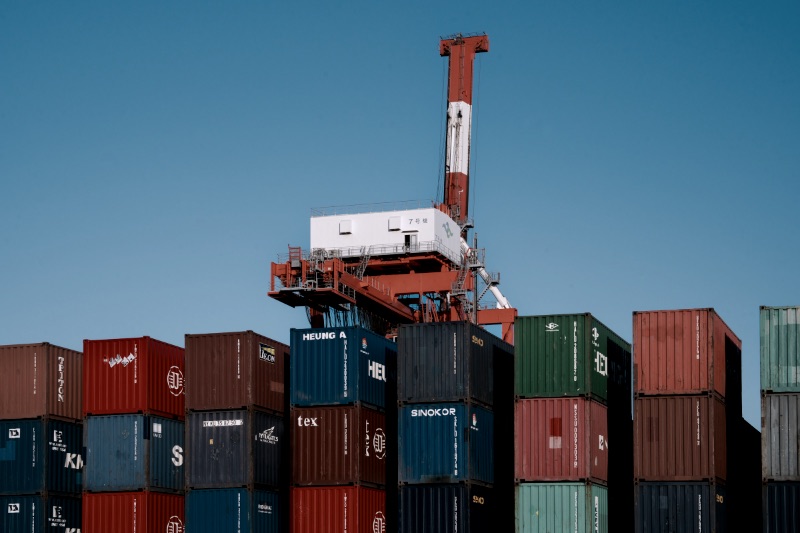
Eric Kilby — CC BY-SA 2.0, via Wikimedia Commons
Trade is argued about at the level of the average. Tariffs are up or down, protection is rising or falling, and the debate proceeds as though a country had a tariff rather than thousands of them.
The provision that establishes the schedule points at a document running to thousands of pages, in which the rate depends on exactly what a thing is held to be.
The schedule itself is where the policy actually lives, and reading any page of it makes the abstraction collapse immediately.
Goods are divided into categories of extraordinary specificity, and the boundaries between categories carry rate differences large enough to decide whether an import is viable.
The rate is only half of what a classification decides. The other half is which agreements apply, since preferential treatment attaches to categories rather than to goods.
Which means the operative question for most trade is not what the rate is. It is which line a product falls under, and that is a matter of interpretation.
So a single classification determination can move an item between two entirely different regimes, and the argument about which line applies is worth far more than the nominal rate difference suggests.
Classification disputes are consequently a large and mostly invisible field of practice, conducted between importers and customs officials over what a thing essentially is.
There is a compliance cost on top of the duty itself. Determining the correct classification for a novel product requires specialist advice, and that advice is priced for firms rather than for individuals.
The implementing regulations set out how those determinations are made and reviewed, in language that treats the exercise as technical rather than as the tax question it is.
A small importer therefore pays twice: once in duty and once in the professional fees required to establish what the duty is.
The lines themselves are historical residue. A category exists because at some point an industry asked for it, or a negotiation produced it, or a classification dispute forced one.
That second cost is entirely invisible in any account of trade policy, because it is not revenue and shows up in nobody's statistics.
Nobody designed the schedule as a whole and nobody reviews it as a whole, so it accumulates distinctions the way an old legal code accumulates exceptions.
The schedule also ages badly in a specific way. New products arrive continuously and old categories are rarely retired, so novel goods are classified by analogy to whatever existed when the line was drawn.
The distributional effect is the part that never surfaces in the trade debate. A tariff is a consumption tax, and consumption taxes fall hardest on people who spend most of what they earn.
Because the schedule is granular, that burden is not spread evenly across goods. Rates on inexpensive staple items are frequently higher than rates on their luxury equivalents.
That is not anyone's stated policy and it is a real consequence of a document assembled over a century by people negotiating one line at a time.
The published receipts record the revenue in aggregate, which is the level at which it is discussed, and the aggregate conceals every one of these distinctions.
The obscurity is functional. A line item that nobody can locate is a line item nobody campaigns against, and a schedule of this size is effectively unauditable by the public.
It is not unauditable by the people it affects. An importer with counsel knows precisely which line applies and precisely what changing it would be worth.
So the schedule is scrutinised continuously by parties with a direct interest and essentially never by anyone representing the consumer who pays the difference.
This is the same asymmetry that runs through every technical instrument of government, and it is sharper here because the instrument is a tax and is not described as one.
The reform is not a rate change. It is a requirement that the schedule be published with an estimate of who bears each line, in the way tax expenditures are meant to be reported.
That would make the document arguable. At present a country can hold a full public debate about tariffs without anyone consulting the thing that actually sets them.
Further reading
- Harmonized Tariff Schedule, 19 U.S.C. § 1202Office of the Law Revision Counsel, U.S. House
- Harmonized Tariff ScheduleU.S. International Trade Commission
- Title 19, Customs DutiesU.S. Government Publishing Office
Daniel Marchetti writes for The 13th Bell on economy. This piece was edited and fact checked before publication.
Get The 13th Bell in your inbox